








Shipbuilding Push Opens a New Lane for Danish Maritime Technology
Indian attempt to rebuild its shipbuilding industry is creating an opening for Danish companies with expertise in marine equipment, propulsion, green fuels and port technology. Denmark’s Ambassador...

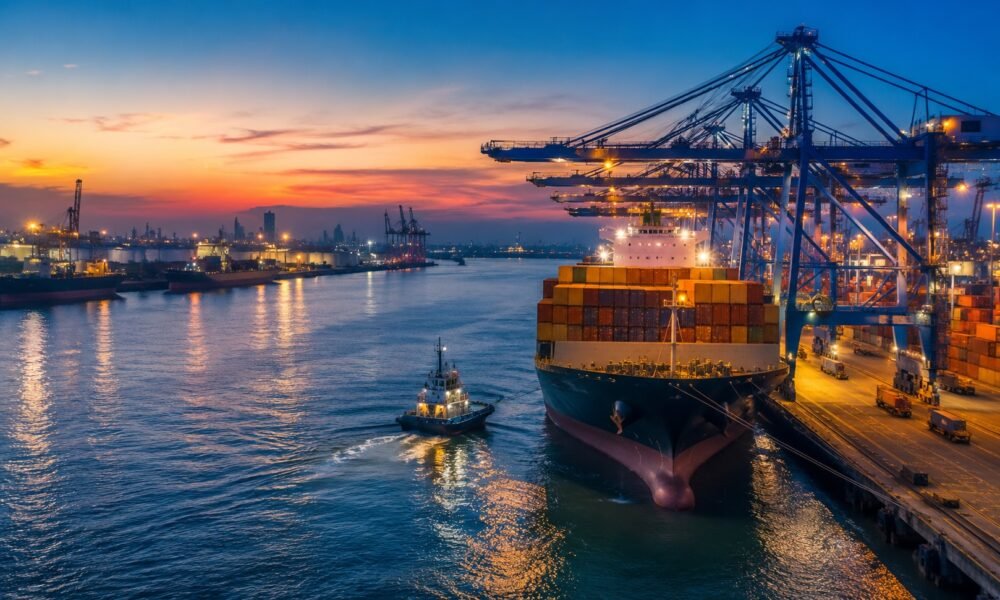
Indian attempt to rebuild its shipbuilding industry is creating an opening for Danish companies with expertise in marine equipment, propulsion, green fuels and port technology.
Denmark’s Ambassador to India said Danish manufacturers are assessing opportunities following India’s roughly ₹70,000 crore maritime support package and its longer-term push to expand domestic shipbuilding. The interest extends beyond vessels themselves to ship recycling, shore-side power, port decarbonisation and maritime technology.
The opportunity comes as the government allocated ₹24,736 crore to the Shipbuilding Financial Assistance Scheme and ₹19,989 crore to the Shipbuilding Development Scheme. The latter is designed to expand capacity through greenfield clusters and brownfield upgrades, with a target of taking annual shipbuilding capacity to 4.5 million gross tonnes.
That policy direction matters for Danish suppliers because India is not simply looking to import more ships. It wants more of the value chain to sit inside the country. The financial assistance framework encourages domestic sourcing, while the planned clusters are intended to bring equipment manufacturers and ancillary suppliers closer to shipyards.
For Danish companies, that could mean moving from exporting specialised equipment into India toward establishing local manufacturing, engineering or technology operations.
The potential market spans several areas. Danish expertise in electric propulsion, efficient pumps, sustainable coatings, methanol-capable engines, ship design and green hydrogen aligns with India’s push to decarbonise maritime operations. Companies such as Danfoss, DESMI, Hempel, Everllence and Topsoe sit across parts of that technology chain.
Ship recycling is another opening. India’s Alang yards remain strategically important, while the government has introduced incentives linking domestic ship recycling with future vessel construction.
The two countries are also exploring cooperation around maritime decarbonisation, including a possible green shipping corridor. That could eventually connect Indian ports, shipping operators and fuel infrastructure with Denmark’s experience in cleaner maritime technologies.
For India, the attraction is technology and industrial capability. For Denmark, it is access to a maritime market being reshaped by policy, localisation and green investment.
The next phase of India’s shipbuilding story may therefore be less about buying foreign technology and more about bringing foreign expertise into the domestic manufacturing ecosystem.