





Smarter, Not Faster: Rethinking Automation in Pharma Manufacturing
Automation has become one of the defining investment themes. Automotive factories are adding robots. The warehouses are deploying autonomous systems, and industrial companies are connecting machines...

Table Of Content
Automation has become one of the defining investment themes. Automotive factories are adding robots. The warehouses are deploying autonomous systems, and industrial companies are connecting machines to software. This will help to monitor, predict and optimize production.
Pharmaceutical manufacturing is moving in the same direction. However It cannot simply copy the playbook.
That is because a pharmaceutical plant does not only make a product. It makes a product whose quality, consistency and safety ultimately affect a patient’s health. In most industries, a new automation technology can be installed, tested on the production floor. Then it gets refined as operators learn what works. In pharma, the same approach can create a regulatory problem. This is before it creates an operational advantage.
The industry’s automation challenge is where, how and to what extent automation can be introduced. That too without compromising validation, data integrity, quality or regulatory control. This can make pharmaceutical automation – a case more compelling to solve.
Its Automation Problem Is Not a Technology Problem
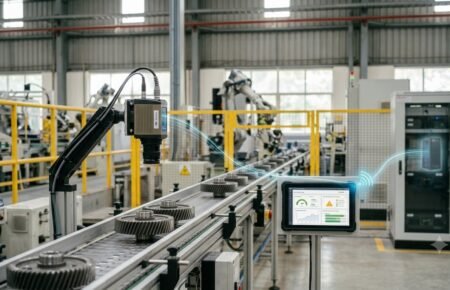
The technology available is no longer a limitation. Robotics, machine vision, automated material handling and increasingly manufacturing execution systems are already available. The harder question is what happens when those technologies become part of a manufacturing process.
A conventional manufacturer might introduce an automated inspection system. Then, it can discover that it needs adjustment and modify it over time. A pharmaceutical manufacturer has to think differently.
If an automated system influences a GMP-critical process. It changes to a system that can have implications for validated processes. The manufacturer needs evidence that the system performs as intended. Moreover, the manufacturing process continues to produce products meeting its requirements. FDA’s process-validation framework focuses on demonstrating that manufacturing processes can meet requirements.
That makes “move fast and fix it later” a particularly redundant strategy for pharma automation. The better philosophy is almost the opposite: Design carefully, validate appropriately, monitor continuously and change in a controlled way.
The Cost of Being Wrong Is Different
This is where pharmaceutical manufacturing diverges sharply. If an automated packaging system in a manufacturing environment makes an error, the consequence may be a production stoppage. Or it can be, rejected products or financial loss. In pharmaceutical manufacturing, an automation failure can affect the identity, strength, purity or quality of a medicine. That changes the economics of automation.
The cheapest technology is not necessarily the best choice. Neither is the most useful. The right technology is the one that delivers operational value. This is why automation projects in pharma need to involve engineering, IT, operations, and quality assurance. They also require validation teams from the beginning. Automation cannot sit in a corner as an engineering project. The regulatory implications need to be considered.
Yet Pharma Has Plenty of Reasons to Automate
The cautious approach should not be mistaken for resistance to automation. In fact, the forces pushing pharmaceutical companies toward automation are becoming stronger. Manufacturers are dealing with increasingly complex product portfolios. At the same time, pharmaceutical production is becoming more data-intensive.
Every batch can generate quantities of information. Starting from raw-material handling to process parameters, equipment performance and quality testing. Trying to manage all of that creates its own risks. Automation can reduce repetitive work and improve consistency. It creates a more complete digital record of what happened during a manufacturing process. The opportunity, therefore, is not simply to replace people with machines.
Material Handling Is an Obvious Starting Point
One place that automation can be effective without making significant changes to the chemistry or the manufacturing process is in material handling. Pharmaceutical plants are concerned with the handling of raw material, components, packaging materials, work-in-progress and finished products. Much of this motion is repetitive.
Automated guided vehicles, autonomous mobile robots and automated storage and retrieval systems have the potential to transport materials with minimal human intervention. It’s not only about saving manpower. Less manual movement can also mean better traceability, more predictable workflows and fewer opportunities for handling errors. Those benefits can be significant in a very controlled manufacturing environment.
Cleanrooms Make the Equation More Complicated
A clear example is continuous manufacturing. Traditional pharmaceutical production may be in the form of separate batches. Continuous manufacturing brings together processing steps allowing for continuous movement of material through the process. Continuous manufacturing is a more modern manufacturing technology that has been identified as a significant promise in pharmaceutical manufacturing by the FDA.
Its Emerging Technology Program has enabled innovative manufacturing methods such as continuous direct compression. The take-home message is that pharma’s future need not be about just automating the current batch process. It could be about re-imagining processes as a result of the things automation can enable. This is a much larger concept.
Rather than questioning how to automate a manual process, manufacturers should consider whether the process can be redesigned to be more continuous, measurable and controlled. From there, automation starts to emerge as a strategic manufacturing ability instead of just an efficiency tool.
Validation Is Not a One-Time Checkbox
The business case for pharmaceutical automation is also changing. Prior to the pandemic, the discussion may have been very much about productivity. Resilience is important almost as much today. Manufacturers have witnessed the consequences of raw material shortages, transportation and supply chain disruptions and lost labour on access to medicines.
Automation is not a cure-all to eradicate supply-chain risk. However, it can enable factories to be more flexible. A facility that is more digital in nature can potentially detect any bottlenecks earlier. Automated systems have the ability to provide more consistent execution.
Data Is Becoming the Real Automation Asset
Digital planning tools can aid production teams in adapting to demand fluctuations. It is not just a matter of making a plant faster. It is to make it more difficult to break up. That’s a far more tactical driver for automation. The secret to the best pharma automation may be the automation that you don’t notice.
It’s easy to visualize the plant of the future, where robots take the place of human workers in the chemical manufacturing industry. This could occur in some regions around the world. However, some of the most useful automation might be hidden and stitched together with, an automatic process parameter checking system, a computer program that detects an abnormality, an automated material tracking, a continuously operating sensors on critical conditions, an algorithm that detects the behaviour of equipment that indicates a failure is imminent and a secure digital workflow to make sure that the proper approval occurs prior to a process change.
Conclusion: Pharma Needs Smarter Automation, Not Just More Automation
The pharmaceutical industry is on the verge of an interesting time. There is greater automation technology available than ever before and pressures are mounting on the industry to employ more automation. That’s not something that pharma can afford to do, though, just because everyone else is doing it. Its factories run on a different set of numbers.
All new systems must be integrated with validation, GMP requirements, data integrity, quality systems, contamination controls and regulatory expectations. All changes must be evaluated in terms of productivity as well as consistency and safety of the final product to a patient. This doesn’t mean that pharmaceutical automation is slower than industrial automation. It makes it a more conscious variant.
The companies that win the prize will not necessarily have the most robots or the biggest budgets for artificial intelligence. They will be the companies that know where automation makes sense as a manufacturing tool, and where it is just a vanity add. So the future will probably be neither all-human nor all-automatic. It will turn out to be selectively automated, very validated and growingly wise. In pharma, that could be the only type of automation that really counts.