








From Traceability to Quality: How India’s QR Code Push is Reshaping Pharmaceutical Manufacturing
The era of Pharma digitisation is truly upon us, and what’s furthering it is the spread of digital regulations starting with wider traceability . For a long time, the fear […]

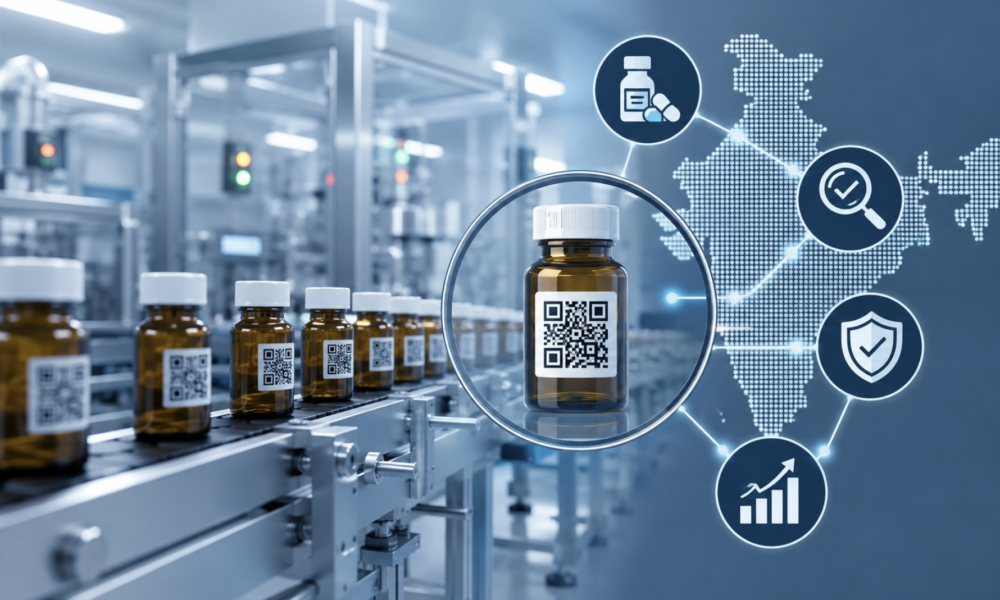
Table Of Content
- India’s Traceability Programme: Then and Now
- Quick Snapshot
- Why India Is Expanding QR Code Requirements
- Implementation Timeline
- What Information Will QR Codes Contain?
- Traceability Is Important, But It Is Not Enough
- Why Global Standards Matter
- The Challenge Facing Smaller Manufacturers
- Faster Recalls and Greater Accountability
- Conclusion
The era of Pharma digitisation is truly upon us, and what’s furthering it is the spread of digital regulations starting with wider traceability .
For a long time, the fear of counterfeit medicines was at the forefront of discussions about drug traceability. The regulation introduced QR codes for certain medications so that medicines could be traced through the supply chain and verified by suppliers, doctors and users.
Now that project has advanced significantly and created preconditions promising a wider adoption and a greater change.
In 2026, the Union Health Ministry extended the QR code requirement to nearly all medically advanced drug classes, not just a small list of medications. Though the move may seem to be just an anti-counterfeit measure, this initiative has much broader implications.
The initiative is aimed not only at detecting counterfeit medications, but also at introducing data-based drug manufacturing, promoting supply chain transparency, and improving recall process.
India’s Traceability Programme: Then and Now
India’s journey toward pharmaceutical tracking began with the introduction of the QR code for the top 300 drug brands as per Schedule H2. This was launched in August 2023, and the primary purpose was to help people and authorities track the authenticity of the medicine and curtail the circulation of counterfeit products.
However, the new 2026 amendment increases the scale of the program. Rather than restricting to the high-selling medicine brands, the government has adopted a new category-based method of tracking drugs that are associated with high health risks. Under the new regime:
- All vaccines
- All antimicrobials
- All oncology drugs
- All narcotics
- All psychotropics
This represents a significant progression for India, by changing from product-based verification to category-wide digital tracking.
Quick Snapshot
| Earlier Framework | Expanded Framework (2026) |
| Top 300 pharma brands | Entire therapeutic categories |
| Introduced in 2023 | Expanded in 2026 |
| Focus on anti-counterfeiting | Focus on traceability, quality and patient safety |
| Brand-based monitoring | Category-wide digital tracking |
| Limited product coverage | Vaccines, antimicrobials, oncology and controlled substances |
Why India Is Expanding QR Code Requirements
The issue of counterfeit drugs continues to pose a serious threat to health systems around the world. Counterfeit products may enter the supply chain through various means, such as unauthorized distribution networks, illegal imports, repackaging, or counterfeiting of drugs.
In some cases, fake drugs may contain wrong ingredients, but in some cases, they may have no active ingredients at all. As a result, the consequences may range from the failure of treatment to even a loss of confidence of the public in medicine.
Due to their dangers, regulators around the world have been increasingly adopting serialization and track-and-trace technology. Although India used to implement the serialization technology for only a small number of pharmaceutical brands, at present the technology is being used on a much larger scale. Vaccines, onco drugs, antimicrobials, narcotic drugs, and psychotropic substances are under stricter control because of their role in the health care industry and their vulnerability to counterfeit production.
Implementation Timeline
To ensure smooth adoption across the industry, the government has provided a phased implementation roadmap. QR code requirements for:
- Vaccines
- Anti-cancer medicines
- Narcotic drugs
- Psychotropic substances
will become mandatory from 1 July 2027.
For antimicrobial medicines, mandatory implementation will begin from 1 July 2028.
This phased approach gives manufacturers adequate time to upgrade packaging systems, serialization infrastructure, databases, and compliance processes.
What Information Will QR Codes Contain?
Under the revised framework, QR codes will carry significantly more information than before.
The codes are expected to include:
- Product identification code
- Generic name
- Brand name
- Manufacturer details
- Batch number
- Manufacturing date
- Expiry date
- Manufacturing licence number
- Excipient information
This enhanced data structure improves product authentication while supporting faster investigations, recalls, and regulatory oversight.
Traceability Is Important, But It Is Not Enough
QR code tracking offers an important innovation within this area but is only seen by many in the industry as a partial solution to the problem. Using traceability systems can give manufacturers answers to the following questions:
- Where was the medicine made?
- Which batch does it relate to?
- How was it transported through the supply chain?
- Quality systems have a different aim:
- How to prevent any problem from arising?
This issue is especially important for pharmaceutical manufacturers because, while fakes are often covered by the media, there is less attention given to the problem of genuine drugs that do not meet requirements.
It is possible for a drug to be fully traceable while experiencing difficulties in production at the same time. Therefore, modern pharmaceutical companies are increasingly striving to connect traceability with high-quality control systems.
Why Global Standards Matter
An essential feature of India’s QR code strategy is its correspondence to global traceability standards. India sells its medicinal products to over 200 countries throughout the globe. As the medicines make their way through numerous distributors, healthcare, regulatory bodies, and supply chains, facilitating their exchange becomes increasingly vital. Standards of global serialization help create identical digital language regarding the medicines because of:
- Product identification
- Batch information
- Details on production
- Expiry dates of the products
- Licensing information
At the same time, such consistency simplifies verification of international products and builds trust in Indian medicines among foreign buyers.
The Challenge Facing Smaller Manufacturers
While the benefits of digital traceability are widely acknowledged, implementation presents challenges for smaller pharmaceutical manufacturers.
Large pharmaceutical organizations often possess the resources necessary to invest in serialization infrastructure. For MSMEs, however, compliance can require substantial investment in:
- Serialization equipment
- Packaging upgrades
- Data management platforms
- Software integration
- Database infrastructure
- Employee training
These costs can be significant, particularly for manufacturers producing essential medicines under price-controlled environments.
Industry stakeholders have therefore emphasized the importance of balancing regulatory requirements with economic realities to ensure smaller manufacturers can successfully transition to the new framework.
Faster Recalls and Greater Accountability
One of the most immediate benefits of digital traceability is improved recall management.
When quality concerns emerge, speed is critical. Traditional investigations often rely on paper documentation, multiple intermediaries, and manual verification processes, which can delay corrective actions.
With digitized tracking systems, regulators and manufacturers can quickly identify affected batches, determine their locations, and execute targeted recalls.
Rather than recalling entire product categories, companies can isolate specific batches and locations, minimizing supply chain disruption while improving patient safety.
The system also enhances accountability by creating transparent records throughout the product lifecycle.
Conclusion
India’s decision to expand QR code requirements across high-risk therapeutic categories marks a significant step toward strengthening pharmaceutical supply chain integrity.
The initiative will improve traceability, accelerate recalls, enhance transparency, and make it more difficult for counterfeit products to enter legitimate distribution channels. However, the opportunity extends far beyond medicine authentication.
The next phase of pharmaceutical modernization focuses on improving how medicines are manufactured in the first place. Technologies such as AI, predictive analytics, digital quality systems, and advanced process monitoring are becoming essential tools for ensuring consistency, compliance, and patient safety.
Ultimately, the pharmaceutical manufacturers that succeed in the future will combine end-to-end traceability with proactive quality management.
Knowing where a medicine comes from is important. Ensuring it is genuine and manufactured correctly is even more critical.