







How AI and Cybersecurity Are Becoming the Twin Pillars of Indian Pharma Future
India’s pharmaceutical industry has been in the process of establishing itself as the “pharmacy of the world” for decades. The industry has worked its way into the global healthcare landscape,...

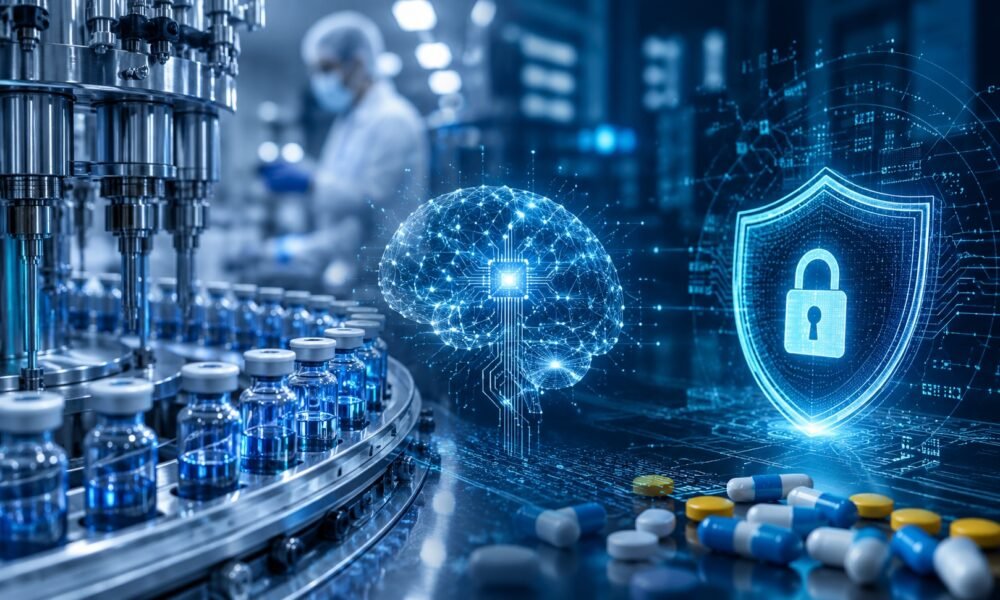
Table Of Content
- AI Is Moving Beyond Efficiency to Scientific Innovation
- Manufacturing Is Becoming Smarter
- The Rise of Pharma GCCs Is Creating New Digital Responsibilities
- Every Connected System Expands the Attack Surface
- Global Compliance Is Raising the Bar
- AI Also Needs Strong Cybersecurity
- Building Digital Trust Will Define Global Competitiveness
- The Next Competitive Advantage
India’s pharmaceutical industry has been in the process of establishing itself as the “pharmacy of the world” for decades. The industry has worked its way into the global healthcare landscape, from providing affordable generic medicines to more than 200 different countries, to also being one of the world’s biggest vaccine makers. However, the next phase of growth is not going to be made up entirely of manufacturing capacity. It will be influenced by intelligence and resilience.
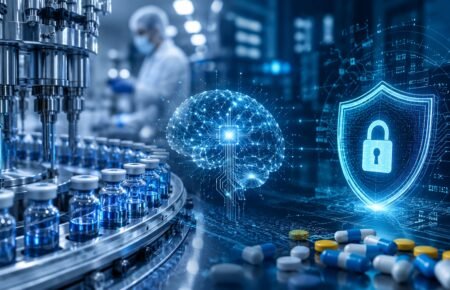
Artificial Intelligence (AI) is expanding the possibilities in drug discovery, clinical development, manufacturing and regulatory compliance. Meanwhile, cybersecurity has evolved into a key part of the strategic agenda of pharmaceutical companies as they digitize their operations, create Global Capability Centers (GCCs), and look after increasingly complex supply chains.
These two priorities, though seemingly unrelated, are changing the face of India’s pharmaceutical industry for the competition in the global market.
AI Is Moving Beyond Efficiency to Scientific Innovation
AI’s potential use in the medical field has been restricted to repetitive tasks, better documentation or administrative workflows for years. This is a complete turnaround. AI is currently helping to discover potential drug molecules, to forecast the way molecules may behave, to design clinical trials, to optimize yields, to improve drug production, and to speed up the regulatory process.
A machine learning model can process millions of biological and chemical data points in a matter of seconds, compared to the time it would take traditional research methods to process. This allows the researcher to choose the most promising candidates much earlier in the development process. This change is significant for India.
While India has long been a hub for generic drug production, today, numerous Indian pharmaceutical firms are investing in more complicated biologics, specialty drugs, biosimilars, and research into new drugs. AI offers a chance to accelerate the process of drug development and lower the staggering costs of drug innovation.
Rather than replacing scientists, AI is emerging as a decision-making tool providing scientists with more time to test promising therapies, as they are able to test thousands of possibilities without AI.
Manufacturing Is Becoming Smarter
AI is not only transforming research but is also reshaping the industry. Pharmaceutical companies create vast amounts of production, quality, maintenance and environmental data in the modern world of pharmaceutical production. AI can turn this data into actionable insights that help to optimize operational performance at manufacturing plants.
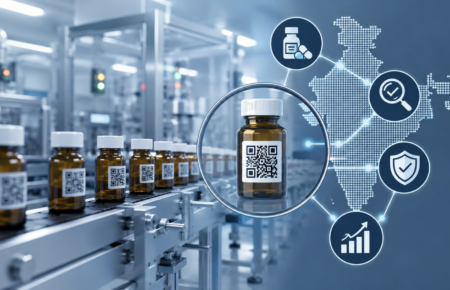
Predictive maintenance algorithms are used to predict equipment failure. AI-powered vision systems can identify defects in the package that may not be detected otherwise. Optimization of the process using intelligence can minimize deviations in the batch size and maximize yield uniformity.
For highly regulated manufacturing processes such as pharmaceuticals, maintaining product quality is a must. For manufacturers, AI can provide continuous real-time monitoring of manufacturing parameters, early detection of anomalies, and contribute to a more stable manufacturing process.
These features are increasingly becoming competitive differentiators as many of the world’s customers are now looking for reliability as well as cost competitiveness.
The Rise of Pharma GCCs Is Creating New Digital Responsibilities
India has become one of the most popular destinations for Global Capability Centers (GCCs). Leading pharmaceutical companies are moving into India beyond shared services to high-value areas like pharmacovigilance, regulatory affairs, digital engineering, AI development, supply chain analytics and clinical data management.
These centres now hold sensitive research information, intellectual property, manufacturing data, patient-related information and operate globally for business. Their strategic significance is increasing, as is the need to secure them. Cybersecurity isn’t just for business networks. Protection of the digital backbone of global pharmaceutical operations has become the must have for its necessity.
Every Connected System Expands the Attack Surface
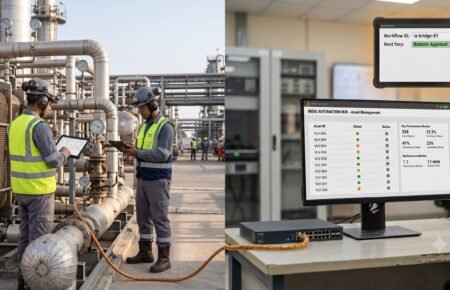
Pharma is going through a swift digital transformation. Manufacturing plants are getting more and more connected with Industrial Internet of Things (IIoT) devices, cloud platforms, Manufacturing Execution Systems (MES), Laboratory Information Management Systems (LIMS) and enterprise-wide ERP platforms.
This connectivity brings operational visibility and efficiency, but also new cyber security risks. Any cyber attack today can result in manufacturing disruption, compromise of intellectual property, disruption of global supply chains, delays of regulatory submissions, or availability of medicine. Unlike many industries, pharmaceutical disruptions have the potential to impact public health.
This is because cybersecurity is not just an IT responsibility but also a business continuity and patient safety concern.
Global Compliance Is Raising the Bar
There are some of the strictest regulations in the world that apply to pharmaceutical companies. The growing use of digital technologies throughout research, manufacturing, and distribution requires regulators to come to expect that organizations have an adequate grasp of how to manage and secure their electronic records, validated computer systems, and data governance processes.
International customers are also giving more weight to cybersecurity maturity as a relevant criterion in the selection of suppliers and manufacturers. Indian pharma firms selling products in the international market have made robust cyber security an integral part of operational credibility.
With sensitive research data, data integrity, and uninterrupted production now tied closely to customer confidence, it is clear that no one wants to be in the position of losing customer trust.Protecting sensitive research data, maintaining data integrity and ensuring uninterrupted production are now inextricably tied to maintaining customer trust, and no one wants to be in a situation where they lose customer trust.
AI Also Needs Strong Cybersecurity
The more widespread the use of AI technology, the greater the need for cybersecurity. AI systems depend on vast amounts of data. Once this information gets into the wrong hands or is altered or lost, decisions made could be flawed. Likewise, generative AI tools raise new concerns related to intellectual property protection, data privacy and governance.
With the increasing use of AI in pharmaceutical research, manufacturing, and business operations, additional safeguards will be necessary regarding who can access information, its administrative management, the way models are controlled, and cyber-resilience. AI and cybersecurity are not earmarks for the budget competition, they are complimentary investments. One drives innovation, the other makes it secure and trustworthy.
Building Digital Trust Will Define Global Competitiveness
To drive India’s pharmaceutical industry on the path of its future, manufacturing excellence is not the only thing which will be important, but digital confidence too. Organizations with the ability to integrate cutting-edge data analysis, AI-driven insights, smart production and electronic security will stand to benefit when it comes to securing international collaborations and scaling up high-dollar processes.
This is particularly true with the growing expansion of research, digital engineering and innovation centers by multinational pharmaceutical companies in India. Digital trust is increasingly becoming as valuable as production capacity. Companies with proven cybersecurity maturity and AI skills will be more attractive to regulators, investors, tech vendors, and foreign customers.
The Next Competitive Advantage
Pharmaceuticals is already a sector that has proven itself to be a manufacturer at scale. Next comes the challenge of innovating at scale, while simultaneously safeguarding increasingly digital operations.
AI has the potential to speed up drug discovery, optimize drug manufacturing, bolster drug quality systems and support the decision-making process in operational management. Cybersecurity helps these developments continue to be reliable, compliant, and resilient to the changing digital threats. Both technologies can’t achieve their potential alone.
Pharmaceutical companies are highly intelligent businesses that are open to attack if they lack robust cybersecurity. On the other hand, a business that cannot adapt to AI will miss the opportunity to thrive and stay competitive in today’s globally competitive market.
The future of the industry is changing from manufacturing to something more akin to being a world base for pharmaceutical innovation and AI and cybersecurity will become a greater part of its success. One will enable the discovery of medicines of the future and the other will safeguard digital infrastructure that aids the discovery of medicines. As a combined force they are becoming the two key areas in India’s next big pharmaceutical growth story.