







Supply Chain Visibility: How Automation is Changing the Way ManufacturersOperate
Just think of entering a factory where everything feels tightly controlled. Machines are calibrated, production schedules are planned and outputs are tracked with precision. But the moment you step...

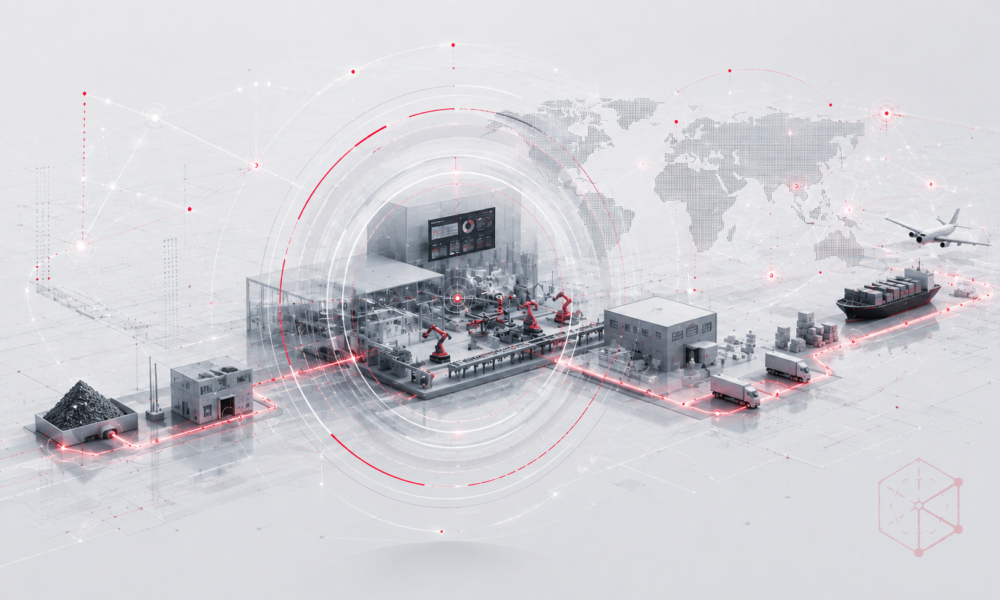
Just think of entering a factory where everything feels tightly controlled. Machines are calibrated, production schedules are planned and outputs are tracked with precision. But the moment you step outside the factory and look at the supply chain feeding it, that control starts to fade. For many manufacturers, supply chain still runs on partial information.
Once materials leave a supplier, tracking often depends on updates over email, calls, or periodic reports. By the time that information reaches the production team, it is already outdated. Decisions are made based on what was true, not what is happening right now.
That gap between reality and information creates risk. And in today’s manufacturing environment, that risk is getting harder to manage.
The cost of not seeing clearly
When manufacturers do not have full visibility of their supply chain, they usually compensate in predictable ways. Some build large safety stocks. Warehouses stay full because no one wants to risk running out of critical materials. This ties up capital and reduces flexibility.
Others try to operate lean but end up reacting to problems at the last minute. A delayed shipment leads to rushed procurement, expensive air freight, or idle production lines. Both approaches lead to an increase in costs.
One locks money in inventory. The other creates operational instability. At the core, the problem is quite simple. Information moves more slowly than the supply chain itself.
Why traditional system falls short in such scenarios
Most supply chains still rely on manual coordination. A supplier shares an update. A logistics partner sends that status report. Someone enters that data into a system. Then another team checks it and plans accordingly.
Every step introduces a delay in one way or another. By the time the information is visible across the organisation, it may no longer reflect the current situation.
This is why supply chains often feel like a black box. You know where things started. You know where they are supposed to end. But what happens in between is not always clear.
That lack of clarity makes planning difficult. It also makes it harder to respond when something goes in the wrong direction.
Automation changes the equation
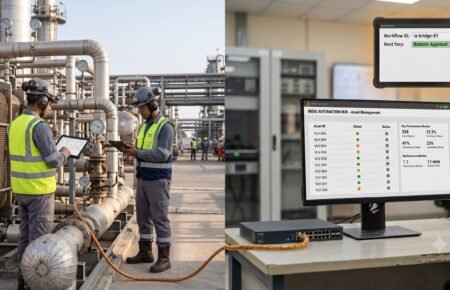
Automation removes a lot of the delay caused by manual updates. Instead of relying on emails or calls, systems connect directly with each other. Data flows automatically between suppliers, logistics providers, and internal platforms.
When a shipment leaves a certain supplier, that update is reflected instantly. When inventory levels change, the system updates in real time. When a delivery is delayed, the information is visible immediately.
This creates a shared view of the supply chain that is always current. For the first time, teams across procurement, logistics, and production can work from the same information without waiting for updates.
Tracking condition, not just movement
Visibility is not limited to just knowing where a shipment is. It is also about understanding its condition.
Modern supply chains are increasingly using sensors and connected devices to track more than just location. Temperature, humidity, handling conditions, and even shock levels can be monitored during transit.
This matters in many industries.
For example, if temperature-sensitive materials are exposed to heat during transportation, their quality may degrade. Without visibility, this issue may only be discovered once the material reaches the factory, by which time production has already been affected.
With automated tracking, the issue is identified as it happens. Teams can take action before the material is used, reducing delays and preventing further problems.
This kind of visibility adds a new layer of control that was not possible with traditional systems.
Closing the gap between data and decisions
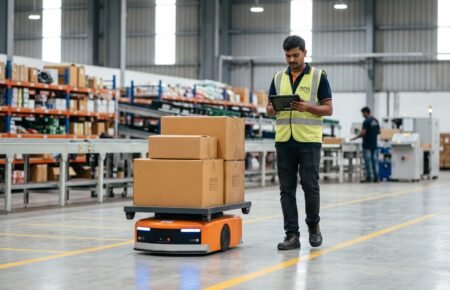
Having real-time information is useful, but the real value comes from how quickly teams can act on it. When supply chain data is updated continuously, decisions can be made faster. If a shipment is delayed, production teams can adjust schedules even before the disruption hits the line.
Procurement teams can explore alternatives instead of waiting until stock runs out. Logistics teams can look for faster routes or different carriers. In more advanced setups, some of these responses can happen automatically.
For example, if a delay is likely to cause a shortage, the system can trigger a reorder or suggest changes to production planning. This reduces the time between identifying a problem and solving it.
The result is a supply chain that responds faster and with less disruption.
Connecting the entire operation
One of the most prominent challenges in supply chain management is fragmentation. Different teams use different systems. Procurement, inventory, logistics, and production planning often operate in silos. Each team has its own data, but no one has the complete picture.
Automation helps bring these pieces together.
When systems are connected, data flows across departments. Inventory levels, supplier updates, shipment statuses, etc, are all visible in one place. Teams are no longer working with partial information. This improves coordination.
Production teams can plan more accurately. Procurement teams can align better with demand. Logistics teams can prioritise shipments based on real needs.
When everyone is working with the same data, decisions become more consistent and more effective.
A shift in how supply chains operate
The biggest change automation brings is not just better visibility. It is a shift in how supply chains are managed.
Without visibility, operations are reactive. Problems are discovered late, and teams scramble to fix them.
With real-time visibility, operations become more proactive. Manufacturers can spot delays earlier, adjust plans in advance, and avoid disruptions before they escalate. The focus shifts from firefighting to planning.
Over time, this leads to more stable operations and better utilisation of resources.
Why this matters more now
Supply chains today are more complex than they were a decade ago.
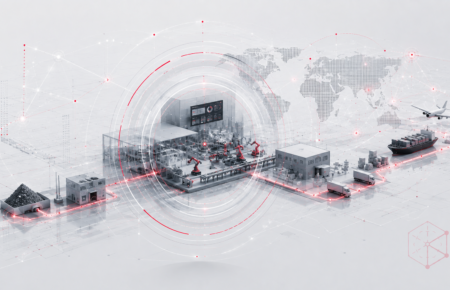
They span multiple countries, involve more partners, and depend on tighter timelines. At the same time, disruptions have become more frequent and less predictable.
In this environment, operating without visibility is a major limitation.
Manufacturers that rely on delayed information will continue to face higher costs and more frequent disruptions. Those who invest in automated visibility gain a clearer understanding of their operations and more control over outcomes.
Takeaways
Supply chain visibility is no longer restricted to just tracking shipments. It is about running operations with confidence.
When manufacturers can see what is happening across their supply chain in real time, they can make better decisions, respond faster, and avoid unnecessary costs.
Automation makes this possible by removing delays, connecting systems, and providing continuous insight into operations.
The manufacturers that are moving ahead are not necessarily the ones with the largest supply chains. They are the ones that understand them better. And that understanding starts with visibility.