





How Hyundai Motor and Kia Are Using Industrial 3D Printing to Reinvent Automotive Product Development
With the vehicle development cycle getting shorter and automotive technology increasingly complex, manufacturers are reassessing the process of designing, testing and producing new technologies. This...

With the vehicle development cycle getting shorter and automotive technology increasingly complex, manufacturers are reassessing the process of designing, testing and producing new technologies. This transformation is illustrated in the Hyundai Motor and Kia’s Additive Manufacturing Solution Center (AMSC), which is demonstrating the transition from a fast prototyping tool to a key engineering function.
The facility, opened at the company’s Namyang R&D Center, is cutting-edge, featuring several AM technologies in a single location where engineers can transition from digital design to 3-D printed components with minimal reliance on traditional tooling. Additive manufacturing, as opposed to traditional casting, machining or injection moulding processes which rely on a costly mould, die and setup time, creates components layer by layer from a digital model.
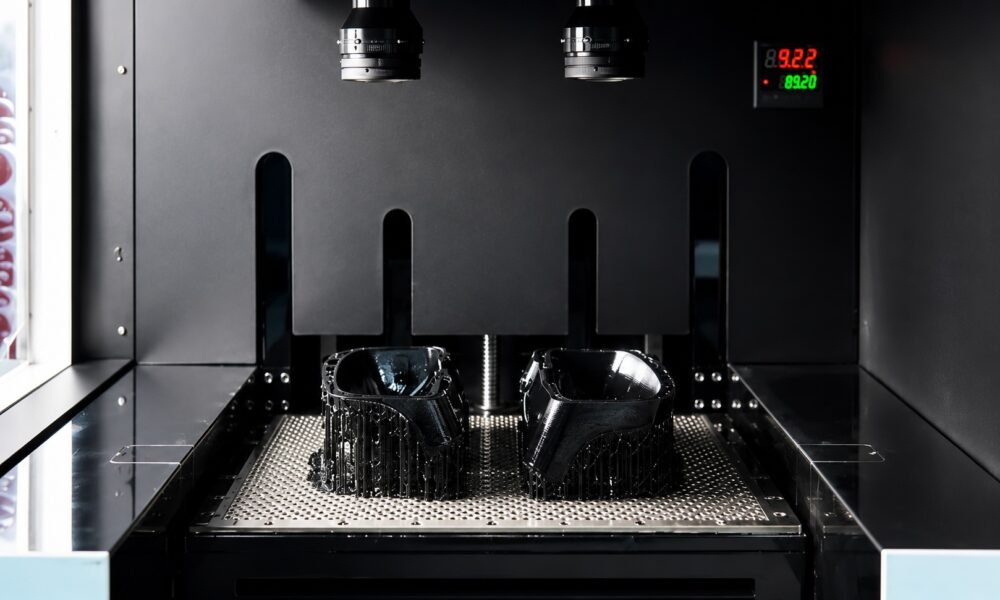
This provides engineers with significantly more design flexibility, and enables them to construct light weight structures, complex internal parts and integrated parts which would be challenging or even impossible with traditional manufacturing methods. The interesting aspect of Hyundai’s effort is the variety of technologies used for various engineering requirements. For highly detailed polymer components used during product validation, the centre uses Vat Photopolymerization technologies such as Digital Light Processing (DLP) and Stereolithography (SLA).
These methods use ultraviolet light or precise lasers to cure liquid resin to create accurate prototypes with fine surfaces. Hyundai’s Polymer Powder Bed Fusion (PBF) is used to create polymer parts with high mechanical properties, as it is a process that does not require support. This saves material and material waste, and also helps to save post-processing time to make quick customised development parts.
Metal Powder Bed Fusion is a technology in which a fine metal powder is melted by a high-power laser beam to form a complex and strong metal component that can be used in demanding applications in the automotive industry. The company also employs Directed Energy Deposition-Wire Arc Additive Manufacturing (DED-WAAM) for larger structural components, which is a process that builds up structures, layer by layer, using welding technology.
The technology can be used to produce large parts that could not be fabricated using other methods, including steel, aluminium, stainless steel and titanium materials. In addition to the printing technologies, Hyundai is also making investments in Design for Additive Manufacturing (DfAM). Engineers optimize parts for additively manufactured parts instead of adapting conventional designs for 3-D printing.
For manufacturers in all industries, the message is getting more clear by the day: Additive manufacturing isn’t all about prototypes anymore. It’s also becoming a strategic engineering tool to deliver improved designs, reduced development times and faster product innovation which are increasingly critical for advanced manufacturing of the future.