








Battery Storage Is Becoming the Backbone of India’s Renewable Energy Expansion
Battery energy storage systems (BESS) are playing an extremely important role in India’s renewable energy transition and are crucial for providing dependable and stable electricity. While the...

Battery energy storage systems (BESS) are playing an extremely important role in India’s renewable energy transition and are crucial for providing dependable and stable electricity. While the contribution of solar and wind energy is increasing, the importance of energy storage combined with load shifting is likewise increasing. Such transformation spurs the investment in digital controls that regulate sophisticated energy infrastructures.
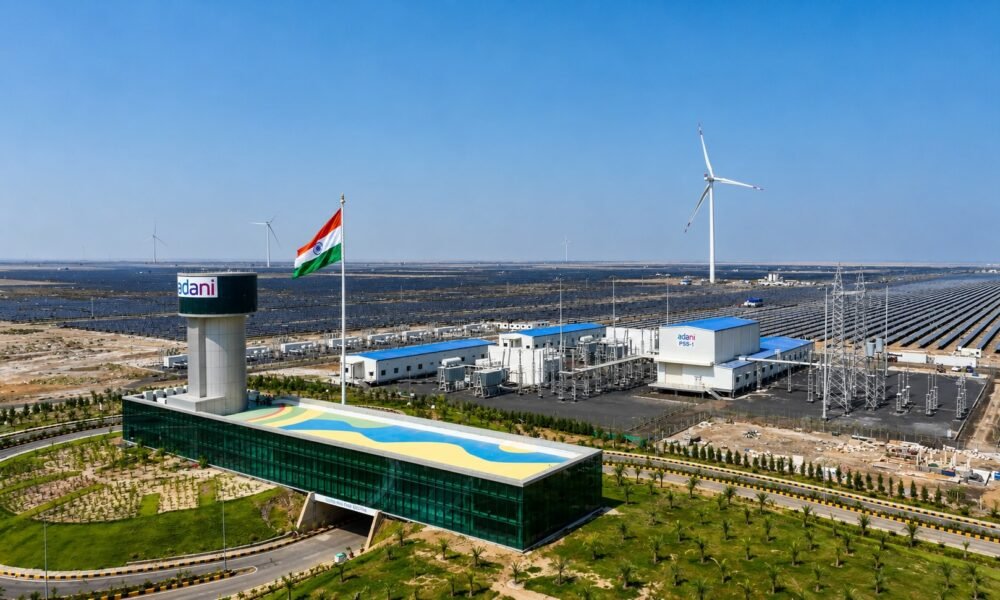
Ovation Green SCADA system designed by Emerson helps Adani Green Energy to manage a 3.55 GWh BESS at Khavda, Gujarat. The software provides capabilities for users to control millions of data sourced from various components including battery management systems, power conversion equipment, substations, and the whole power grid across the facility.
The system is part of a bigger renewable energy scheme at Khavda, which represents a great advancement in the field of automated digital systems used in distribution of power at large-scale energy storage facilities. The implementation of this innovative technology took 10 months only which proves the rapid development of clean energy infrastructure in India.
Industry context
As countries are making a rapid shift over to renewables, battery energy storage is also fast turning into an integral part of modern power systems. In contrast to traditional power plants, the renewable energy generation from sources like solar and wind is inherently intermittent and requires sophisticated storage solutions and intelligent management strategies to ensure a stable power supply and demand balance.
In order to overcome this challenge, utilities are increasingly implementing such an integrated automation platform that integrates real-time monitoring, analytics and control of the grid into a single operational system. They allow operators to maximize battery performance, utilize assets, ensure grid stability, and quickly adapt to shifting power demand and conditions.
The entry of larger renewable energy parks will make digital platforms that can easily integrate generation, storage and grid operations essential to providing reliable clean energy at scale. In the Khavda deployment, automation software is clearly moving beyond the role of supporting technology to being a major enabler of the energy transition. Intelligent control platforms will become more critical in the development of a more resilient, flexible and sustainable power infrastructure as battery storage projects continue to grow in size and complexity.