







AI Is Moving from Design Assistance to Engineering Workflows
Artificial intelligence is gradually making its way into product development, as engineering software vendors include AI in the products designers use daily. The new generation of AI capabilities is...
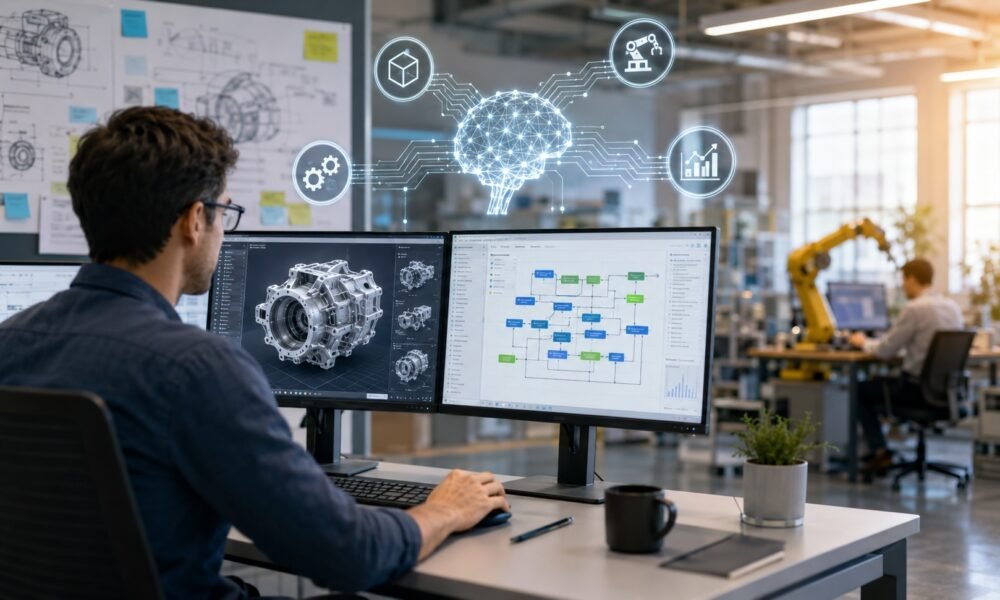
Artificial intelligence is gradually making its way into product development, as engineering software vendors include AI in the products designers use daily. The new generation of AI capabilities is designed to be part of the mainstay computer-aided design (CAD) and product lifecycle management (PLM) tools, which essentially helps with mundane engineering work and drive product development.
In keeping with this evolution, PTC has announced the launch of Onshape Labs, a program for innovations in its cloud-native Onshape CAD and product data management (PDM) platform that will be available on an early access basis. It provides customers with the chance to experience AI’s capabilities in real engineering settings before they become generally available.
Key features among the first to be introduced are the AI-powered tools for rendering, intelligent drawing validation, and automation agents to minimize repetitive design tasks and enhance engineering productivity. PTC wants to integrate these features into current processes, enabling teams to reduce design cycles and simultaneously produce better documentation and collaboration during the engineering process.
Industry context
AI’s use in engineering is changing from generative design and design suggestions to a broader range of possibilities. As AI becomes more prevalent, software vendors are now prioritizing its application in routine engineering tasks, such as adding documentation, ensuring accuracy, creating visualizations, and optimizing design reviews all of which can be accomplished without disrupting the current workflow.
Cloud-native engineering platforms are helping to drive this shift, with applications that allow for the easier deployment of AI capabilities across world-wide distributed design teams. Cloud-based platforms offer real-time collaboration capabilities, and continuously integrate AI-driven enhancements into product development processes, rather than traditional engineering software, which is installed locally on a desk.
The trend is also sculpting competition throughout the engineering software market. As manufacturers face growing design complexity and want to take a faster path to product development, companies such as PTC, Siemens Digital Industries Software, Dassault Systèmes, Autodesk, and Hexagon are building AI functionality into their CAD, PLM, simulation and digital twin platforms.
With the trend to smarter, more connected engineering environments, AI is likely to become an integral part of the digital product development process rather than a productivity tool. AI-enabled platforms that can be easily integrated into the daily workflow of engineering will increasingly be a key enabler for manufacturers to enhance innovation, collaboration, and time to market.