






Automation in a Labour-Rich Economy: India’s Smart Manufacturing Paradox
For decades, labour has been one of the biggest competitive advantages of India. The “why waste millions on automation” scenario was easy to understand, because one of the world’s...

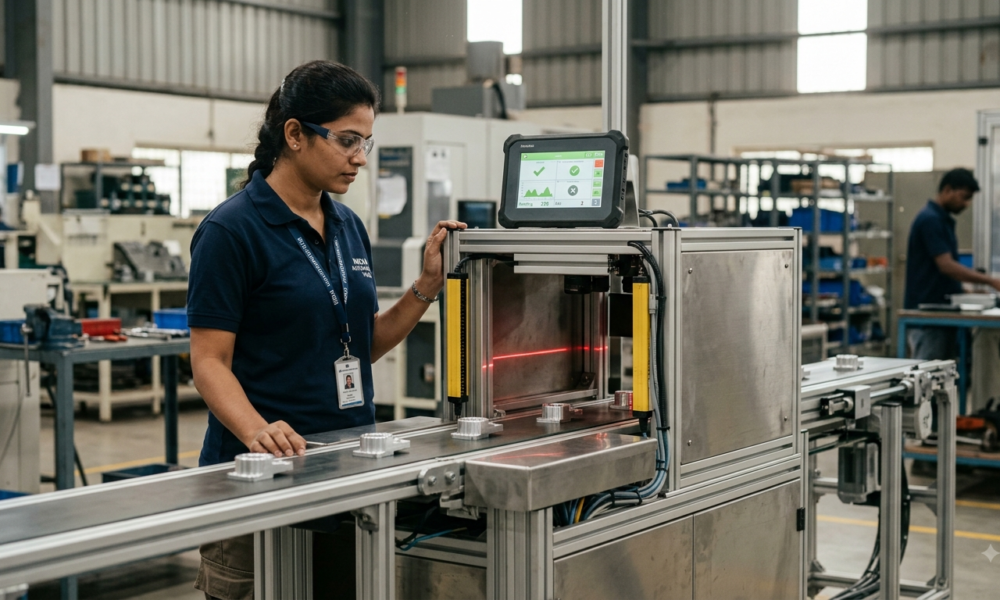
For decades, labour has been one of the biggest competitive advantages of India. The “why waste millions on automation” scenario was easy to understand, because one of the world’s largest labour forces, with manufacturing wages significantly lower than many developed economies, meant that everything could be done manually.
For years, it has been roaming around the boardroom, especially of SMEs in India, and it is a question that has decided the fate of numerous businesses. Automation was not a necessity in India like in countries like Japan, Germany or South Korea, where ageing populations and dwindling workforces made the adoption of automation a reality of the times. People were available. Labour costs were not high. Production lines always have the possibility of employing more people. But this is starting to fall apart.
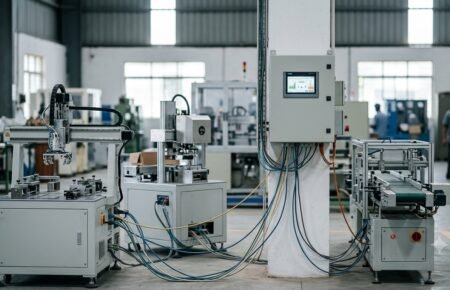
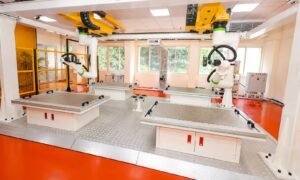
Even in factories where there is plenty of labor, automation is taking its place these days. Industrial robots are adding to the operators, artificial intelligence is supporting production planning, and digital process automation is becoming a part of daily routines. What makes this shift noteworthy is not that India has become a shortfall in labour but because of the shift itself. Because manufacturers are finding that there is a great difference between the availability of labour and manufacturing competitiveness.
This is the smart manufacturing paradox in India: Labour economy driven by automation, not to replace humans, but to compete with the rest of the world!
India’s Automation Numbers Tell Two Different Stories
India, on paper, seems to be a long way behind the industrial automation leaders of the world. The International Federation of Robotics (IFR) has estimated that India’s automotive industry robot density is at 148 robots per 10,000 workers. That’s compared to South Korea’s 2,867, China’s 772 or Germany’s 1,492 and the difference is massive. India’s robot density in manufacturing is estimated at 30 times lower than the world’s average, at 5-7 robots per 10,000 manufacturing workers.
These figures, on their own, indicate that the country has been slow to automate. However, there’s another figure which tells a different story. India recorded a record 9,100 industrial robot installations during 2024, 7% higher than in 2023 and ranked as the 6th largest market for industrial robot installations worldwide.
The automotive sector accounted for almost 45% of these installations, and electronics, metal fabrication, food processing and consumer goods are also gaining in uptake. The number of each of these is indicative of a fact. The question now being posed is not if automation should be used in manufacturing but how and when it should be deployed. The conversation now centers on the value automation delivers to businesses.
Cheap Labour Doesn’t Always Mean Reliable Labour
The main fallacy with Indian manufacturing is that labour is always available to enter factories whenever they want. In reality, it’s a lot more complicated. This was put into stark relief during COVID-19. When the migrant workers started to head back to their homes, factories in Maharashtra, Gujarat, Tamil Nadu, Karnataka, and NCR suddenly had to deal with the problem of acute shortages to keep the production lines going, even though they had orders from customers.
The manufacturers realised an unwelcome fact: there’s a lot of labour in the country, but not always on the shop floor. Labour shortages are not a rare occurrence, even if it’s not at the height of a crisis such as the pandemic. Reverse migration occurs across clusters of industries during festival seasons like Diwali & various other festivals both national and regional. Agricultural laborers are drawn to the rural regions during harvest times. The availability of the workforce is often affected by state and local elections and seasonal migration.
The shortages have been recurrent in several manufacturing hubs like Tamil Nadu, Gujarat and Maharashtra and many others , and this has led companies to either slow down their production or run at reduced capacities or often tap into higher cost temporary alternative sources. In businesses that provide service to global clients, uncertainty comes at a price which is a lot higher than the savings on labour.
The Real Driver Isn’t Labour Costs: It’s Global Competition
Wherever labour is not always available, automation provides stability. The actual driver is not labour costs, it’s global competition. There are several conversations which revolve around the idea of investing in technology to cut employment. This is seldom true in India’s manufacturing world. Quality is the more powerful of the two drivers.
With the factories going on the global supply chain, Indian manufacturers are expected to live up to Germany, Japan, China or Vietnam, and have the same level of precision, traceability and consistency. Export customers are not as interested in the number of workers on a production line as much as they are interested in the fact that every component is made to an exact specification.
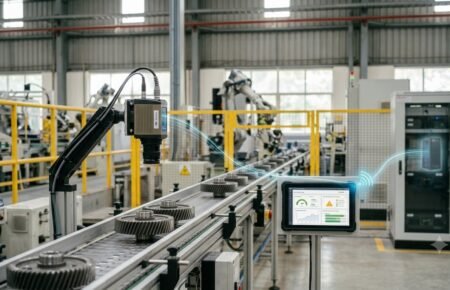
Of course, there are tasks for which human operators still play an irreplaceable role, but the processes of making things are repetitive, so there is time variation. Documentation errors, inconsistent manual measurements, shift changes and fatigue are also causes of quality deviations. These variables are reduced through automation. Each component is examined in exactly the same way by machine vision systems. Automated dispensing systems keep accurate amounts of materials. Every fastening operation is registered by digital torque tools.
Automated traceability systems capture all production activities, eliminating manual documentation. This does not always yield reduced work force. More predictable production than other beans. Consistency is the more important factor for the exporters than labour saving.
Economics of Automation Have Quietly Changed
The use of automation was a significant capital investment ten years ago and was reserved for the big manufacturer. Those equations have changed. Industrial sensors are now considerably cheaper. The collaborative robots, or cobots, are much less expensive than traditional robotic systems. Cloud-based manufacturing software has assisted in cutting down on infrastructure costs.
AI-powered industrial PCs now take the place of specialized hardware for vision systems. For the most part, automation has gone modular. With the ability to implement a single-automation system, manufacturers no longer have to go the whole nine yards. Rather, they can deal with specific blocks. A packaging line. A welding station. A quality inspection process. A palletizing operation. Digital maintenance process.
A number of solution providers now say the ROI on a focused automation project is 18–24 months, especially when manual bottlenecks for production throughput or quality are involved. This is a game-changer for India’s MSMEs. Automation is seen not as a big capital expenditure but rather a series of productivity gains.
MSMEs Face a Different Automation Challenge
While it’s easy to focus on the news surrounding the big manufacturers, India’s manufacturing economy is driven by micro, small, and medium enterprises (MSMEs) in the majority. These businesses are subject to vastly different conditions. Capital is limited. There is little engineering expertise available. Installation downtime can have a direct impact on cash flow. It’s not really feasible to bring in automation experts.
The main challenge before MSMEs is not setting their intentions, but their skills. Many owners of factories are aware that digital technologies can help them become more efficient, but they do not know where automation is making an impact. To digitise your inefficient process is to automate it. The first challenge is thus the standardization of the process. The point at which workflows start repeating is the beginning of sustainable value creation from automation.
It is this that makes low-code automation platforms, digital work instructions, workflow automation, predictive maintenance software, and IoT-based monitoring so popular, as well as robotics. Digital process automation is the first step for many MSMEs on their path to smart manufacturing.
India’s Workforce Doesn’t Need Less Work: It Needs Different Work
The issue of jobs always arises when automation becomes a topic for public discussion. Are robots going to take the place of workers? The answer in the context of India, is more complex. Rather than simply cutting employees wholesale, most manufacturers are streamlining their workforce. Instead, they are changing the nature of work.
Precision work, hazardous or hard repetitive work is increasingly automated. The movement of workers towards machine supervision, programming, maintenance, quality assurance, troubleshooting and production optimisation. This change opens up another challenge. Skills.
Technologists who are familiar with sensors, PLCs, industrial networking, machine vision, robotics, cybersecurity and data analytics are in demand as a result of automation. The manufacturing workforce thus needs to be reskilled, not replaced. This will possibly be the most crucial automation challenge in India. The adoption of technology can be fairly rapid.
Creating a digitally literate industrial workforce is far more time consuming. Sufficient efforts are being done by the government through Skill India and other industry-driven training programs. Scaling up, however, to millions of manufacturing employees still remains one of the nation’s industry’s biggest priorities.
Smart Manufacturing Is About Much More Than Robots
India has always been a country that has depended on the availability of labour to corner the market in manufacturing. That was the reasoning that was used for many years. However, the challenges of the modern manufacturing world, from global quality standards and volatile supply chains to changes in labour availability during festivals, seasonal migration and COVID-19, have put the importance of having a workforce in place to the test.
The irony is that India’s automation journey is being powered by forces different from what is powering the manufacturing automation in older economies. It is not mainly a substitute for labour in the strict sense of the word, in that there is not so much a shortage of labour. It’s about increasing the productivity, consistency and resilience of all workers, all machines and all production lines.
For Indian manufacturing companies, particularly MSMEs, the best investments will not necessarily be in fully automatic factories. They’ll be aimed at modular technologies that address actual business issues: from quality improvements to minimizing downtime, from traceability to sustainable production in the face of workforce fluctuations. If these solutions can effectively “pay for themselves” in a few years, automation becomes a business decision, not just a vanity goal.
The true irony of a labour intensive economy automating, however, is the question of why. That’s part of why automation and employment are still being viewed as opposing things. The future of manufacturing in India is not about “human or technology”, but about “human and technology”.
At least, automation isn’t taking over India’s “labour advantage” in that respect. It’s changing the nature of that advantage in a world where competitiveness is not solely based on labour costs, but on the consistency, quality, agility and intelligence of production. The key to India’s most powerful manufacturing is not necessarily low wages or sophisticated machinery, but the capacity to use the two more effectively than others