






How Indian Manufacturers Are Leveraging Software-Defined PLCs for Industry 4.0 Transformation
Indian manufacturing is going through a major shift. Factories that once depended mainly on fixed, hardware-heavy systems are now moving towards more flexible, software-led automation. At the centre...

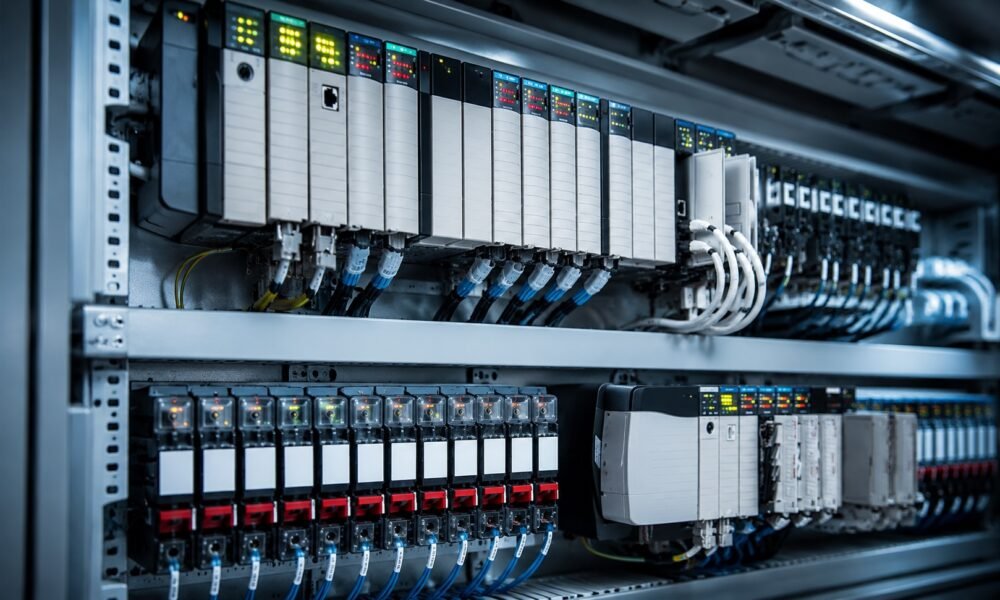
Table Of Content
Indian manufacturing is going through a major shift. Factories that once depended mainly on fixed, hardware-heavy systems are now moving towards more flexible, software-led automation.
At the centre of this change is the programmable logic controller (PLC). A PLC is the control system that helps machines follow instructions on a factory floor. For years, these systems were tied closely to specific hardware. Today, software-defined PLCs are giving manufacturers more flexibility, better data use and easier ways to upgrade production.
This shift is being driven by initiatives such as Make in India and the growth of high-tech sectors, including electric vehicle battery manufacturing. As factories become more connected and data-driven, Indian manufacturers are moving away from older systems and adopting automation that can work faster, adapt more easily and support artificial intelligence-led operations.
From fixed hardware to flexible software
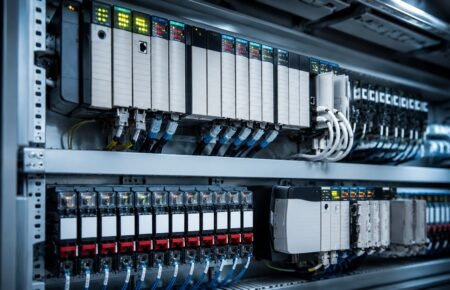
In India, modular PLCs still play a major role, especially in automotive and textile manufacturing clusters. These systems are useful for factories that want to upgrade in phases rather than rebuild everything from scratch. They are also built to handle the demanding conditions of Indian factory floors, where temperature, dust and power quality can vary.
According to the India Industrial Automation Market Report 2026, many manufacturers prefer such brownfield upgrades because they are easier to scale and can deliver faster returns on investment.
But the bigger change is coming from software-defined PLCs, also called soft PLCs.
A traditional PLC depends heavily on dedicated hardware. A soft PLC, by contrast, allows manufacturers to run machine-control instructions on standard industrial computers. In simple terms, it separates the “brain” of the machine from a fixed piece of hardware. This gives factories more flexibility and reduces their dependence on proprietary systems.
This matters especially in electric vehicle battery manufacturing, where chemical processing and cell assembly require fast, reliable data flow. Software-led controllers can support these high-speed operations better than older hardware-bound systems.
According to “Future Market Insights 2026”, soft PLCs in India are projected to grow at a compound annual growth rate of 16.3 per cent, faster than the global average. While modular PLCs continue to dominate in Asia-Pacific, India is now expected to be the fastest-growing PLC market in Asia, with a projected compound annual growth rate of 7.18 per cent through 2031, according to Mordor Intelligence.
This growth is being driven by electronics and semiconductor clusters in Karnataka and Tamil Nadu, where companies are looking for automation systems that can match global production standards.
Making the connected factory safer
As PLCs become more connected, cybersecurity becomes more important.
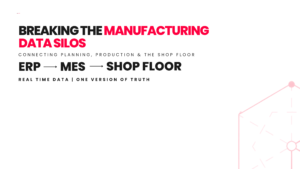
Earlier, many factory machines worked in isolation. Today, PLCs are increasingly connected to manufacturing execution systems and supervisory control and data acquisition systems. These systems help factories monitor production, track performance and control processes in real time.
But once machines are connected to a network, they also become vulnerable to cyber risks.
Indian manufacturers are, therefore, moving beyond basic firewalls. The focus is shifting to stronger identity checks for each machine. According to security frameworks discussed by Matrix Comsec, each software-defined PLC needs a unique, encrypted identity. This helps prevent unauthorised code from being added to a machine-control system.
For factories, the message is simple: Becoming more digital should not mean becoming more exposed.
Can AI make factory programming easier?
One of the biggest barriers to automation in India has been the shortage of skilled PLC programmers.
Programming a factory machine usually requires specialised knowledge. This can slow down automation, especially for smaller manufacturers that do not have large technical teams.
Artificial intelligence is beginning to change this.
In November 2025, Siemens introduced its AI-powered Industrial Copilot, developed with Microsoft. The tool can help generate, improve and debug PLC code. Importantly, it allows a technician to describe a machine sequence in plain English. The system then helps convert that instruction into machine-control code.
According to Microsoft, early pilot data shows that engineers using this tool can generate logic that needs only 20 per cent manual adaptation.
For Indian manufacturers, this could be a significant shift. Factory staff with general information technology skills may be able to move into industrial automation more easily. This can reduce the skills gap that industry bodies such as the Confederation of Indian Industry have often highlighted.
Making automation more affordable
Software-defined systems are also making automation more accessible for small and medium enterprises.
Automation no longer has to mean a full factory overhaul from day one. Smaller manufacturers can begin with one process, such as packaging, labelling or automated quality inspection, and then expand gradually.
According to Industrial Automation, basic automation investments for small factories in India can range from ₹5 lakh to ₹50 lakh. For medium-sized plants, advanced systems typically start at ₹50 lakh.
The ₹5 lakh to ₹10 lakh range is often the starting point for small manufacturers that want to automate a single process. This phased approach is important because many smaller firms cannot afford large upfront investments.
The government’s production-linked incentive schemes are also encouraging micro, small and medium enterprises to connect PLCs with systems that track production and supervise factory processes in real time.
Why global companies are investing
Global automation companies are also expanding in India to meet rising demand.
In March 2026, ABB announced a $75 million investment in India to expand its manufacturing and research & development activities. The investment is aimed at sectors such as sustainable mobility and data centres.
A key area of focus is edge-enabled PLCs. These systems process data close to the machine instead of sending everything to a distant cloud server. This allows factories to respond almost instantly to sensor feedback.
For example, if a machine begins producing defective parts, the system can help correct the process quickly. This can reduce wastage, improve safety and lower downtime.
Festo has also been expanding its India presence. In June 2025, the Germany-headquartered company opened a ₹500 crore manufacturing plant in Hosur, Tamil Nadu, according to The Hindu. In February 2026, it launched a 71,000-square-foot global capability centre in Bengaluru, Karnataka, according to the Deccan Herald. The centre is focused on digital solutions and AI-led software development.
These investments show how India’s manufacturing clusters are becoming more important in the global automation map.
Why real-time monitoring matters
In high-precision sectors such as semiconductors and electronics, even a short production stoppage can be costly.
In Karnataka and Tamil Nadu, where such manufacturing clusters are growing, predictive maintenance is becoming a basic requirement. This means using machine data to identify problems before a breakdown happens.
In a cleanroom environment, even a three-minute stoppage can affect an entire batch of semiconductor wafers. Edge-enabled PLCs help factories detect such risks early and respond quickly.
This is also changing the economics of automation. Earlier, a full-scale factory upgrade could require ₹50 lakh or more. Now, small manufacturers can begin with single-cell digitalisation projects. By focusing on one high-impact process, such as automated quality inspection, they can start with ₹5 lakh to ₹10 lakh and build from there.
This makes the move towards Industry 4.0 more financially manageable for the wider supply chain.
The cybersecurity challenge
As PLCs become part of the Industrial Internet of Things, factories will also need to change how they think about machines.
A connected PLC is not just a piece of equipment. It is a networked asset. It needs regular software updates, secure access controls and basic cyber hygiene.
This requires a cultural shift on the Indian shop floor. Manufacturers will have to treat software maintenance with the same seriousness as mechanical maintenance.
A new phase for Indian productivity
Software-defined PLCs are becoming an important part of India’s Industry 4.0 journey. They can lower entry barriers, make programming easier, support AI-led automation and help factories scale in phases.
Traditional modular hardware will continue to matter because Indian factories still need rugged and reliable systems. But the future is clearly moving towards flexible, software-led and edge-enabled controllers.
For Indian manufacturers, the big shift is this: The most powerful part of the modern factory is no longer only the machine. Increasingly, it is the software that controls it.