







Industrial Robotics Adoption Gains Momentum as Manufacturers Seek Greater Flexibility
Industrial robots are becoming increasingly in demand as manufacturers seek to boost productivity, increase precision and create more flexible production environments. The labour shortage, product...

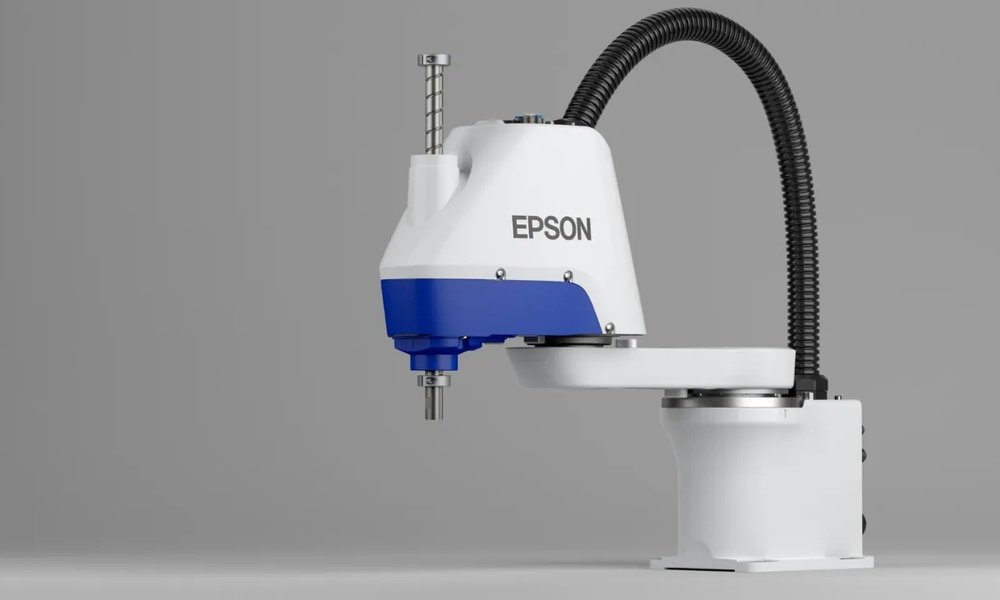
Industrial robots are becoming increasingly in demand as manufacturers seek to boost productivity, increase precision and create more flexible production environments. The labour shortage, product complexity and the drive towards smart manufacturing are driving companies to invest in robotics automation that can be used to support more production processes and be more effortless to program and deploy.
In line with the trend, Epson has now added new robots with 6-axis capabilities, new SCARA robots and an updated robot programming platform to its portfolio of solutions for industrial automation in India. Additions cater to a multitude of manufacturing needs, from high-speed assembly and material handling to precision applications in electronics, cleanrooms and other specialised manufacturing environments.
Designed for applications demanding more flexibility and complex multi-axis movement are the new CX-A Series 6-axis robots, while the LS-C Series SCARA robots are targeted at high-speed applications like assembly, pick-and-place and component handling. RC+ 8.0, Epson’s new robot programming software, complements the hardware by providing a single environment for programming, simulation, diagnostics and system management to make robot deployment and maintenance easier.
Industry context
Previous industrial robots were used mostly for high volume manufacturing, but today they are moving beyond and becoming more adaptable to a broader spectrum of manufacturing settings where flexibility, ease of integration and quick changeover are emerging as critical criteria. Manufacturers are increasingly looking for automation solutions which are easy to install, easy to program and flexible enough to adapt to changing production requirements, with a minimum of downtime.
Meanwhile, software is as crucial as Robot hardware. Today’s robotics platforms are becoming more and more integrated to include simulation, offline programming, diagnostics, connectivity, and predictive maintenance features, helping manufacturers to optimize operations prior to robot deployment on the factory floor. This software-performed method enables the reduction of implementation period and enhancement of the overall performance of the equipment.
Another important area of innovation is safety. New sensing capabilities and functional safety are enabling industrial robots to work side by side with operators in certain applications, thereby enabling more efficient production layouts and at the same time maintaining workplace safety. Overall, the volume of Epson’s recent product expansion highlights some of the trends driving industrial automation.
The demand for robotics solutions is anticipated to rise as Indian manufacturers keep investing in smart factories and digital production systems, where the solutions must be faster, more accurate, intelligent and equipped with state-of-the-art safety features to cater to the next generation of manufacturing.