







Digital Twins Are Transforming How Automakers Launch New Vehicles
In the past, automotive companies used to take the time required to produce physical prototypes and small production runs to get ready for new car releases. Now, that process is […]

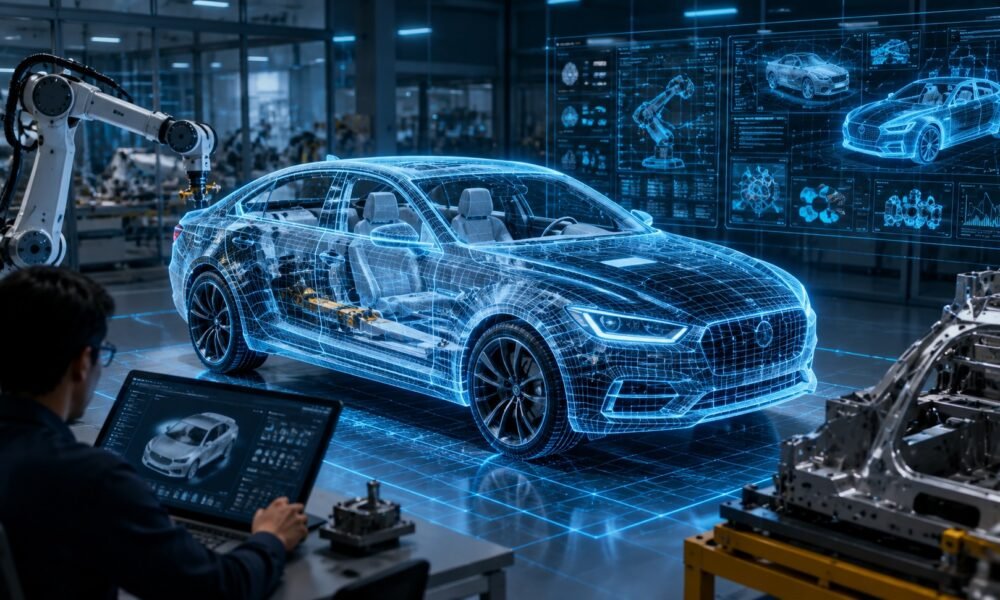
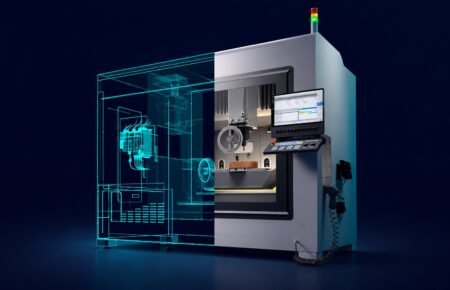
In the past, automotive companies used to take the time required to produce physical prototypes and small production runs to get ready for new car releases. Now, that process is moving more and more towards the virtual world, with digital twins assisting manufacturers in figuring out production problems early in the development process before the first car comes off the production line.
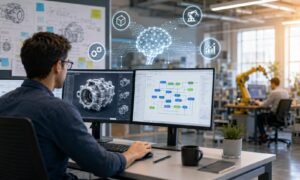
Ford is one of the newest automakers investing in digital twin technology to increase manufacturing readiness and enhance the process of launching new vehicles. The company’s virtual factory, production line and workflow helps engineering and manufacturing staff test the plant layout, validate production processes and optimize material flow before the plant starts.
The approach enables the identification of possible bottlenecks in the early stages, thus minimizing the expenses of modifications at the start of production. Digital twins also enable better collaboration by enabling various teams such as engineers, plant managers and suppliers operate within the same virtual environment and more easily coordinate complex manufacturing programmes, across multiple locations.
Industry context
Digital twins have come a long way from their engineering simulation days. They are increasingly becoming an integral component of today’s manufacturing approach, especially for product launches that span thousands of linked processes and supply-chain partners. The automotive industry has been leading the charge in this change. The increasing reliance on software for vehicle architecture and automation in production systems is driving manufacturers to deliver high-quality products with reduced development and manufacturing cycles, at lower costs.
Digital twins enable businesses to test various production scenarios, optimize factory processes and solve problems virtually before they impact real production processes. Virtual factory technologies are a key part of the smart manufacturing push of leading car makers such as BMW, Mercedes-Benz, Renault Group, Stellantis, and Ford. In conjunction with artificial intelligence, the industrial internet of things, robotics and advanced analytics, digital twins are contributing to the shift towards a more connected and data-driven manufacturing process.
Digital twins will no longer be considered a luxury, but an essential innovation, as competition grows and manufacturing becomes more complex. They are increasingly a key tool in the automotive production process, aiding companies to launch vehicles faster, to increase factory productivity and to make factory production more resilient.