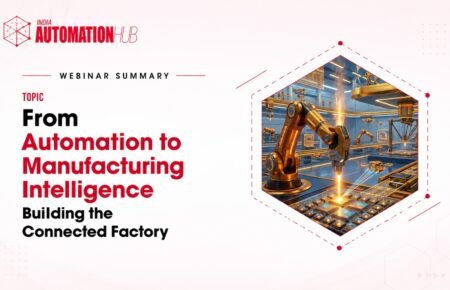








From Automation to Manufacturing Intelligence: Building the Connected Factory
A recap of our recent webinar — the argument, the evidence, and the takeaways that matter most for anyone building a connected factory. The premise was deceptively simple: most factories […]

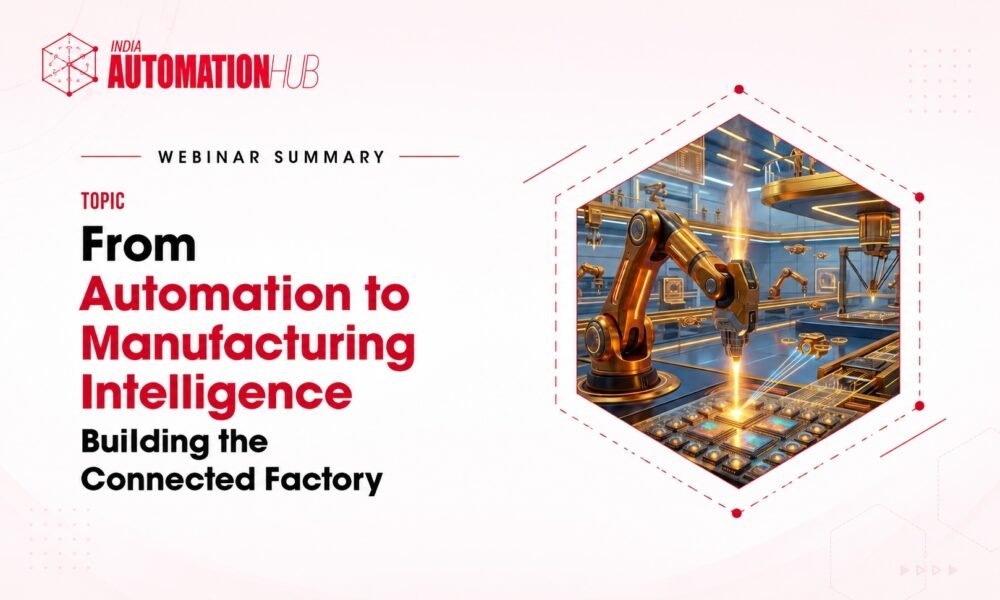
Table Of Content
A recap of our recent webinar — the argument, the evidence, and the takeaways that matter most for anyone building a connected factory.
The premise was deceptively simple: most factories don’t have an AI problem — they have a data problem. The session made the case that connectivity must come before intelligence, and that the industry’s rush toward AI is too often built on foundations that cannot hold the weight.
The through-line: connectivity is the nervous system, intelligence is the brain
A connected factory is one where every critical element — machines, materials, processes, orders — communicates in real time through a unified namespace. That real-time nervous system is what feeds the “brain” of analytics and AI. Skip it, and intelligence runs on stale, siloed, hand-typed data. The blunt framing from the session: AI on bad data produces confident, wrong answers. Clean, accurate, contextual, timestamped, owner-verified data is non-negotiable groundwork.
The contrast is stark. In a disconnected plant, downtime, rejections, and maintenance still live in spreadsheets and human memory — captured too late to act on, useful only for post-mortems. In a connected plant, changeovers, first-part counts, quality approvals, and maintenance windows log themselves, turning traceability from an aspiration into a byproduct.
Key discussion points
India’s uneven starting line. Pharma and automotive lead on automation, pushed by compliance and global standards, while much of the MSME and mid-tier base still runs on logbooks. The path forward isn’t a copy-paste of subsidy-driven models seen elsewhere, but a distinctly Indian, ROI-first version of Industry 4.0: practical, phased, and outcome-led.
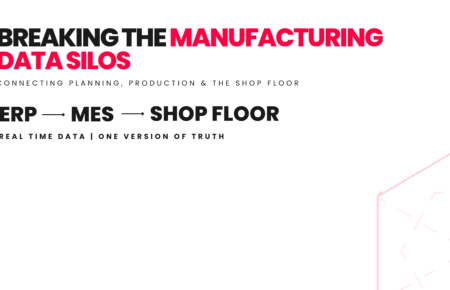
IT–OT convergence is now a production issue. IT can tolerate an outage; OT cannot — a shop-floor network drop halts production and raises safety risk. The right architecture keeps millisecond-critical data (recipes, safety, quality checklists) at the edge and pushes dashboards, analytics, and planning to the cloud. The goal is one view spanning ERP to the machine — “truck to truck.”
MES, digital logbooks, and traceability. Begin MES with a specific use case, not a big-bang rollout, anchored to the four pillars: production, quality, maintenance, and inventory. Digital logbooks cut operator burden while feeding analytics; in regulated sectors, data integrity (21 CFR Part 11) is table stakes. A vivid illustration: a “tire birth certificate” carrying full process history for recall readiness.
Connectivity evolved. OPC-UA remains widely deployed, but MQTT is emerging fast — lightweight, store-and-forward, and wireless-friendly. One pilot connected roughly 900 machines and HMIs over Wi-Fi with no cabling on the floor.
AI as co-pilot, not replacement. The strongest use cases are predictive maintenance and predictive quality. In root-cause analysis, AI weighs 200-plus variables where a human juggles four or five — but operators and supervisors stay in the loop, and closed-loop, self-healing systems remain rare.
Cybersecurity is now production-critical. With AI lowering the barrier to attacks, OT security can no longer be an IT afterthought. Asset inventory, network segmentation, multi-factor access control, patching, and data diodes are baseline. Connectivity without security is a smart city with no traffic rules — and attackers target weak systems, not big names.
The takeaways
- Sequence matters: digitize → visualize → analyze → measure → improve. Connectivity first, intelligence second.
- Start small, prove ROI. Targeted use cases — downtime, scrap, energy — can show value in 6–8 months; a full digital backbone is a 12-month-plus effort, phased over 3–4 years.
- Count the real cost. Comparing headcount salaries to technology spend misses the hidden cost of errors, inconsistency, and zero traceability.
- The biggest barrier isn’t technology — it’s culture. The department that prints and signs while the next one goes digital is the real bottleneck.
- Avoid the classic mistake: closed, rigid, poorly integrated systems. Build an open, flexible, data-first foundation instead.