





Datasensing Launches SLS10 Safety Laser Scanner for Industrial Applications
Datasensing has added a new industrial safety solution to its product lineup, namely the SLS10 Safety Laser Scanner to provide manufacturers with increased protection for a larger work space and...
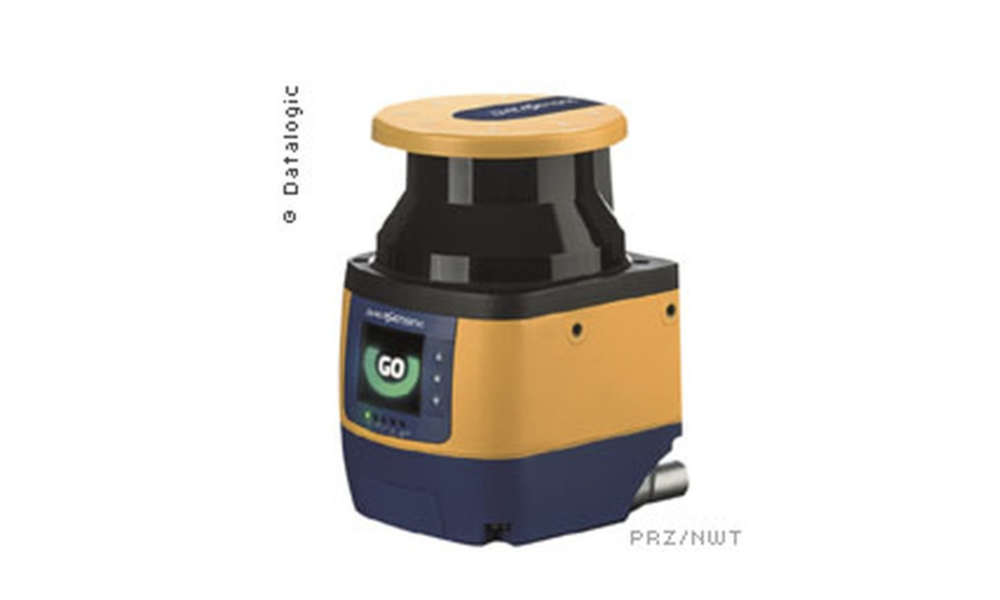
Datasensing has added a new industrial safety solution to its product lineup, namely the SLS10 Safety Laser Scanner to provide manufacturers with increased protection for a larger work space and to accommodate applications like robotic cells, automated guided vehicles (AGVs), autonomous mobile robots (AMRs), and automated machinery.
The scanner is designed to do both machine protection and navigation, which provides greater flexibility in applications where a machine must know if people are present, the presence of objects or changes in the environment around the machine.
One of the SLS10’s main advantages is its coverage. It can provide a safety range of up to 10 metres with a 275° scanning angle for 70 mm detection, covering an area of up to 240 square metres from a single scanner. In some installations this may decrease the number of scanners needed in production areas and long automation lines, simplifying the commissioning, wiring and maintenance.
There are also different detection ranges according to the application of the scanner. It supports 30 mm detection at up to 5 metres, 40 mm at 5.5 metres, 50 mm at 7.5 metres and 60 mm at 8.75 metres. It can be used in palletizing, robotic work cells and in various other woodworking, wood automating, laser cutting, warehouse automation and other application areas.
The SLS10 is not only suitable for safety use but also for any other applications. It can also be used for navigation for high payload AGVs, AMRs and automated forklifts, which requires accurate environmental detection for safe movement, with an angular resolution of up to 0.059°. Machine builders will also want to consider response time. For safety distances higher than 9 metres the SLS10 has a response time of 84 milliseconds.
This may offer more flexibility in the placement of the scanner in dangerous areas, depending on the machine design and safety criteria that are applicable. Datasensing has also been working on improving the ease of configuration. The redesigned DL Sentinel interface, which is part of the ONEGUI platform, enables the user to set up safety zones and to monitor Master and Remote devices. OptimaTune aids the user to consider detection range, response time and environmental factors when setting.
SLS10 is built for industrial applications and meets safety classification SIL-2 and PLd requirements. Dust-immunity functions also are designed to minimize false detections and unwanted machine stops. With increasing automation of factories, safety systems are called on to do more than just provide a protective perimeter. These devices such as the SLS10 make use of this change by merging machine safety with environmental sensing and navigation within a single platform to make more flexible, manageable automation systems for the manufacturer.