




Rockwell Connects AI Vision With Quality Management to Build a Closed-Loop Inspection System
The next level of AI in manufacturing isn’t just about catching defects more quickly, it’s about ensuring that the information that is discovered is used in the quality process. The...

The next level of AI in manufacturing isn’t just about catching defects more quickly, it’s about ensuring that the information that is discovered is used in the quality process. The concept behind Rockwell Automation‘s integration of its Plex Quality Management System (QMS) with FactoryTalk Analytics VisionAI is to enable machine-vision inspection within the same workflow as digital quality management.
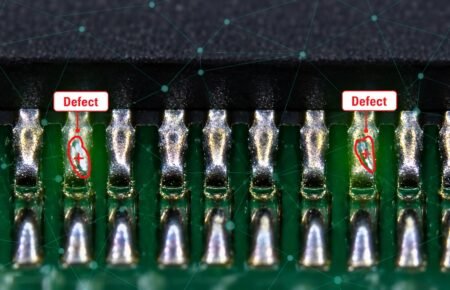
The concept is a common manufacturing challenge. Although camera-based inspection can detect components with defects on a production line, if the inspection result is still not linked to the quality record, it will still take the effort of the operators and engineers to draw conclusions. Rockwell’s way of doing that is to automate it. Production images can be captured and analysed by VisionAI and the images inspection results can be sent to Plex QMS via APIs and this also enables the identification of anomalies. The QMS then documents the items inspected, what was found and what was done and how.
It’s important because modern quality management is changing from pass or fail decision. Traceability, product history and data are getting more and more important for manufacturers to have, as they can help clarify why a defect has occurred. Plex QMS is built on real-time quality data, digital inspections and closed-loop workflows, while VisionAI’s AI-based image analysis enables the detection and classification of production anomalies.
The transition is thus not from ‘automated inspection’ to ‘connected quality intelligence’. Manufacturers can link visual evidence to production and quality data instead of viewing machine vision as an isolated check-point, developing a stronger visual evidence to corrective action link.
In industries like the automotive, electronics, food and beverage and medical manufacturing sectors, where consistency and traceability can have a direct impact on cost and compliance, this kind of integration can become even more significant. Perhaps the true power of industrial AI will come down to how many intelligent machines will be added to the mix, as well as how they are linked to the systems and humans that make decisions and take actions.