







AI Will Decide the Future of Indian Manufacturing, But Only If We Move Beyond Automation
The Indian manufacturing industry has been investing in automation for almost 30 years with an aim to increase efficiency. To cut down downtime, enhance quality and boost output, factories invested...

Table Of Content
- Automation Is No Longer the Competitive Advantage
- India Is Better Positioned Than Many Realize
- The Next Industrial Battle Will Be Fought Over Data
- India’s Manufacturing Growth Depends on Intelligence, Not Just Capacity
- Small Manufacturers Cannot Be Left Behind
- Skills May Become a Bigger Challenge Than Technology
- Cybersecurity Can No Longer Be an Afterthought
- The Vendor Ecosystem Must Also Reinvent Itself
- India Has an Opportunity to Build, Not Just Buy
The Indian manufacturing industry has been investing in automation for almost 30 years with an aim to increase efficiency. To cut down downtime, enhance quality and boost output, factories invested in PLCs, SCADA, industrial robots, drives, sensors and distributed control systems. Much of automation involves control – that is, getting machines to do the same thing again and again with accuracy. That model is now going down the path of complete revolution.
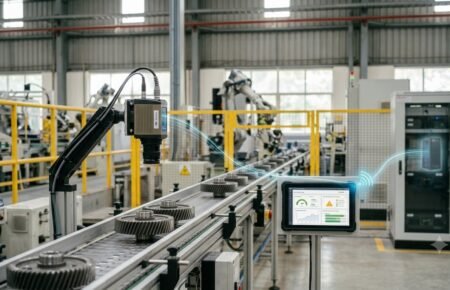
Industrial automation is now taking a step towards thinking machines, learning machines, predicting machines, optimizing machines. From what was once an experimental technology, Artificial Intelligence (AI) is becoming the interface between equipment, data, and human expertise to build intelligent manufacturing systems.
According to a recent report from Bain & Company, AI-powered offerings are expected to account for almost half of the total global industrial automation industry’s revenues by 2030. Further, the report says, the industry’s value is shifting from the old days of control systems to software, industrial data, intelligent devices and intelligent decision making with AI.
This is no ordinary technology trend for India. It raises an important question, but can India move toward being a leader in AI-powered manufacturing, or will it be a user of technologies created elsewhere? The response will shape the nation’s industrial competitiveness in the coming 10 years.
Automation Is No Longer the Competitive Advantage
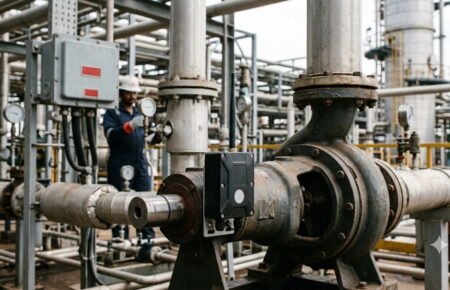
Traditionally, industrial automation has been hardware based. The companies that stood out sold improved PLCs, quicker controllers, more dependable motors, more precise sensors or better drives. After installation, these systems were seldom changed for years. The model is becoming outdated. Modern makers are looking for machines that can anticipate failures before they happen, optimize energy usage in real time, automatically detect quality problems, and constantly self-learn and enhance production performance based on what they have learned during operations.
The controller is still important. However, it is becoming more of a base than a differentiator more and more. What really got competitive is the intelligence that’s been layered on top of automation. That’s why software platforms, cloud connectivity, AI models, digital twins, industrial IoT, and advanced analytics are seeing much more investment than traditional control technologies.
Today, when it comes to manufacturing, the question is no longer “Can this machine run?” because most machines are now capable of doing so. It asks, “Can this machine continually get better? That change is everything.
India Is Better Positioned Than Many Realize
When it comes to talking about industrial AI, it is typically about Germany, Japan, the United States or South Korea. India is seldom a part of the discussion. But the country could have a special asset. India has already one of the world’s best software engineering ecosystems. It boasts of a growing cloud infrastructure, a large talent pool of AI developers, a maturing startup ecosystem, and a government that is actively fostering digital manufacturing through various initiatives such as Make in India, Digital India, and Smart Manufacturing programs.
Meanwhile, global manufacturers are looking to diversify away from China. This opens up an opportunity with much greater scope than just the expansion of the factory. India can be the place where the software of industrial automation is developed. That would be a much bigger opportunity than just putting together an automation hardware box.
The Next Industrial Battle Will Be Fought Over Data
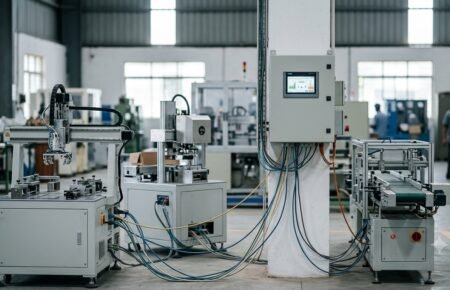
Nowadays, factories produce tremendous amounts of operational data. All of the PLCs, servo drives, motors, vision systems, vibration sensors, temperature transmitters, MES platforms and SCADA screens generate data continuously. Surprisingly, many manufacturers continue to have trouble making this information meaningful to their business.
Much of the data produced by the factory is still siloed within single machines or production lines.Much of the factory data is still contained within individual machines or production lines. Communication between different systems is often not successful.
The quality of data is still inconsistent. Many operators are still using manual observations in many situations after spending a great deal of money on digital equipment. Artificial Intelligence changes this equation. AI is not just about data collection, it’s also about data interpretation.
It detects production bottlenecks, foresees maintenance needs, suggests process optimizations and assists in scheduling optimizations before issues arise. This is one of the largest productivity opportunities that Indian manufacturers have today. Data is available at the factories. The difficulty is in how to use it.
India’s Manufacturing Growth Depends on Intelligence, Not Just Capacity
From electronics to semiconductors, automotive industry, pharmaceuticals, textiles, defence, chemicals, food processing, and renewable energy equipment, production capacity is growing exponentially. However, mere capacity is not enough to make India globally competitive.The mainstream factories in the world are increasingly self-sufficient.
They need less human intervention; make quicker decisions; consume less energy; reduce waste; enhance quality; optimize production in real time.
If AI is not used, many Indian factories may end up being efficient, but not intelligent. That distinction matters. Two factories can make the same product.
There is always a person that is learning and improving. The latter relies solely on engineers’ identification of improvement. The intelligent factory will inevitably prevail in the long run.
Small Manufacturers Cannot Be Left Behind
When talking about industrial AI, the discussion is likely to be dominated by multinational companies.
In India it is a different story. The manufacturing sector is dominated by MSMEs with over 90% of the units. They are the heart of the automotive component industry, machine tools, pharmaceuticals, food processing, electrical equipment, textiles, plastics, and precision engineering.
They are also the ones who have the most obstacles. Limited investment budgets. Poor business acumen with respect to AI. Lack of qualified engineers. Trouble with integration of legacy equipment. Not like big manufacturers, they can’t afford multi-million dollar digital transformation projects.
Skills May Become a Bigger Challenge Than Technology
Cloud based analytics, subscription software, AI-powered machine retrofits, edge computing and plug-and-play industrial applications may make intelligent manufacturing more accessible to small-scale factories. But MSMEs should not be left out of the AI message, if India is to reap benefits from AI-driven manufacturing growth. Adopting technology is not usually the primary challenge.
People are. There are still many factories where recruiting automation engineers is difficult.
Now they need to also identify professionals who can operate in AI, Industrial Data, Cyber Security, Cloud Platform, Machine Learning and Operational Technology.
This will call for a whole new group of people.
Maintenance teams will be increasingly tasked with understanding and interpreting AI suggestions and not just with fixing machines. Production managers will use predictive dashboards rather than past reports. Electrical/instrumentation knowledge will be necessary, as will be software skills, for automation engineers. It is essential that engineering education adapt to those changes.
Cybersecurity Can No Longer Be an Afterthought
The greater their connectedness, the more vulnerable their factories will be. Industrial AI is based on data. Connectivity is the key to data. The more connected something is, the higher the cyber risk is. Indian manufacturers have always been more focused on continuity of operations than on cybersecurity. This attitude is rapidly shifting.
Worldwide ransomware attacks are on the rise in manufacturing plants. Whilst new automation technologies are being adopted, securing industrial networks, protecting operating data and ensuring infrastructure resilience will be just as critical as deploying new technologies. Secure factories are essential to smart factories. However, the Vendor Ecosystem also needs a re-invention.
The Vendor Ecosystem Must Also Reinvent Itself
In the past, companies in the automation sector fought each other based on hardware performance. In the next 10 years, companies that offer integrated digital ecosystems will be rewarded. Customers increasingly expect:
- AI-powered maintenance recommendations
- Digital twins
- Cloud-based monitoring
- Industrial data platforms
- Energy optimization
- Predictive analytics
- Lifecycle software
- Subscription-based digital services
- Hardware will still be needed.
However, software and recurring digital services are now growing just as important revenue streams. Auto vendors in India must develop more sophisticated software capabilities, while assisting customers in tackling increasingly complex digital transformation journeys.
India Has an Opportunity to Build, Not Just Buy
What makes the opportunity the greatest isn’t factory adoption, however. India has the potential to be an industrial AI creator instead of an importer. The country already has software developed for international companies. The natural progression is to create AI applications geared toward manufacturing. Envision Indian startups creating platforms for predictive maintenance in cement manufacturing plants. Textile Vision AI.
Calculating and optimizing energy use in steel production. Pharmaceutical Digital Twins. Adaptive robotics in automotive production. Industrial co-pilots for maintenance engineers. These are not things that can only happen in a dream. There are several companies working in these fields in India already. The challenge is getting them to a global scale. India could export industrial intelligence in addition to its exports of manufactured goods if it succeeds.
The Future Belongs to Factories That Learn
The industrial automation industry is in for what is arguably its biggest period of change since the dawn of programmable controllers years ago. It’s no longer a matter of man versus machine. It’s about empowering people and machines to collaborate and make better decisions.
This change has come at a critical time for India. The nation is putting resources into manufacturing, attracting global supply chains, and creating a conducive environment for production. However, the next level of industrial competitiveness in India will not be decided by the number of factories that are constructed, but by how intelligent they are.
AI will not take the place of the basics of manufacturing. Precision engineering, quality equipment, operators and processes will remain essential. The role of AI will be to multiply their impact: to make factories more predictive, adaptive, efficient and resilient. This is where the next chapter in Indian manufacturing will be played.