








Beyond the hype: Building digital factories for the Indian manufacturing reality
Real success stories from India’s world-class factories If one looks past all the fancy marketing buzzwords surrounding Industry 4.0, a very practical revolution is happening on India’s factory...

Table Of Content
- Real success stories from India’s world-class factories
- A step-by-step practical roadmap for real financial return
- Affordable automation solutions for local small business owners
- Building a virtual twin to stop machine failures before they happen
- Using smart computer visions to guard product quality
- Riding the wave of government incentives to upgrade the floor
- Balancing new smart tech with our local workforce
- Driving real-world economic impact across regional hubs
Real success stories from India’s world-class factories
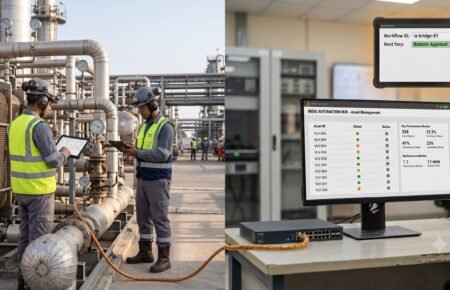
If one looks past all the fancy marketing buzzwords surrounding Industry 4.0, a very practical revolution is happening on India’s factory floors. The World Economic Forum has been inducting a growing number of Indian manufacturing plants into its prestigious Global Lighthouse Network—a group reserved for the smartest, most digitally advanced factories in the world. Leading names like Tata Steel in Kalinganagar and Dr. Reddy’s in Hyderabad that have entered the Global Lighthouse Network have not scaled such heights by summarily rejecting their old machines and going spending crores on robotics. Instead, they have been taking their brownfield infrastructure and wrapping it in a layer of smart, non-intrusive digital tools. Consequently, they are raising production capacities and cutting operational costs, leading to the global market noticing that Indian factories are competitive at the highest international levels.
A step-by-step practical roadmap for real financial return
The biggest mistake a company can make is trying to digitalise the entire assembly line in a short span, which usually creates a financial burden and promises zero immediate returns. The successful framework used by India’s Lighthouse factories is following a highly calculated, phased roadmap. They are not starting by buying expensive robotics; they are starting by putting low-cost IoT sensors on old critical machines to track things like temperature, vibration and power consumption. Once that live data starts flowing into a centralised dashboard, they start using basic analytics to spot hidden bottlenecks on the floor. Only after having fixed those initial gaps and seeing a clear financial payback are they scaling up to advanced automation, making sure every single rupee spent is translating into higher factory output.
Affordable automation solutions for local small business owners
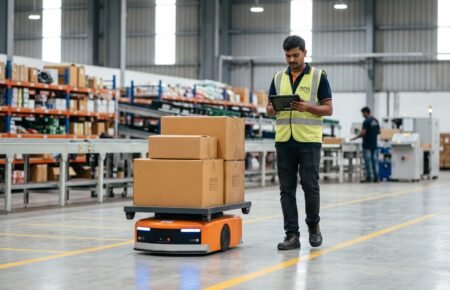
While massive corporate houses could be easily funding digital transformation, the reality for India’s crores of micro, small and medium enterprises (MSMEs) is completely different. For a small components manufacturer in hubs like Pune, Ludhiana or Coimbatore, high upfront technology costs and a lack of specialised in-house IT staff are making advanced robotics out of reach. To remedy this, this corporate segment is shifting toward ‘low-cost automation’ and flexible Software-as-a-Service models. Instead of buying complex enterprise systems, small business owners are installing modular plug-and-play tracking kits on their legacy machines for a fraction of the cost. This is allowing them to eliminate manual paperwork, track raw materials accurately and pass strict vendor audits from large buyers without draining their cash reserves.
Building a virtual twin to stop machine failures before they happen
One of the most fascinating technologies moving from the whiteboards to India’s shop floor is the ‘digital twin’. It is like building a live, 3D virtual clone of the physical factory floor inside a computer screen. By linking every conveyor belt, motor and heating chamber to this digital model using real-time sensors, supervisors are watching exactly how the plant is running without stepping into the heat and noise of the shop floor. If an internal component inside a heavy hydraulic press is beginning to wear out, the digital twin starts simulating the breakdown days before that could actually be happening. This is giving the maintenance crew plenty of time for scheduling a quick fix during a natural shift break, completely avoiding sudden line shutdowns ruining daily production targets.
Using smart computer visions to guard product quality
The traditional way of checking for product defects—a worker standing under a bright light for eight hours a day, staring at thousands of passing components—is not very reliable because human eyes can understandably be getting tired. In 2026 Indian manufacturing setups have started replacing such stressful processes with AI-powered computer vision systems. By placing high-speed industrial cameras directly above the assembly line, an AI model can be scanning every single piece passing by in a millisecond. Whether it is a hairline crack in an automotive engine part or a tiny seal defect in a medicine pack, the AI-augmented system is flagging and automatically ejecting the flawed item. This is ensuring a near-zero defect rate, helping a brand in protecting its reputation and eliminating expensive customer returns.
Riding the wave of government incentives to upgrade the floor
The massive push India is seeing toward factory digitalisation is being heavily fuelled by the Union government’s Production Linked Incentive (PLI) schemes. Across critical sectors like electronics, automobile components and advanced chemistry cell batteries, the government is linking financial rewards directly to domestic production targets. To be hitting these aggressive scale targets and maintaining international quality standards, companies have to be investing in smart factory infrastructure. This policy push is turning cybersecurity and advanced operational technology from optional boardroom discussions into strategic priorities, giving Indian manufacturers the financial cushion and motivation for upgrading their legacy systems and building resilient supply chains.
Balancing new smart tech with our local workforce
Building a successful digital factory in India isn’t about replacing the workforce with machines; it is about upskilling workers for handling the future. When factories are introducing smart dashboards and automated tools, the job of an ITI-trained technician begins shifting from manual, repetitive heavy lifting to managing digital systems. Forward-thinking companies are investing heavily in simple, vernacular-based user interfaces and interactive training modules on the shop floor. By teaching the experienced operators how to interpret data alerts and manage robotic assists, factories are achieving the ultimate operational sweet spot—combining deep human experience with the speed and precision of modern digital technology.
Driving real-world economic impact across regional hubs
If one looks at the broader macro numbers, this structural shift has been driving the Indian smart factory market toward its $17-billion valuation target by 2032. This is proving that digital manufacturing is no longer restricted to a few isolated pockets in premium economic zones.
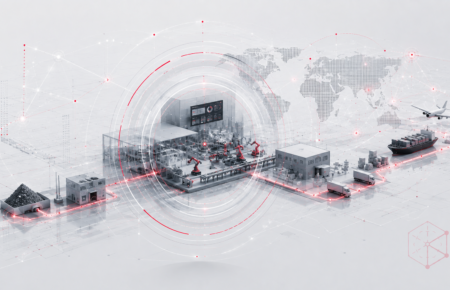
By applying these Lighthouse strategies to Tier-2 industrial corridors, regional business families are experiencing a major operational rebirth. Wrapping simple, cost-effective tech layers around old infrastructure is keeping local production costs incredibly low, supporting regional Indian factories in confidently defending their margins and securing a dominant position in the global supply chain.