








Delta Puts Embodied AI and Digital Twins at the Centre of Smart Manufacturing
Robots that understand tasks, test production lines virtually in advance of a real change, and AI that connects them, these are the elements Delta Electronics showed a glimpse of to […]
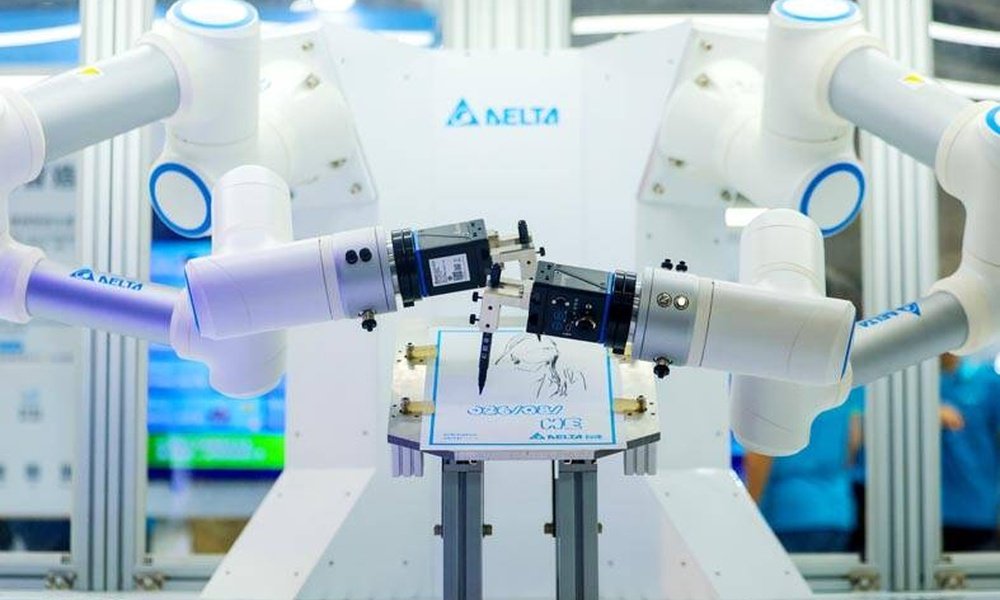
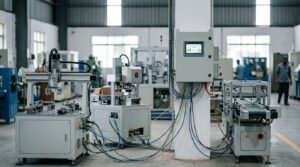
Robots that understand tasks, test production lines virtually in advance of a real change, and AI that connects them, these are the elements Delta Electronics showed a glimpse of to indicate where industrial automation is going next. The company announced its Embodied AI Dual-Arm Robot Platform, which integrates AI models and robot control into a single architecture. To shift from robots that will perform repetitive, preprogrammed actions to systems that will be able to recognize multimodal inputs and learn tasks and modify actions.
This may be especially pertinent to high-mix, low-volume manufacturing, where the number of changeovers makes traditional automation difficult to justify. The demonstration was simple to show it using voice commands to draw drawings, but the concept behind that is much more industrial. The platform will be developed for the applications like AI-server assembling, wherein the robotic system has to perform more diversified sequences instead of one fixed sequence in an infinite loop.
AI is also becoming a more dominant part of the digital twin aspect of manufacturing with the company. Developed in collaboration with NVIDIA Omniverse technologies, its DIATwin platform allows it to simulate equipment, robotics and production processes before changes are implemented on the factory floor. Delta has already done so on AI-server power-supply manufacturing in Thailand, where they have optimised the robot path and validated processes by simulation.
One of the most noticeable is the inspection of the works. NVIDIA’s defect-image-generation technology is delivering the same benefits for Delta as it did for Tesla, by cutting the time required to create AI inspection models for new or unfamiliar defects from around three months to two weeks. The company also claimed its automated optical inspection rates improved 17% in the demoed application.
This has important implications, since the true promise of industrial AI might not be in making each machine smart. It involves the intelligence connection throughout the factory, from simulation and robot control to inspection, production data and human workstations.
The next step in smart manufacturing will likely be more about this convergence: AI that can think, robots that can do, and digital twins that can enable manufacturers to test the impact without making changes on the shop floor.