






Microchip Unveils Smaller Ethernet Sensor Bridge for Scalable Edge AI Systems
To address a rapidly emerging challenge in edge AI connecting multiple sensors and cameras without creating unnecessarily large, power-intensive or complex systems – Microchip Technology Inc....
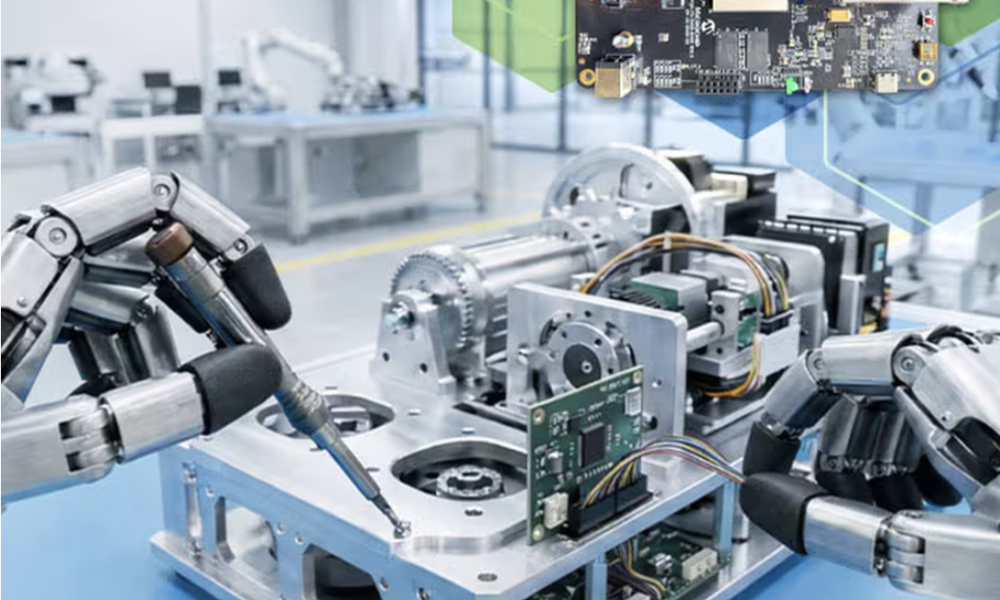
To address a rapidly emerging challenge in edge AI connecting multiple sensors and cameras without creating unnecessarily large, power-intensive or complex systems – Microchip Technology Inc. has announced a new version 2.0 of its PolarFire FPGA Ethernet Sensor Bridge. The new board features NVIDIA Holoscan Sensor Bridge technology, and is optimized for NVIDIA’s edge AI platforms, including NVIDIA Jetson and IGX.
The new version is 60% smaller than the previous generation, Microchip says, can support twice as many cameras and can be powered via USB-C, which makes it more affordable for scalable deployments. It’s part of a wider trend of industrial AI. As more intelligence is brought nearer to machines, robots, and other physical systems, developers have to be able to process the data locally, instead of sending sensor data to the cloud all the time. That adds strain to the infrastructure of connectivity.
The new bridge is capable of handling up to four cameras and features a 10Gb Ethernet connection to make the sensor to edge computing connection easy. Implementing a common Ethernet architecture can help minimise the number of proprietary interfaces and components needed, which can help lower wiring, integration and overall complexity. The other important point is the latency, which is a crucial factor for robotics and machine vision. In addition, the board’s optical latency measurement feature enables developers to evaluate the latency between sensor capture and AI inference.
The platform has been designed around Microchip’s PolarFire FPGA, with interfaces such as MIPI CSI-2, I²C, UART and GPIO supported and technologies like SLVS-EC, 12G-SDI, HDMI and DisplayPort supported for expansion.
The board is targeted at applications such as industrial automation, robotics, medical systems and humanoid robots that require a predictable response time, low power consumption, and compact hardware.
The takeaway is that edge AI is more than just about better AI models. Efficient, secure, and predictable latency connection of cameras/sensors is also increasingly necessary. The connectivity layer will be critical to the seamless transition of AI systems from the prototype stage to production, as more industrial intelligence moves right onto the machines.