






FedEx and Amazon Push Robotic Arms Deeper Into Logistics Operations
Robotic arms have transcended the factories and are stepping into one of the most challenging aspects of logistics: handling packages in large quantities. Robotic systems are increasingly being...

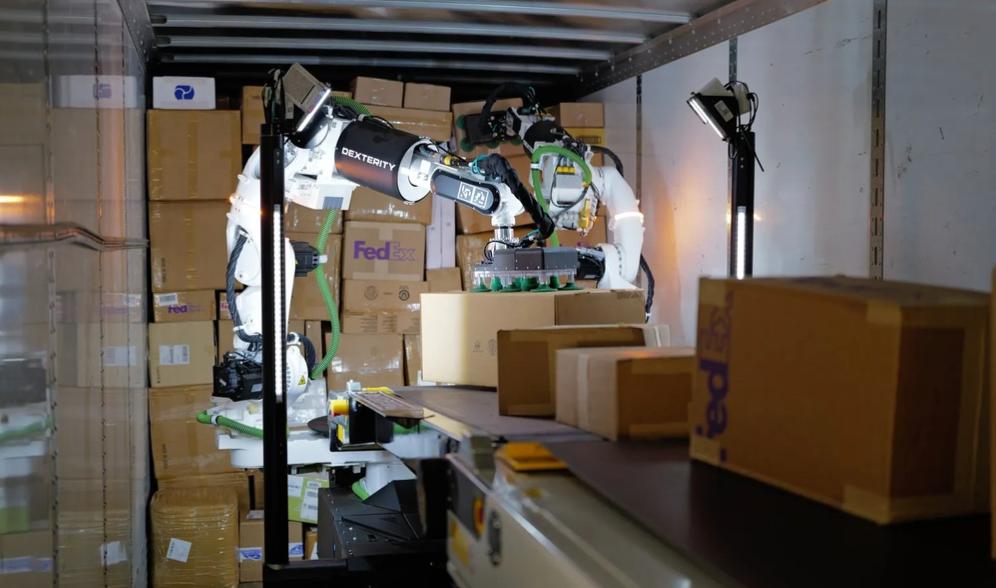
Robotic arms have transcended the factories and are stepping into one of the most challenging aspects of logistics: handling packages in large quantities. Robotic systems are increasingly being adopted by companies such as FedEx and Amazon, making warehouses and parcel networks an increasingly significant growth segment in the field of industrial automation.
FedEx has integrated Dexterity’s Mech Systems that load and unload trailers automatically at the Hagerstown Hub in Maryland. It utilizes Dexterity’s Foresight AI model to make instant choices on where and how packages should be stored inside trailers. The loading of trailers has always been hard to automate, as packages come in various sizes, orientations and packers, and space is constantly changing.
Repeatedly lifting, positioning and arranging packages, and making quick decisions about how to use available space, are repeated duties for workers. The system is designed to deal with this variability, rather than a step-by-step series of motions, by using robotic arms and AI-driven decision-making. FedEx has been testing the technology for several years now and said it would eventually roll it out at thousands of more than 20 U.S. hubs. Amazon is doing the same. Since 2012, the company has deployed over a million robots and will more than double its robotic-arm fleet in 2026.
Its robots feature systems like Cardinal, for loading packages into carts and Sparrow, for handling products in fulfillment. The prospects for robotics manufacturers have expanded beyond the automotive factory and are being seen more and more in the warehouse, distribution centre and parcel hub.