








Beyond monitoring: How hybrid SCADA-IoT systems are transforming Indian manufacturing in 2026
Previously in factories, computer systems called Supervisory Control and Data Acquisition (SCADA) were only doing very simple monitoring inside one small control room. But now, the whole market is...


Table Of Content
- Combining industrial IoT with modern protocols
- Moving toward smart predictive maintenance
- Live deployments across Indian factories
- Financial reality for smaller manufacturers
- Protecting the connected shop floor
- Why real-time visibility is crucial for fast reconfiguration
- Overcoming skills deficit in Tier-2 industrial hubs
- Handling the legacy hardware challenge
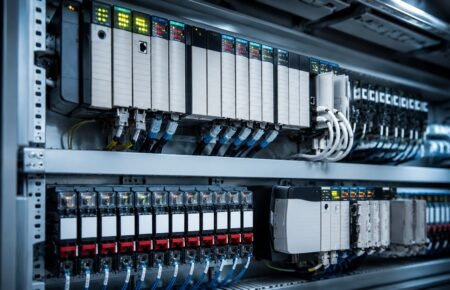
Previously in factories, computer systems called Supervisory Control and Data Acquisition (SCADA) were only doing very simple monitoring inside one small control room. But now, the whole market is shifting toward a hybrid SCADA-IoT (Internet of Things) setup that connects local controls with the cloud. The local SCADA system on the shop floor was acting like a fast reflex, handling machine commands with zero delay so nothing crashes. While the cloud IoT side was acting like a big brain far away, handling thinking and data storage. So factory owners were not needing to throw away expensive hardware completely; they were just adding a cheap adapter, called an ‘edge gateway’, for connecting old machines to modern platforms. This was giving a smooth upgrade for factories wanting better visibility without spending too much capital upfront.
Combining industrial IoT with modern protocols
The massive headache in the past was that different machines spoke entirely different languages, creating heavy communication silos where no device could talk to another. Now, the industry is fixing this by adopting a ‘unified namespace’ setup using very lightweight IoT protocols like ‘Message Queuing Telemetry Transport’ (MQTT) and ‘Open Platform Communications Unified Architecture’ (OPC UA). So instead of making complicated wiring for every device on the floor just sending the data to a central message broker, like a single notice board. This makes the data flow very smooth and fast, moving from the smallest sensor right up to the boss’s mobile screen. Whether it is a temperature reading from a machine or an order status from management software, everything sits in a clean, open structure that any authorised application can check instantly.
Moving toward smart predictive maintenance
A major change is happening in maintenance handling on the production floor. Earlier, most factories were just sticking to a fixed schedule or simply waiting for a machine part to break down completely, causing huge losses.
Now, by feeding live machine data like motor vibration and heat into smart analytics tools, the system works like a smart doctor. It can flag a tiny hidden problem weeks before a total machine failure actually happens. This condition-based alerting means maintenance teams only step in when truly needed, saving time and money.
Live deployments across Indian factories
Big companies are already using connected platforms for managing entire production chains. For instance, large-scale automotive and energy infrastructure plants are deploying digital twin systems, making exact copies of the factory inside a computer. These systems are taking real-time signals from the machines and running them through physics models to optimise assembly lines and prevent bottlenecks. This helps management in reconfiguring entire assembly line through simple software commands rather than dealing with slow, manual rewiring on the factory floor.
Financial reality for smaller manufacturers
For micro, small and medium enterprises (MSME), investing in full-scale automation was creating huge financial tension and mental strain. But the hybrid cloud model changes everything by shifting big upfront capital expenses into predictable monthly operating costs, just like paying a mobile bill. Instead of buying massive local computer servers and paying for a dedicated IT team, smaller units can use cloud subscriptions and only pay for the data capacity they are using. This allows smaller factories to take their initial energy and efficiency savings and use them to pay for the next phase of digitalisation, letting them compete with global players on a tight budget.
Protecting the connected shop floor
The minute a local factory network connects to the public cloud, cyber-resilience becomes Number 1 priority. The old strategy of relying on a simple network perimeter is not helpful when IT and machine networks are being mingled. Modern facilities are deploying strict ‘zero trust’ architecture and ‘micro-segmentation’. These work like having security guards for every single room instead of just the main gate. This is ensuring that even when corporate email account gets hacked, malicious traffic is not crossing to critical machine commands or safety systems on the factory floor, keeping physical operations isolated.
Why real-time visibility is crucial for fast reconfiguration
The biggest issue with the old-school setup is management being blind to what is happening at the machine level until the shift is over. If a breakdown or bottleneck occurred, the supervisor was getting the news way too late, dragging down efficiency and spoiling the entire production. But after implementing hybrid SCADA-IoT architecture, absolute live data is coming from every corner of the factory instantly. If a machine faces tiny glitch, the alert goes straight to the cloud platform and the supervisor’s mobile app within seconds. This high-level visibility means managers can make fast decisions on the spot and reconfigure production steps through software commands without stopping the whole line. In today’s market, where customer demands change rapidly, having this type of flexibility is absolute survival.
Overcoming skills deficit in Tier-2 industrial hubs
Another heavy burden for factory owners in places like Patna, Ranchi or industrial areas near Delhi-NCR is that they struggle to find highly trained engineers who know complex automation programming. Traditional SCADA setups require specialised software skills and costly maintenance teams that smaller factories simply cannot afford. However, modern IoT-enabled SCADA platforms are designed with incredibly simple, no-code or low-code dashboards that feature highly intuitive graphical interfaces. This means even a standard ITI-trained technician or a basic floor operator can understand the machine status and handle daily troubleshooting easily after a short training. By shifting the complex data crunching to smart cloud-based assistants, the technology becomes user-friendly for the local workforce. It completely removes the dependency on high-budget consultants and allows factories in smaller towns to run advanced, connected operations with their existing staff, making the digital transition much smoother for the regional job market.
Handling the legacy hardware challenge
One more major hurdle for these factory owners is that their legacy ‘Programmable Logic Controllers’ (PLCs), older factory computers controlling machines, and older machines don’t have ethernet ports or smart communication features. Owners were assuming that to connect these machines, they have to buy new electronic setups from big international brands, which was causing massive financial headache. But hybrid SCADA-IoT solves that by using low-cost external hardware adapters. This means data is being pulled from any old machine without changing its core programming. This is allowing small industrial units to use cloud monitoring without massive capital.