








The great debate: Centralised vs distributed control in Indian smart factories
Finding the Right Balance for Industry 4.0 Factory owners are facing a tension when they are planning to upgrade older setups. A centralised system is working like a single, highly […]


Table Of Content
- Finding the Right Balance for Industry 4.0
- When to choose DCS vs PLC-based control
- Hybrid control strategies for brownfield upgrade
- Ensuring system scalability and redundancy
- Moving safely from legacy controllers
- The big market trend for DCS
- Difference between greenfields and brownfields
- What top industry experts are saying
Finding the Right Balance for Industry 4.0
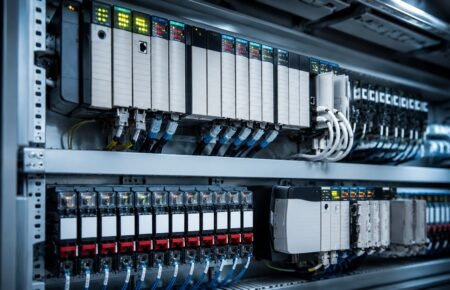
Factory owners are facing a tension when they are planning to upgrade older setups. A centralised system is working like a single, highly powerful local master controller that is handling all the machine actions from one single spot. This is making it very simple for the supervisor to monitor everything, but it is also having one massive risk—if that one main controller faces any hardware glitch or breaks down, entire factory production stops instantly, creating huge losses. But a ‘Distributed Control System’ (DCS) spreads the control across multiple small-small local controllers. If any tiny glitch happens in one unit, only that specific machine section is pausing, while the rest of the factory is running smoothly without any tension. In 2026, finding the exact balance between these two setups is absolute for keeping continuous production moving in smart factories.
When to choose DCS vs PLC-based control
The big confusion for most manufacturers in the market is deciding whether they need a full-scale DCS system or just a normal setup based on ‘Programmable Logic Controllers’ (PLCs), older factory computers controlling machines without internet ports, keeping data isolated from clouds. Think of a PLC as a high-speed specialist technician—it is incredibly fast and efficient at handling simple, repetitive actions, like a robot arm picking up a steel part on a fast assembly line. But a DCS is working like a very senior manager: handling highly complex, continuous processes with thousands of connected data points, like tracking chemical reactions, temperature changes and fluid flow all at the same time. If the factory floor relies on split-second, individual machine movements, PLCs are best. But for a large continuous process plant where a minor mistake can ruin an entire production batch, a DCS provides the heavy-duty reliability that your business is requiring.
Hybrid control strategies for brownfield upgrade
For factory owners running older ‘brownfield’ plants, ripping out old setup to install new automated systems is creating a massive financial headache. The smart way forward is adopting a hybrid control strategy that mixes old hardware with new software. Instead of doing a total costly replacement, leave the old local PLCs for handling basic machine commands on the ground, while adding centralised software on top to pull all data together. This allows smaller industrial units to use advanced cloud monitoring while saving capital by keeping their old infrastructure.
Ensuring system scalability and redundancy
When expanding the production line for higher demand, the control setup must be able to grow without requiring a total network redesign. A distributed architecture makes this process simple by allowing just plugging in new local controller nodes whenever adding a new machine. Along with this scalability, built-in backups or ‘redundancy’ are also needed. This basically means running duplicate controllers so that when primary units face glitch, the backup unit takes over command preventing downtime.
Moving safely from legacy controllers
The final big hurdle for manufacturers is planning the actual migration away from outdated, legacy controllers without causing absolute chaos and breakdown on the floor. Automation leaders are suggesting a step-by-step phased migration path rather than doing a sudden, risky change. Start the process by updating the human-machine interfaces (HMIs) and the communication network first, allowing local operators to get used to the new digital dashboards while old machines are running smoothly underneath. Then, replace physical controllers section by section during scheduled maintenance downtime. This phased approach removes risk of unexpected breakdown and ensures digital transition is stress-free for the regional workforce.
The big market trend for DCS
The DCS market in India is expanding rapidly, growing at a compound annual rate of 9.81%. This growth is happening because industries like chemical plants, oil refineries and large power units are moving away from old control rooms to highly modular and flexible setups. Previously, any change in minor production steps meant re-engineering the whole plant, creating a heavy operational tension and waste of production time. But modern systems are plug-and-play: add or remove local control nodes just like installing an app on your smartphone without disturbing other sections. This adaptability is why Indian manufacturing hubs are rushing to upgrade old, aging instrumentation setups with distributed technology.
Difference between greenfields and brownfields
Another point of discussion among automation experts is how to handle ‘greenfield’ or new versus ‘brownfield’ or old factory deployments. A greenfield project means building a new smart factory from scratch on empty land, designing the entire Industry 4.0 digital network. But in a brownfield setup, a running factory is already having 20-30 years of legacy hardware, manual gauges and messy old wiring. For Indian operators, brownfield automation is the much bigger challenge because they cannot just stop a running factory for months to install new systems without facing catastrophic financial losses. Therefore, the architectural debate is not just about what is technically superior, but also about how to smoothly layer modern decentralised control systems on top of old, stubborn infrastructure without creating any operational chaos or breaking the company’s bank balance.
What top industry experts are saying
If one checks the core whitepapers and expert opinions from global automation giants like Honeywell, Siemens and ABB, they are all highlighting one single strategy for the Indian market: the rise of software-defined control. These industry leaders are emphasising that the physical boundaries between traditional PLCs and high-end Distributed Control Systems are completely vanishing. Instead of buying separate proprietary hardware boxes for every single task, factories are now moving toward virtualisation, where the critical control logic runs on powerful edge servers. Experts from Siemens and ABB suggest that Indian manufacturers should focus heavily on open standards, ensuring that any new control platform they purchase can easily talk to older field devices using standard translation layers. This prevents companies from getting permanently locked into one single expensive vendor and allows them to scale up their smart operations step-by-step according to their exact market needs and budget reality.