






Avatar Robotics Raises $6.5M as Human-in-the-Loop Model Targets Industrial Labour Gaps
The next generation of industrial robotics might not be all-or-nothing, but it might be more about eliminating man from the process completely. Rather, a handful of robotics companies are developing...


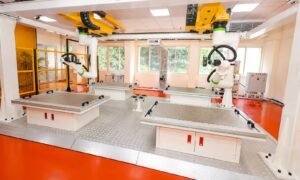
The next generation of industrial robotics might not be all-or-nothing, but it might be more about eliminating man from the process completely. Rather, a handful of robotics companies are developing humans to assist robots to become more autonomous over time. At Avatar Robotics, this is the way we are going about it as we prepare to roll out semi-humanoid robots in warehouses, manufacturing plants and logistics centres.
This San Francisco-based startup has just closed a $6.5 million seed round, which was led by AlleyCorp, after a previous pre-seed round led by defy.vc. The funding will go towards growing both the number of robots and customers it has deployed, as well as toward enhancing the autonomy software powering its systems.
The way Avatar goes about it is based on a human-in-the-loop model. Initially, the robots are remotely operated to complete picking, packing, sorting, kitting, cycle counting and material handling tasks. In doing so, the robots generate operation data to be used in training their autonomy systems, and ultimately the intention is to have fewer individuals control larger numbers of robots.
These are especially applicable to the warehouse and factory sectors where traditional automation solutions may be costly or impractical. Mobile robotic systems can be deployed without significant changes to the facilities, and human operators can be used when the robot finds itself in an unforeseen situation.
The company claims it already has over 900,000 products shipped or handled by its robots within customer facilities, offering a good glimpse into how the technology is being tested in real operating environments. But the larger opportunity could be the data that is created in the process. In actual facilities, there are many different tasks and conditions, which industrial robots are still unable to handle.
Human intervention can be used as an effective means of communicating between the current situation of autonomous limited systems and future autonomous systems that will be able to deal with such variations. It may make some manufacturers and logistics companies think of robots as not a one-and-done proposition, but rather a gentle evolution from humans to more and more autonomous workers in the industry.