








How automated assembly lines are changing Indian auto-component manufacturing
India’s auto-component industry is going through one of its biggest shifts in decades. By the end of FY25, the industry was valued at about $80.2 billion, according to Motoring Trends. […]

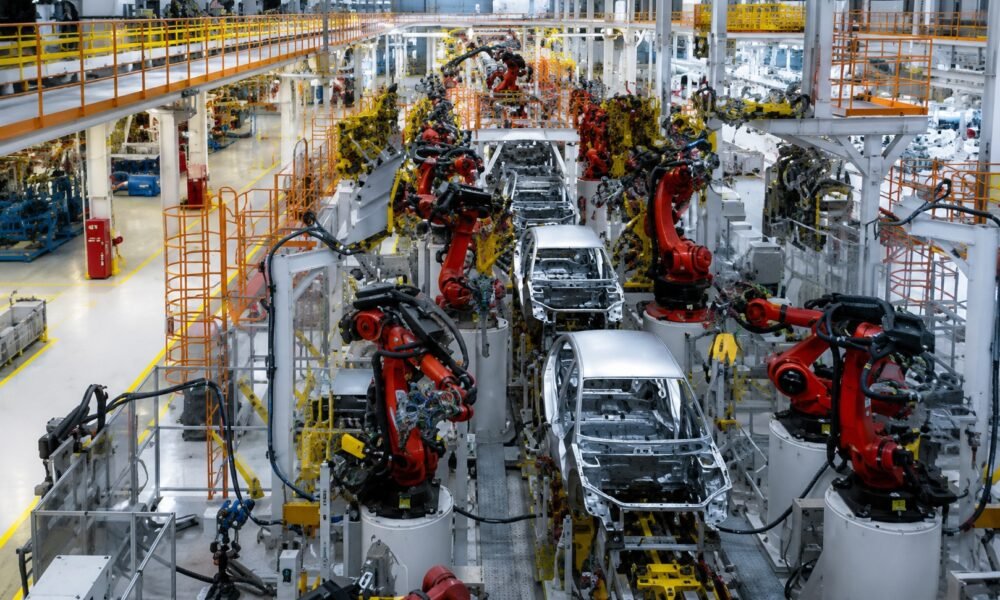
Table Of Content
India’s auto-component industry is going through one of its biggest shifts in decades.
By the end of FY25, the industry was valued at about $80.2 billion, according to Motoring Trends. This growth is being driven by two major forces: Rising global demand for high-precision electric vehicle components, and India’s push for self-reliance under Aatmanirbhar Bharat.
For Tier-I suppliers, automated assembly lines are no longer just a technology upgrade. They are becoming a strategic necessity. Global original equipment manufacturers are trying to diversify their supply chains, and Indian suppliers want to show that they can match the quality and precision of established manufacturing hubs such as Germany and Japan.
Production-linked incentive schemes have also helped reduce some of the risk involved in heavy investments in robotics and automation. This has made it easier for Indian companies to move towards more advanced, automated production systems.
Sona Comstar: Using AI and robotics for quality
Sona Comstar has positioned itself strongly in mobility technology, especially as the electric vehicle transition gathers pace. The company is using artificial intelligence, robotics and electronics across its manufacturing operations to strengthen its role as a trusted global supplier.
According to Efficient Manufacturing, Sona Comstar is using artificial intelligence-enabled computer vision systems for automated inspection at its Indian plants. These systems help check components such as differential gears and traction motors before they are shipped to global original equipment manufacturers.
The goal is simple: Reduce defects and ensure consistent quality.
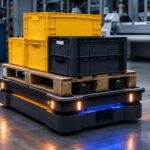
The company has also brought advanced robotics and autonomous material-handling systems, including autonomous mobile robots, into its assembly lines. In 2025, Sona Comstar signed a memorandum of understanding with Germany’s NEURA Robotics to jointly develop industrial robots and humanoids for auto-component assembly, according to Motoring Trends.
This partnership is aimed at automating complex sub-assembly work that was once considered too detailed for high-speed robotic lines. For Sona Comstar, automation is not only about speed. It is also about meeting the quality expectations of global electric vehicle platforms.
Bharat Forge: Reinventing a traditional manufacturing giant
Bharat Forge is an example of how a traditional Indian manufacturing company is adapting to the new industrial landscape.
The company is using intelligent automation to make its production systems more autonomous and precise. Its artificial intelligence-driven robots can sense their surroundings and adjust their movement in real time. This reduces the need for manual intervention while improving output quality.
In March 2026, Bharat Forge partnered with Germany’s Agile Robots, according to the company’s website and a Modern Manufacturing India report. The collaboration focuses on deploying advanced robots that can adjust to real factory conditions.
This is important for Bharat Forge’s strategy of supplying components in a fully machined condition. In simple terms, this means the parts are ready for direct use by original equipment manufacturers. This increases the value of each component and reduces dependence on raw material-led pricing.
The strategy has also helped Bharat Forge strengthen its position in the global electric vehicle supply chain.
Motherson Group: Using digital twins to manage scale
Motherson has built a large global manufacturing footprint, with more than 270 facilities across countries. Managing quality and efficiency at this scale is a major challenge.
To address this, the group is using digital twin technology. A digital twin is a virtual model of a factory, machine or production line. It allows companies to test changes in a simulated environment before applying them on the shop floor.
According to Motherson’s website, the group is creating three-dimensional maps of production sites. These simulations allow robots to practise movement sequences virtually before they are deployed on the factory floor.
This helps reduce collisions, errors and downtime during line commissioning.
For Motherson, this digital-first approach also helps maintain quality consistency across manufacturing hubs, including Sanand and Kanchipuram. It improves data synchronisation and reduces the time spent on complex bill of materials data entry.
It also allows the group to integrate new acquisitions faster. A newly acquired plant can be brought closer to Motherson’s global standards by testing processes virtually before making physical changes.
The economics of automation
The financial case for automated assembly lines in India has changed significantly.
Earlier, the biggest question was whether companies could justify the high capital cost. Today, the bigger issue is the cost of poor quality. For Tier-I suppliers, automation is increasingly seen as essential for meeting global quality standards.
According to the Market Insights Report, the return on investment for automated assembly lines is now achieved within 18-24 months.
Automated inspection systems using machine vision have become important for meeting zero-defect targets and 50 parts per million quality thresholds required by global electric vehicle original equipment manufacturers. Manual assembly lines, by contrast, are more vulnerable to fatigue-related errors and higher defect rates.
For global suppliers, avoiding warranty claims and recalls can itself help recover the cost of automation in less than 2 years, according to the Market Insights Report.
There is also a space advantage. According to a Muhlbauer report, modular robotic assembly lines require about 30 per cent less floor space than manual lines. This allows companies to increase output within existing factories, instead of spending heavily on new facilities.
Automated lines also operate at a more consistent pace. This helps reduce the 10-15 per cent productivity variation often seen across manual shifts.
One important concept here is “takt time”. It refers to the pace at which a factory must produce to meet customer demand. If production is faster than takt time, inventory builds up. If it is slower, deliveries get delayed.
The formula is:
Takt time = Net available production time / Customer demand
For auto-component suppliers working with global customers, this predictability is a major advantage.
The new assembly line: Humans, cobots and machine vision
The Indian assembly line of 2026 is not fully human or fully robotic. It is increasingly a hybrid system.
Human workers, collaborative robots and machine vision systems are working together. Machine vision is now being used directly in pick-and-place processes. High-speed artificial intelligence cameras can identify the position of a part and detect surface defects faster than the human eye.
This ensures that only suitable components move into the next stage of production.
For Tier-I suppliers, the key lesson is clear. Automation is not only about reducing labour costs. It is becoming the foundation for better quality, consistency and global scale.
As the electric vehicle supply chain grows and global manufacturers demand higher precision, automated assembly lines will play a central role in keeping Indian suppliers competitive. The companies that invest carefully in robotics, machine vision and digital production systems are likely to be better placed in the next phase of auto-component manufacturing.