







Robotics-as-a-Service: Solution to India’s Automation Gap — or Premature Push?
The Indian manufacturing landscape stands at a pivotal and somewhat paradoxical crossroads. As the global shift toward Industry 4.0 accelerates, the domestic sector faces a persistent and widening...

The Indian manufacturing landscape stands at a pivotal and somewhat paradoxical crossroads. As the global shift toward Industry 4.0 accelerates, the domestic sector faces a persistent and widening automation gap. This chasm is defined by a combination of high upfront capital expenditure, a chronic shortage of specialised technical skills and a fragmented industrial infrastructure. Robotics-as-a-Service (RaaS) has emerged as a potential panacea, offering a cloud-based, subscription-oriented model that effectively converts heavy initial investments into manageable operating expenses. However, is RaaS the bridge India needs to cross the digital divide, or is it a premature push into a market where the fundamental shop-floor realities are not yet aligned with high-tech automation?
RaaS as an equaliser
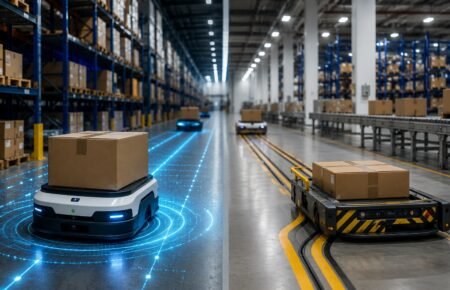
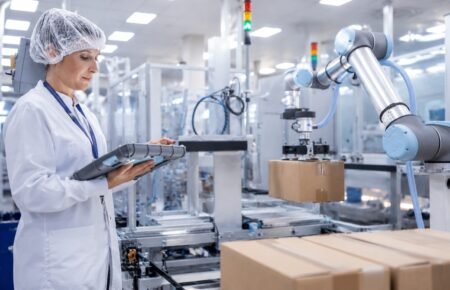
Proponents of RaaS, including homegrown pioneers like Addverb Technologies and GreyOrange, argue that subscription models democratise access to advanced technology in a way that traditional sales cannot. Historically, robotics in India was the exclusive playground of Tier 1 automotive giants. Companies like Maruti Suzuki have a long history of integrating robots into their assembly lines to maintain global standards. But for the thousands of small and medium enterprises (SMEs) that form the backbone of the supply chain, the cost of a single industrial robotic arm—compounded by import duties and installation—can be prohibitive. By shifting to a subscription model, these SMEs can deploy automated guided vehicles (AGVs) or collaborative robots (cobots) without depleting their vital cash reserves or taking on high-interest debt.
Global technology giants such as ABB, through their ABB Ability platform, emphasise that RaaS is not merely about the physical hardware; it is about the uptime and performance guarantees that come with a service-level agreement. In an Indian context, where maintenance ecosystems are often localised and inconsistent, a model where the provider is responsible for servicing, preventative maintenance and software updates is highly attractive. According to the CII Market Facilitation Services (MFS) report on Industrial Robots (2026), industrial automation is now central to India’s global competitiveness. The report highlights a sharp rise in Industrial Internet of Things (IIoT) connectivity, projected to reach 13.75 billion connections by 2031, signaling a deep integration of sensors and cloud platforms that underpins the viability of the RaaS model.
Ground realities
Despite the optimism radiating from boardroom presentations, significant friction exists at the ground level. System integrators who understand the daily grind of the Indian shop floor, such as Festo India and Matrix Comsec, frequently highlight that a robot is only as efficient as the environment it inhabits. Many Indian factories, particularly those situated in secondary industrial hubs, grapple with what engineers call ‘dirty power’—chronic voltage fluctuations and frequent outages that can wreak havoc on sensitive robotic sensors and delicate controllers. While a RaaS provider might own the robot, the manufacturer still bears the primary cost and responsibility of the infrastructure required to keep it running, such as high-speed 5G or Wi-Fi connectivity and climate-controlled environments to prevent overheating in tropical conditions.
Traditional automation suppliers, including KUKA India and FANUC India, often maintain a more cautious and conservative stance. Their perspective is rooted in the ‘total cost of ownership’ logic. Under the leadership of Toshiyuki Suzuki, appointed President & CEO of FANUC India in 2026, the company has unveiled a roadmap focused on democratising automation through flexible, space-saving cobot solutions. Suzuki’s strategy also emphasizes Next-Gen Technology Development Centers for real-world proof-of-concept testing, acknowledging that the transition requires more than just a new payment model. Furthermore, the ACMA & BCG study, “Bolts, Bytes and Bots” (2026), notes that while EBITDA margins for the industry average 11–12%, they are lower for smaller firms. Vinnie Mehta, Director General of ACMA, notes in the report that firms face a “dual investment squeeze”, where they must “sweat existing ICE assets harder” to fund new EV investments, the Business Standard reported in February 2026. For these firms, a recurring RaaS subscription represents a fixed liability that may be difficult to balance against these competing capital demands.
The human element: skills gap
Perhaps the most significant barrier to the RaaS revolution is the human factor. Recognising this, IIT Madras launcheda new M.Tech in Robotics in March 2026 to address the shortage of skilled manpower capable of designing and applying robotic systems in industrial contexts. Furthermore, the IITM-Accenture Centre of Excellence is currently researching “human-robot co-work environments“, focusing on the technical and safety training required to integrate autonomous systems with human workforces.
This shift towards rapid adoption is echoed by the Central Manufacturing Technology Institute (CMTI). During a Stakeholder Consultation on the Advanced Manufacturing Systems Mission in February 2026, the institute moved away from cautious scepticism toward a “mission-oriented approach.” Director Dr. Nagahanumaiah emphasised that India’s transition must move from prototype-level capability to commercial-scale deployment. He noted that while India has been slower than required in adopting connected machines, the current focus is on building indigenous CNC systems and cognitive automation to reduce technological dependence. The PM-STIAC meeting in March 2026 further solidified this, calling for a coherent national mission to consolidate India’s strengths in robotics and additive manufacturing.
Verdict: timing the transformation
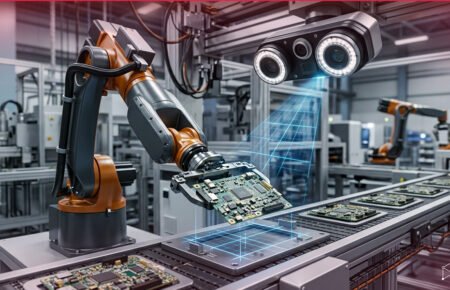
Is India ready for RaaS? The answer is nuanced and sector-specific. For high-growth sectors like e-commerce logistics and precision electronics assembly, RaaS is not just a solution; it is a timely requirement to meet global speed. In these sectors, the flexibility to scale up during peak seasons makes the subscription model inherently logical.
However, for traditional heavy manufacturing and the wider SME ecosystem, the RaaS model must overcome significant hurdles. The gap in India is not just a financial one; it is a structural and educational one. Until there is a more robust national infrastructure for power and a concerted effort to upskill the workforce, RaaS will likely remain a high-value niche. The push for RaaS is not necessarily premature, but it must be accompanied by a ‘service-plus’ approach where providers offer not just the robot, but the training and infrastructure consulting necessary to make the machine truly thrive on the Indian shop floor.