





Understanding Functional Safety Certification in Indian Manufacturing: A Practical Guide for Plant Managers
Indian manufacturing is changing rapidly. As the Make in India initiative matures and the country looks to become a stronger global manufacturing hub, the focus is no longer only on […]

Table Of Content
- What functional safety means
- What is Safety Integrity Level?
- Why India is focusing more on functional safety
- How plants decide what SIL level they need
- Designing a compliant safety system
- AI, connected factories and new risks
- Why SIL certification can make financial sense
- How to get SIL certification
- The road ahead
Indian manufacturing is changing rapidly. As the Make in India initiative matures and the country looks to become a stronger global manufacturing hub, the focus is no longer only on producing more. Manufacturers are also under pressure to meet global standards on quality, safety and reliability.
This is where functional safety and Safety Integrity Level (SIL) certification become important.
The global functional safety market is projected to expand from $5.88 billion in 2024 to about $7.9 billion by 2029, at a compound annual growth rate of 6.1 per cent, according to Research and Markets. The Asia-Pacific region, led by India and China, is expected to grow faster, at 7.1 per cent, according to Markets and Markets Research.
For Indian plant managers, SIL is no longer a specialised technical topic. It is becoming an operational and regulatory necessity.
What functional safety means
Functional safety is about making sure that a machine, plant or process can move to a safe state when something goes wrong.
In industries such as oil & gas, chemicals and power generation, dangerous events can happen if pressure, temperature, flow or other process conditions move beyond safe limits. A safety system must detect the problem and act quickly, usually by shutting down the process or isolating the risk.
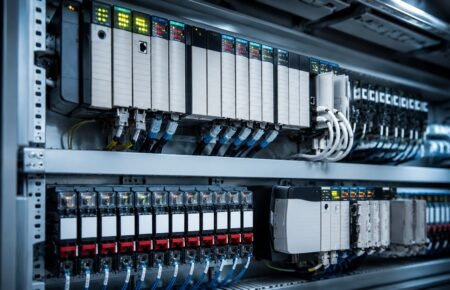
This is done through a safety instrumented system. In simple terms, it is a dedicated safety layer made up of sensors, controllers and final control elements such as valves or actuators.
What is Safety Integrity Level?
Safety Integrity Level (SIL) measures how much risk reduction a safety function provides. It is defined by International Electrotechnical Commission standards, mainly IEC 61508 for general systems and IEC 61511 for process industries.
SIL ratings range from 1 to 4.
- SIL 1 offers the lowest level of risk reduction.
- SIL 2 provides a moderate level of protection and is common in many industrial applications.
- SIL 3 is used where the risk is higher, such as in hazardous chemical plants.
- SIL 4 is the highest level and is usually reserved for extremely high-consequence systems, such as nuclear or critical rail applications.
In India, most industrial applications target SIL 2 or SIL 3. Reaching these levels requires a disciplined process, from hazard analysis and system design to testing, maintenance and eventual decommissioning.
Why India is focusing more on functional safety
Several factors are making functional safety more important for Indian manufacturers.
The first is regulatory pressure. Sectors such as oil & gas, power and chemicals are facing stricter safety expectations. Regulators like the Petroleum and Natural Gas Regulatory Board and the Petroleum and Explosives Safety Organisation have aligned Indian safety codes with international standards.
This also matters for exports. Indian companies that want to supply to Europe or North America must show that their systems meet standards such as IEC 61508. Without such compliance, they may struggle to enter global supply chains.
The second factor is rising scrutiny after industrial accidents. Plant managers are under growing pressure to show that emergency shutdown systems are not just installed, but are actually capable of preventing serious failures.
The third factor is technology. In 2025, several safety-focused products entered the market. In April 2025, SGS introduced ISO/PAS 8800, a standard focused on artificial intelligence functional safety in road vehicles. This is important for Indian automotive manufacturers working on autonomous and assisted-driving features.
In June 2025, SICK, a German sensor manufacturer, introduced the multiScan100-S 3D light detection and ranging safety sensor. This allows more advanced safety monitoring in smart warehouses. In August 2025, Emerson launched the PACSystems RX3i CPS400 Safety Controller, offering small and medium enterprises a scalable route towards SIL 3 compliance.
How plants decide what SIL level they need
The journey usually begins with a hazard and operability study, followed by a layer of protection analysis.
A hazard and operability study helps identify what could go wrong in a process. A layer of protection analysis then checks whether existing safeguards are enough to reduce the risk.
These safeguards may include relief valves, alarms, physical barriers or manual procedures. If they are not enough, the plant may need a safety instrumented system. The level of risk then determines whether the safety function must meet SIL 2, SIL 3 or another rating.
For a plant manager, this step is crucial. The goal is not to chase the highest SIL rating everywhere. The goal is to choose the right level of protection for each specific risk.
Designing a compliant safety system
Once the required SIL level is known, the safety system must be designed with certified components.
This includes sensors that can reliably detect unsafe conditions, logic solvers or safety programmable logic controllers that can process the signal, and final elements such as valves and actuators that can safely shut down or isolate the process.
Each part must be selected carefully. A safety system is only as strong as its weakest component.
The design also has to prove that the system can meet the required probability of failure target. This is why third-party verification becomes important.
AI, connected factories and new risks
As Indian factories become smarter, functional safety is also becoming more complex.
More plants are connecting operational technology with information technology systems. Machines, sensors and safety devices are increasingly connected to industrial internet of things platforms.
This can improve monitoring and maintenance, but it also creates cybersecurity risks. A connected safety system must not be exposed to unauthorised access or interference.
The rise of artificial intelligence adds another layer of complexity. Plants may use AI for predictive maintenance, fault detection or process optimisation. But plant managers must ensure that such systems do not interfere with emergency shutdown functions, which need to behave in a predictable and reliable way.
Standards such as ISO/PAS 8800 show that the industry is beginning to address the safety risks linked to AI-led decisions.
Advanced sensors, such as 3D light detection and ranging systems, can also make factories safer without slowing them down. For example, they can help create dynamic safety zones around automated guided vehicles, allowing people and machines to work in the same environment with lower risk.
Why SIL certification can make financial sense
Many small and medium enterprises assume that SIL certification is too expensive. The upfront cost is certainly higher than a standard control system, but the investment can be justified.
- First, certified safety systems can help reduce insurance premiums. Global insurers often view SIL-rated safety barriers as a sign of lower operational risk.
- Second, they help avoid fines, shutdowns and legal costs. The cost of one major industrial accident can be much higher than the cost of an SIL-rated emergency shutdown system.
- Third, modern safety controllers come with better diagnostics. This helps reduce nuisance trips, where a plant shuts down unnecessarily. Fewer false shutdowns mean better productivity and lower downtime.
How to get SIL certification
The process usually involves 4 key steps.
- Preparing a safety requirement specification: This document explains exactly what the safety system must do, what risks it must address and how it should respond during an unsafe event.
- Product selection: Plants must choose devices that already have IEC 61508 certification from recognised bodies.
- Verification and validation: A third-party auditor, such as TUV or exida, checks whether the design, calculations and system performance meet the target SIL level.
- Operational maintenance: Functional safety is not a one-time exercise. Systems need regular proof testing to confirm that sensors, controllers and shutdown devices still work as intended.
The road ahead
As India moves towards 2030, functional safety will become a defining part of advanced manufacturing.
For plant managers, the message is clear. Safety systems cannot be treated as an afterthought. They must be designed, tested and maintained with the same seriousness as production systems.
By adopting SIL-certified systems, Indian manufacturers can protect workers, reduce operational risks, meet global standards and strengthen their position in export markets.
In the next phase of Indian manufacturing, world-class production will not be measured only by output. It will also be measured by how safely and reliably that output is achieved.