






Microchip Adds Parallel Sensing to Its Turnkey Touch Controllers for Buttons, Sliders and Wheels
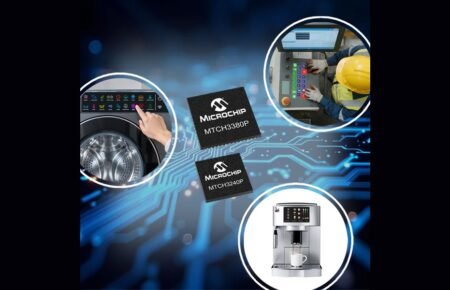
Twelve analog-to-digital converters on one chip, all working at the same time, are the main change in Microchip Technology’s two newest touch controllers. The MTCH3380P and MTCH3240P join the...

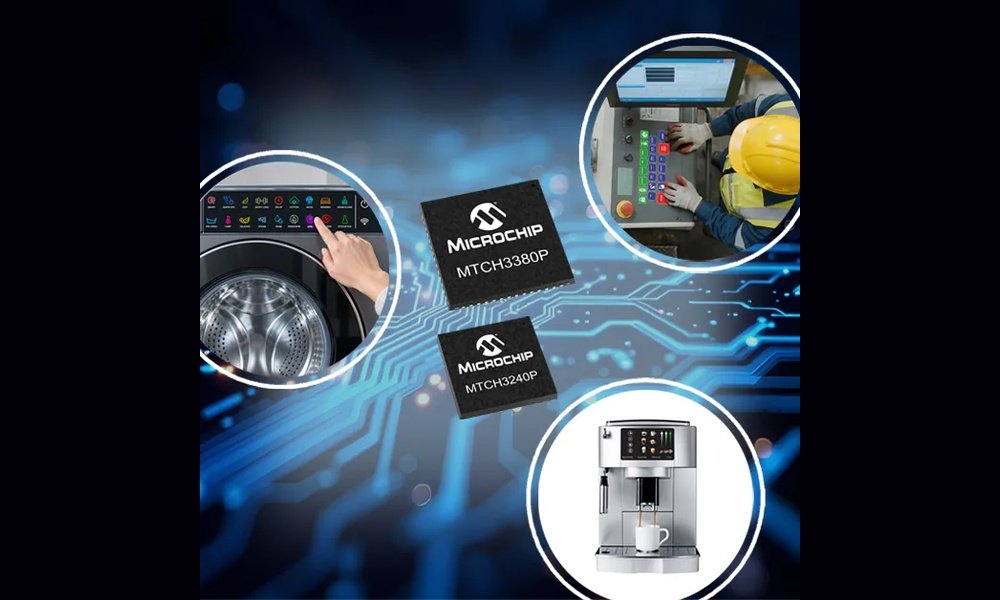
Twelve analog-to-digital converters on one chip, all working at the same time, are the main change in Microchip Technology’s two newest touch controllers.
The MTCH3380P and MTCH3240P join the company’s turnkey capacitive-touch family. They are the first devices in that line to read button, slider and wheel sensors in parallel instead of one after another.
The two parts differ mainly in how many sensors they can handle:
| Controller | Self-capacitance mode | Mutual-capacitance mode |
| MTCH3380P | Up to 38 sensors | Up to 64 sensors |
| MTCH3240P | Up to 24 sensors | Up to 32 sensors |
In mutual-capacitance mode, the larger part handles twice as many sensors as the smaller one.
The problem they target comes from a design trend. More manufacturers are dropping displays and building interfaces from decorative surfaces with lit capacitive-touch buttons, sliders and wheels, which keeps system costs down. Those panels need many sensors. On a conventional controller, a high sensor count can stretch acquisition time and lower the signal-to-noise ratio.
Sampling several sensors at once is Microchip’s answer.
According to the company, the controllers can detect touches through thick cover materials and through gloves. Both operate at temperatures up to 105°C. They also support customers working toward IEC/UL 60730 Class B functional safety certification. Microchip offers help with that process, which it says can assist manufacturers in meeting regulatory requirements.
The applications Microchip lists show where those features matter. In home appliances such as ovens, cooktops, refrigerators and washing machines, moisture and gloved hands are routine. Outdoor equipment such as EV chargers, parking meters and kiosks needs tough protective covers and has to keep working in cold weather. The company also names industrial applications as a target.
For equipment makers, the mix of high sensor counts, glove and thick-cover detection, a 105°C limit and safety-certification support is aimed at screen-free control panels that have to work in heat, moisture or cold.
Image Source – Microchip