






Teledyne e2v Targets Faster Machine Vision With Nexora BSI Sensors
Machine vision systems are being pushed to capture more detail without giving up speed or operating efficiency. Teledyne e2v is targeting that trade-off with Nexora, a new family of...

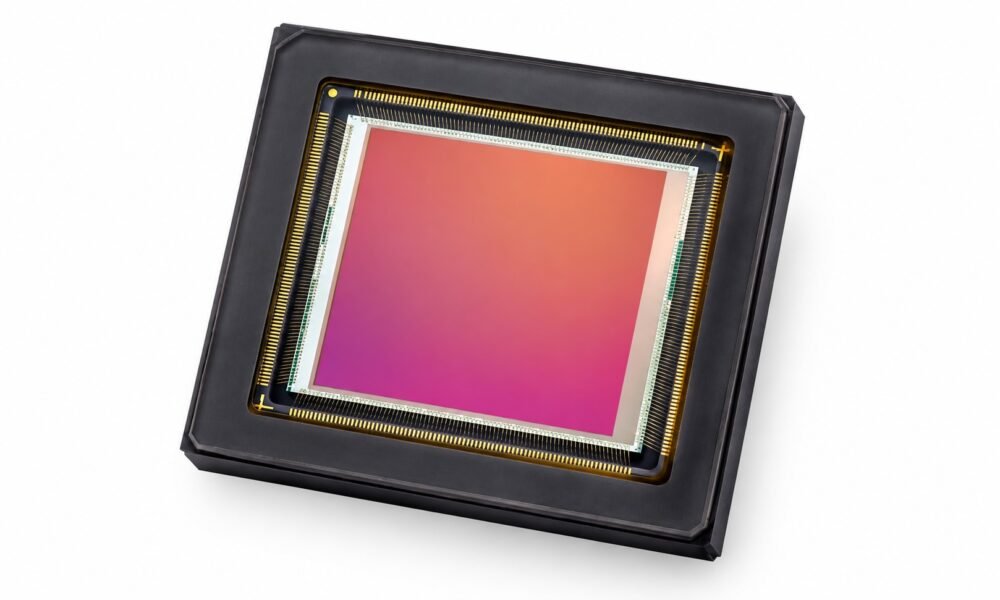
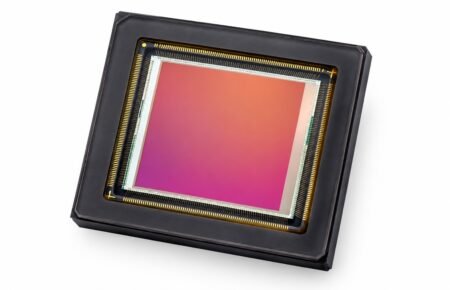
Machine vision systems are being pushed to capture more detail without giving up speed or operating efficiency. Teledyne e2v is targeting that trade-off with Nexora, a new family of backside-illuminated (BSI) global shutter CMOS image sensors announced on September 22.
Nexora comes in 12MP and 16MP resolutions, in monochrome and colour variants, for applications including high-resolution machine vision, intelligent traffic systems and outdoor surveillance. The 12MP version supports up to 240 fps, while the 16MP model reaches 180 fps.
The key technology is the combination of BSI and global shutter. BSI places the light-sensitive area closer to incoming light, improving photon collection compared with conventional front-side illumination. Teledyne claims quantum efficiency of up to 73% at 550nm and 15% at 940nm, giving the sensors stronger sensitivity for visible and near-infrared imaging.
Global shutter addresses a different problem: motion. Unlike rolling shutter sensors, which expose different rows at different times, global shutter captures the frame simultaneously. That helps avoid distortion when inspecting fast-moving parts or tracking moving objects.
Nexora also uses a 3D-stacked architecture, allowing multiple functions to be integrated into a compact sensor design. The devices use an LVDS interface compatible with a range of FPGAs and image signal processors and come in a 23 × 21.5mm package designed for compact camera systems and standard C-mount optics.
The industrial significance is less about adding another high-resolution sensor and more about combining speed, sensitivity and compact integration in one platform.
For machine-vision camera makers, that could mean higher-speed inspection without requiring a larger or more complex imaging architecture, particularly where moving targets, difficult lighting or near-infrared imaging are part of the job.