







Manufacturing Execution Systems in India: Connecting the shop floor with the top floor
Indian manufacturing is changing fast. As the Make in India initiative pushes the country to become a stronger global manufacturing hub, factories can no longer depend only on manual records,...

Indian manufacturing is changing fast. As the Make in India initiative pushes the country to become a stronger global manufacturing hub, factories can no longer depend only on manual records, delayed reports and isolated machines.
Table Of Content
This is where Manufacturing Execution Systems (MES) are becoming important. An MES helps factories track and manage production in real time. It connects what is happening on the shop floor with the decisions being made by managers, finance teams and supply-chain planners.
India’s MES market was valued at about $531.3 million in 2025 and is expected to reach $1.15 billion by 2034, expanding at a compound annual growth rate of 8.74 per cent, according to IMARC. This growth is not just about software adoption. It reflects a deeper shift in how Indian factories operate — from reactive, paper-led systems to data-driven manufacturing.
The missing link between factory floor and management
For decades, many Indian factories have had a visibility problem.
Enterprise resource planning systems handled business functions such as finance, human resources, procurement and high-level planning. But the actual factory floor remained dependent on manual logs, whiteboards and spreadsheets.
This created a gap between what managers thought was happening and what was actually happening in production. Delayed data entry, inaccurate inventory records and poor visibility often led to a 15-20 per cent loss in operational efficiency.
An MES helps bridge this gap.
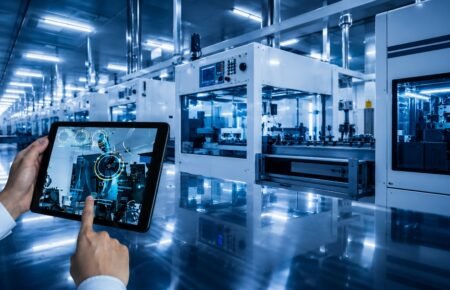
It connects with programmable logic controllers and supervisory control and data acquisition systems to collect live production data from machines. When it is linked with enterprise resource planning software, managers can get a much clearer picture of production, costs, inventory and quality.
For example, instead of waiting for month-end reports to know whether a batch was profitable, managers can track labour and material use in real time. Similarly, when parts are consumed on the production line, the system can automatically alert the enterprise resource planning software to reorder stock, reducing the risk of production delays.
Why MES is becoming more accessible
Earlier, MES adoption was largely limited to large manufacturers. Smaller companies often found it too expensive because it required heavy upfront investment, local servers and specialised information technology support.
That is changing.
Cloud-based MES platforms have reduced the need for expensive on-site infrastructure. Small and medium enterprises can now use subscription-based models, where they pay per workstation or per module. This lowers the capital expenditure barrier and makes digitisation more practical.
According to Mordor Intelligence, this shift has helped reduce total cost of ownership. It has also allowed smaller component suppliers in industrial hubs such as Pune and Coimbatore to compete more effectively, according to a NITI Aayog report.
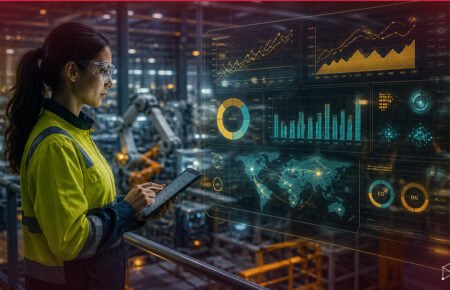
Low-code and no-code platforms are also making MES easier to use. Plant managers can create dashboards, track overall equipment effectiveness and build quality checklists through simple drag-and-drop tools, without writing code.
This matters because many factories do not have specialised software engineers. By the end of 2026, more than 75 per cent of new MES deployments in India are expected to use some form of low-code customisation to match specific shop-floor needs.
Why auto and pharma are leading adoption
Two sectors are driving MES adoption in India: Automotive and pharmaceuticals.
In the automotive sector, the shift to electric vehicles has made production more complex. Electric vehicle manufacturing requires close tracking of battery cells, electronic parts and test results. An MES helps companies trace every battery pack back to its batch and quality record.
This is important for safety, quality control and recalls. If something goes wrong, manufacturers need to know exactly which batch was affected and where it went.
In pharmaceuticals, MES plays an even more critical role.
India is often called the pharmacy of the world, but its drug manufacturers face strict scrutiny from global regulators such as the US Food and Drug Administration. For pharma companies, MES is not just an efficiency tool. It is also a compliance tool.
By replacing paper-based batch records with electronic batch records, MES helps ensure data is accurate, traceable and audit-ready. It can also prevent a process from moving forward if temperature, mixing time or another key parameter falls outside the approved range.
What earlier took weeks of manual document retrieval can now be shown to auditors in minutes through a digital audit trail.
Why overall equipment effectiveness matters
One of the main reasons companies adopt MES is to improve overall equipment effectiveness. This measures how well a factory uses its machines.
In many non-automated Indian factories, overall equipment effectiveness usually is 50-60 per cent. That means a significant part of machine capacity is lost due to breakdowns, slowdowns, defects or delays.
MES helps identify these hidden losses. It can show where machines are failing, where setup time is too high, where small stoppages are happening, and where defects are reducing output.
According to Abhiyanta India Solutions, cloud-based MES and predictive maintenance are high-priority systems because they can deliver 10-15 per cent efficiency gains almost immediately.
For manufacturers, this makes MES a practical first step towards Industry 4.0. Before investing in more advanced technologies, factories need clean and reliable data. MES helps create that foundation.
How manufacturers can avoid getting stuck in pilot mode
Many Indian companies begin digital projects with small pilots, but then struggle to scale them across the factory. This is often called pilot purgatory.
A structured road map can help avoid this.
- The first step is connectivity. Machines, including older ones, need to be connected to software using industrial internet of things gateways.
- The second step is visibility. Companies should begin with basic dashboards for downtime tracking and overall equipment effectiveness. This shows quick returns and builds confidence among stakeholders.
- The third step is integration. Once the MES is working on the shop floor, it should be connected with enterprise resource planning software so that production, material and financial data can flow together.
- The fourth step is optimisation. After the data system is in place, companies can add artificial intelligence and machine learning for predictive maintenance, scheduling and deeper process improvement.
The people and security challenge
MES adoption is not only a technology issue. It also requires a workforce that is comfortable using tablets, dashboards and data.
This is why reskilling is becoming important. Workers and supervisors need to understand how to read alerts, interpret production data and respond to system-generated insights.
Cybersecurity is another concern. As factories become more connected, they also become more exposed to cyber risks. Standards such as IEC 62443 are becoming important for protecting industrial systems from ransomware, espionage and unauthorised access.
The road ahead
In 2026, MES is no longer a nice-to-have software tool. It is becoming the central nervous system of the modern Indian factory.
By connecting the shop floor with the top floor, MES helps manufacturers improve visibility, reduce errors, manage complex production and meet global quality standards.
For India’s manufacturing ambitions, this is a crucial shift. As the country works towards becoming a $5 trillion economy, factories will need more than scale. They will need speed, transparency, quality and flexibility.
MES can help deliver that. It gives manufacturers the data and control needed to make “Made in India” stand for not just cost competitiveness, but world-class efficiency.