







Industrial IoT Protocols Explained: OPC-UA, MQTT, and TSN for Smart Factories in India
India’s manufacturing sector is changing fast. As more global companies look at India as a production base, factories are under pressure to become faster, more efficient and more data-driven. At...

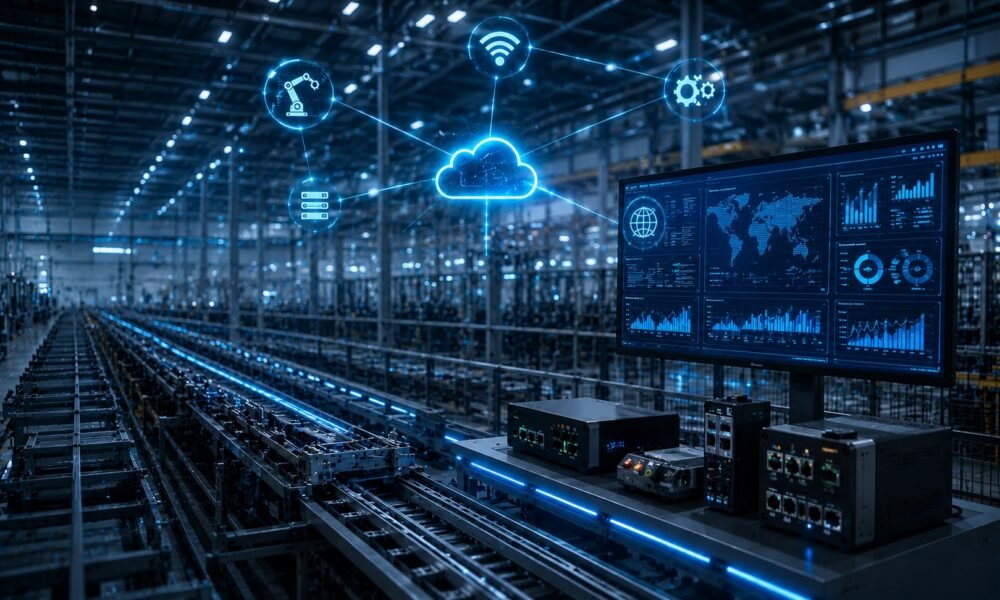
India’s manufacturing sector is changing fast. As more global companies look at India as a production base, factories are under pressure to become faster, more efficient and more data-driven.
Table Of Content
- Why factory connectivity is rising
- Why sensors are becoming easier to adopt
- OPC-UA: Helping different machines work together
- MQTT: Moving data to the cloud more easily
- TSN: Making industrial networks more reliable
- Why data is moving closer to machines
- Why compliance is becoming more important
- What comes next for smart factories
At the centre of this shift is the Industrial Internet of Things (IIoT). In simple terms, IIoT connects machines, sensors and control systems so that factories can collect and use data in real time. But for this connected system to work smoothly, machines must be able to “talk” to one another clearly and reliably.
This is where industrial communication protocols come in. Protocols such as Open Platform Communications Unified Architecture, Message Queuing Telemetry Transport and Time-Sensitive Networking decide how data moves between machines, control systems and cloud platforms.
For Indian manufacturers, choosing the right protocol is no longer just a technical decision. It affects efficiency, safety, compliance and long-term competitiveness.
Why factory connectivity is rising
A clear sign of this shift is the growing use of IIoT-enabled programmable logic controllers, or PLCs. A PLC is the control system that tells machines what to do on the factory floor.
Over the past year, the global market has seen 21 per cent growth in IIoT-integrated PLCs, according to Market Growth Report data. This shows that factories are moving away from isolated machines and towards connected systems where every controller can also act as a source of useful data.
In India, this change is being driven by the need for better visibility. Earlier, much of the machine data stayed trapped on the shop floor. Today, manufacturers want this data to flow into central dashboards so managers can track production, spot problems and make faster decisions.
This also creates the foundation for predictive maintenance, where machine data is used to detect early warning signs before equipment breaks down.
Why sensors are becoming easier to adopt
The rise of IIoT is also linked to falling hardware costs.
Between 2024 and 2025, stronger competition brought down average selling prices for industrial sensors. Prices declined by about 15-20 per cent, according to Mordor Intelligence. Along with cheaper wireless technology, this has made it easier for small and medium enterprises to start digitising older production lines.
Factories can now use sensors in several ways: Vibration sensors on computer numerical control machines, flow meters in pharmaceutical units, or temperature sensors in process industries.
But as the number of sensors rises, factories also face a new challenge: How to move all this data without slowing down the network. This is where choosing the right protocol becomes important.
OPC-UA: Helping different machines work together
Open Platform Communications Unified Architecture (OPC-UA), has become one of the most important protocols in industrial automation.
Its biggest strength is that it helps machines from different vendors communicate with one another. This is especially useful in India, where factories often use a mix of old and new machines from different manufacturers.
OPC-UA does more than send raw numbers. It also adds meaning to the data. For example, instead of simply sending the number “45”, it can explain that the number refers to temperature in Celsius, add alarm limits and provide the machine’s past status.
This context matters. It helps manufacturers combine data from different machines and view it as part of one larger production system.
MQTT: Moving data to the cloud more easily
While OPC-UA is useful for machine-to-machine communication, Message Queuing Telemetry Transport (MQTT) is widely used when data needs to move to the cloud.
MQTT is designed for low-bandwidth environments. It works through a publish-subscribe model, where sensors send data only when there is a change or when the system needs an update.
This is useful for manufacturers with factories in multiple locations. Instead of constantly pulling data from every sensor, a central system can receive updates only when required. This reduces network load.
In India, where connectivity can be uneven in some industrial areas, MQTT’s lightweight design is an advantage. It allows thousands of sensors to be monitored without putting too much pressure on the network.
TSN: Making industrial networks more reliable
Time-Sensitive Networking (TSN) is important for factory operations where timing is critical.
In a normal network, data packets compete for space. This can cause small delays. In many business systems, a small delay may not matter. But on a high-speed production line, even a delay of a few milliseconds in a safety command can cause damage or injury.
TSN helps solve this by giving critical data a guaranteed time slot for transmission. This means important control signals do not get stuck behind less urgent data.
When OPC-UA is used with TSN, factories can get both rich machine data and real-time control. This is especially useful for industries such as automotive manufacturing, where precision robots and safety systems need to work with very little delay.
For manufacturers, TSN can also reduce the need for separate networks. Information technology and operational technology systems can run on a more unified network, lowering cabling complexity while improving reliability.
Why data is moving closer to machines
As factories install more sensors, they are also generating much more data. Sending every signal to a distant cloud server is not always practical or fast enough.
This is why manufacturers are turning to edge computing. It means processing data close to the machine instead of sending everything to the cloud.
For example, in a quality inspection system, a local device can analyse a part, detect a defect and trigger a rejection mechanism immediately. The system does not have to wait for data to travel to a remote server and come back.
This fast response is important for high-speed quality checks, autonomous mobile robots and safety systems. It is what separates a truly smart factory from one that is merely connected.
Why compliance is becoming more important
As factories become more connected, India’s regulatory environment is also becoming stricter.
The Bureau of Indian Standards now mandates ISI certification for industrial transmitters, meaning sensors and transmitters used in critical industrial applications must meet Indian safety and quality benchmarks.
For manufacturers, this adds a new responsibility. Every connected device on the shop floor must be checked for compliance.
The Indian Standards Institution mark is not just a quality label. It can affect legal operation, insurance coverage and procurement decisions. This requirement is also expected to push low-quality sensors out of the market and encourage the use of verified, reliable hardware.
What comes next for smart factories
The combination of OPC-UA, MQTT and TSN is helping Indian factories move towards the next stage of automation.
OPC-UA helps machines understand each other. MQTT helps move data to cloud systems efficiently. TSN ensures that critical factory commands are delivered on time. Together, these protocols create the foundation for smarter and more autonomous factories.
By late 2027, the focus is expected to move beyond monitoring. Artificial intelligence agents may begin using these standardised protocols to make decisions on their own, such as rescheduling production lines, adjusting workflows or reordering materials.
For Indian manufacturers, the message is clear: Smart factories are not built only by buying sensors and machines. They depend on reliable communication, clean data, strong cybersecurity and compliant hardware. The factory of the future will be connected — but it will also need to be safe, fast and easy to manage.