





HD Hyundai Robotics Deploys Korea’s First 1-Ton Industrial Robot
HD Hyundai Robotics has begun commercial supply of South Korea’s first domestically developed industrial robot with a payload capacity of one metric ton. The company marked the first sale of its...

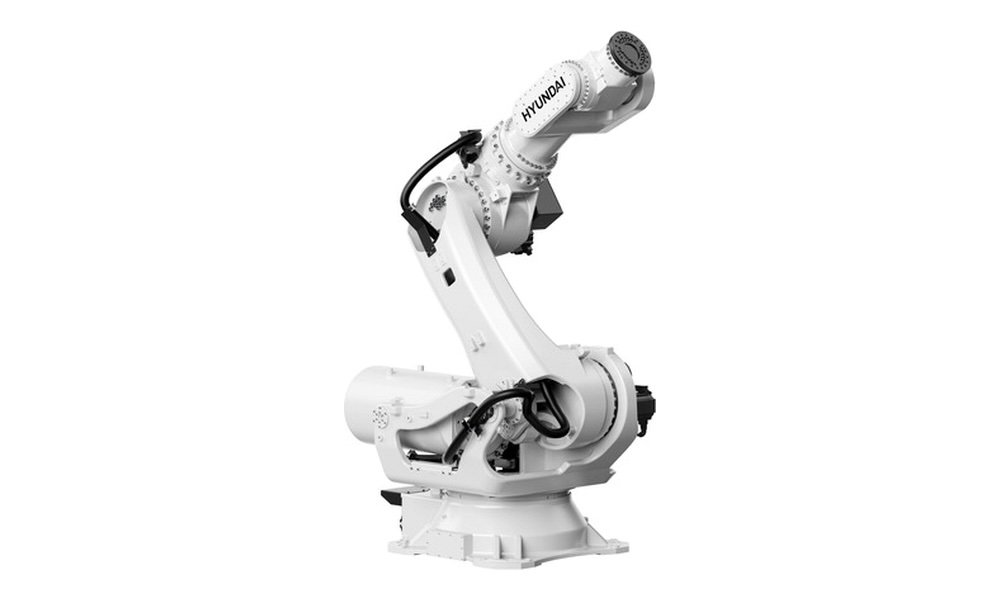
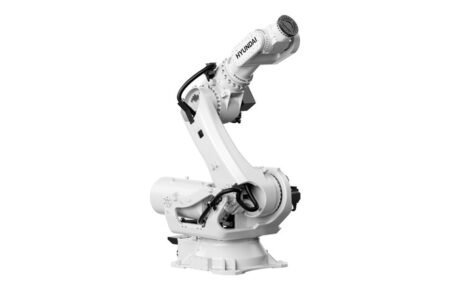
HD Hyundai Robotics has begun commercial supply of South Korea’s first domestically developed industrial robot with a payload capacity of one metric ton. The company marked the first sale of its HDT1000-33 at an event in Ansan, Gyeonggi Province. The six-axis articulated robot will initially be deployed in a construction equipment engine production line. This helps in automating the handling of heavy components.
Key Highlights
- Six-axis articulated design supports lifting, machine loading and component transfer.
- Maintains positioning error within 0.1 mm after thousands of repeated movements, according to the company.
- Initial deployment will focus on heavy engine cylinder blocks.
- Future applications include shipbuilding, automotive components and EV battery packs.
What Has Been Announced
The HDT1000-33 is designed for manufacturing environments that handle oversized and heavyweight components. Its first deployment will be at a facility producing large engines for construction machinery. A robotic system can pick up bulky cylinder blocks and carry out processing of components within the production system.
In early 2024, HD Hyundai Robotics had kicked off trials of the 1-ton robot, which features capacity for high payload deliveries and accurate motion with precision of positioning within 0.1 mm after multiple repetitions. Its design also focuses on energy efficiency, supporting demanding industrial handling operations.
The company plans to expand the robot’s applications to shipbuilding equipment, large automotive parts, electric vehicle battery packs and other heavy manufacturing processes.
Why It Matters
Heavy-component handling remains a challenge in manufacturing, particularly where lifting, positioning and machine loading involve repetitive operations and workplace safety risks. Automating these tasks can reduce workers’ direct exposure to heavy loads while improving consistency across production stages. The HDT1000-33 also extends industrial robot applications into processes that require both substantial lifting capacity and precise positioning.