





AMRs in Indian warehouses: How 3PL and e-commerce firms can make automation work
India’s warehousing sector is changing quickly. For years, many warehouses depended heavily on manual labour. That is now beginning to shift as third-party logistics (3PL) companies and e-commerce...

India’s warehousing sector is changing quickly. For years, many warehouses depended heavily on manual labour. That is now beginning to shift as third-party logistics (3PL) companies and e-commerce players look for faster, more flexible ways to move goods.
Table Of Content
The market for automated material handling in India is projected to reach $1.87 billion in 2026, growing at a compound annual growth rate of 12.43 per cent, according to Mordor Intelligence. At the same time, urban wage costs in Tier-I hubs are rising by 10-12 per cent a year, adding pressure on logistics companies to improve productivity without sharply increasing operating costs.
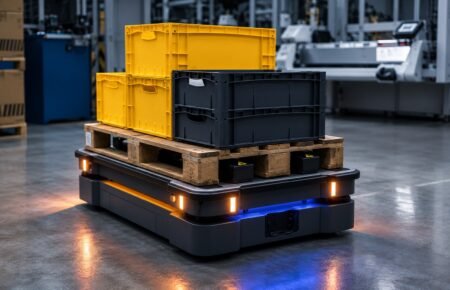
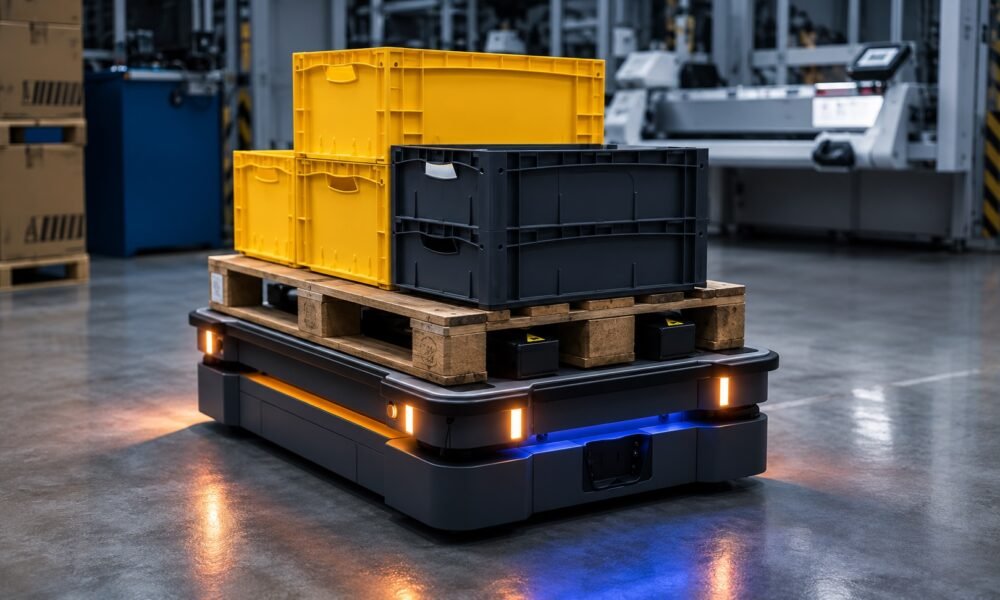
This is where autonomous mobile robots (AMRs) are gaining ground. Unlike older automated guided vehicles (AGVs), which usually need fixed tracks, magnetic tape or floor markings, AMRs can move around more freely. They can understand their surroundings, avoid obstacles and adapt to changes in the warehouse layout.
For India’s e-commerce and 3PL operators, this flexibility matters.
Why AMRs fit Indian warehouses better
Many Indian warehouses are not newly built, automation-ready facilities. They are often older, repurposed spaces where layouts change depending on demand, season and stock movement.
AMRs are useful in such environments because they do not require major changes to the warehouse floor. They use technologies such as light detection and ranging and simultaneous localisation and mapping to move through aisles and avoid obstacles.
In simple terms, they can “see” the space around them and choose their own route.
This is particularly useful during festival-season sales, when stock-keeping unit volumes change quickly and warehouse layouts may need to be adjusted. Instead of redesigning fixed routes, companies can simply reconfigure the robots’ tasks through software.
Indian startups such as Botsync, along with international providers, now offer robots with carrying capacities ranging from 300 kg to 1,500 kg. Botsync’s MAG1500 series, for instance, is built for heavier warehouse and industrial use. Such robots can support everything from moving small e-commerce bins to transporting full pallets.
AMRs also require very little physical modification. Some modern systems can move through aisles as narrow as 60 cm and handle small floor gaps or surface thresholds of up to 20 mm. This makes them easier to deploy in older facilities that were not originally designed for robotics.
Start small, then scale
For 3PL companies, automation cannot be a reckless bet. Margins are often tight, and a sudden, large-scale rollout can create financial and operational risks.
A phased approach is usually more practical.
The first step is a pilot. A small fleet of 5-10 robots can be tested in one section of the warehouse for about 3 months. This helps the company understand how the robots perform around workers, where bottlenecks appear, and whether the physical layout supports smooth movement.
The next stage is integration. Over the following few months, the AMRs can be connected with the existing warehouse management system through secure application programming interfaces. This allows tasks to be assigned in real time and routes to be adjusted based on live order flow.
Once the system works well, the fleet can be scaled. More robots can be added across other zones of the warehouse.
This is also where Robotics-as-a-Service, or RaaS, becomes useful. Instead of buying a large fleet permanently, companies can lease extra robots during peak periods and return them once demand normalises.
Why the economics are changing
India has long had a labour-cost advantage, but that advantage is narrowing in large urban logistics hubs.
Monthly wages for manual handlers in cities such as Bengaluru and Mumbai have reached ₹18,000-25,000, while attrition in e-commerce logistics can exceed 20 per cent, according to Mordor Intelligence and Wisemonk.
This makes automation more attractive.
AMRs can operate continuously, reduce empty trips inside warehouses and improve internal movement of goods. With three-dimensional time-of-flight sensors, they can navigate complex warehouse environments with centimetre-level precision.
Such deployments can raise overall productivity 30-50 per cent by improving internal routes and reducing unnecessary movement, according to Tofsensors.
For a typical 100,000-square-foot Grade-A warehouse in India, manual sorting and handling can form a large part of operating expenses. High-performing facilities can recover their investment in AMRs within 18-24 months by lowering labour costs 25-30 per cent and achieving accuracy rates of about 99 per cent, according to SellersCommerce.
Over a typical 7-year lifecycle, the total cost of using an AMR fleet is estimated to be 40 per cent lower than relying on a manual workforce. This is mainly because companies spend less on hiring, training and workplace injury-related costs.
Challenges in Indian conditions
AMRs offer clear benefits, but deploying them in India is not always simple.
Floor quality is one challenge. Many older warehouses have uneven flooring, expansion joints or small gaps that standard robots may struggle with. Indian manufacturers such as Botsync have tried to address this by using larger drive wheels and specialised suspension systems that can handle gaps of up to 20 mm.
Dust and heat are also major concerns. Indian industrial environments can be harsh, and high dust levels or temperatures may affect optical sensors. This means companies need regular preventive maintenance and durable robot bodies designed for such conditions.
Another challenge is the skill gap. Many warehouses still do not have enough technicians who understand automation systems. To address this, several suppliers now include training and onsite support as part of their implementation packages.
This is important because the success of an AMR fleet depends not just on the robot, but also on the people who operate and maintain it.
Why software matters
The real strength of an AMR system lies in the software that manages the fleet.
In 2026, many Indian 3PL companies are moving towards cloud-based platforms that can coordinate robot movement across the warehouse.
These systems help prevent traffic jams at busy points such as packing stations and loading docks. They can also prioritise tasks based on courier departure times, delivery urgency or order queues.
Real-time data also helps managers see which parts of the warehouse are busiest. These activity maps can be used to improve shelving layouts and reduce the distance robots need to travel.
In other words, AMRs are not just moving goods. They are also generating useful data that can make the entire warehouse more efficient.
Why scalability is the biggest advantage
The biggest advantage of AMRs is flexibility.
A conveyor belt is difficult to move once installed. An AMR fleet, however, can be expanded or reduced depending on demand. During peak sale periods, companies can lease additional robots. During slower months, they can operate with a smaller fleet.
This prevents warehouses from being over-equipped when demand is low, while still allowing them to handle sudden order surges.
For Indian 3PL and e-commerce operators, AMRs are no longer an experimental technology. They are becoming a practical response to rising labour costs, tighter delivery timelines and the growing complexity of warehouse operations.
As land and labour become more expensive, companies that can deploy flexible robotic fleets are likely to move faster, serve customers better and operate more efficiently than those still dependent on fully manual systems.