







Building end-to-end automation strategies for Indian manufacturers
Indian manufacturing is moving quickly towards a more connected and software-led future. While 71 per cent of German industrial firms had adopted Industry 4.0 applications by 2024, according to...

Table Of Content
Indian manufacturing is moving quickly towards a more connected and software-led future.
While 71 per cent of German industrial firms had adopted Industry 4.0 applications by 2024, according to Bitkom, India is now closing the gap fast. The Industry 4.0 Barometer 2026, produced by Germany’s MHP and the University of Munich, says India is “modernising faster than its European competitors”, especially in software-defined manufacturing.
In India and China, 30 per cent of manufacturers now rate their understanding and use of software-defined manufacturing as “very high”. This compares with just 3 per cent in the DACH region, which includes Germany, Austria and Switzerland.
This shift is not just about placing more robots on the factory floor. It is about moving from isolated machines to connected systems where data flows smoothly across the business. For Indian manufacturers, the goal is no longer to automate one process at a time. The bigger challenge is to build a connected system that covers everything from the arrival of raw materials to the dispatch of finished goods.
What end-to-end automation really means
End-to-end automation is not only about moving goods faster. It is about making sure information also moves smoothly.
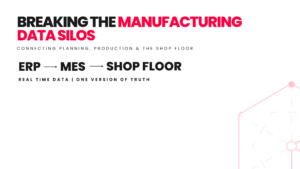
In a modern factory, data from machines on the shop floor must connect with the systems used by managers, planners and business teams. This helps companies track production, manage orders, monitor equipment and respond quickly when something goes wrong.
A strong automation strategy brings together four key layers.
- Enterprise resource planning systems manage business functions such as orders, inventory and supply chains.
- Manufacturing execution systems help convert business plans into actual work orders on the factory floor.
- Supervisory control and data acquisition systems allow teams to monitor equipment and factory processes in real time.
- Programmable logic controllers (PLCs) act as the machine-level control systems that send instructions in milliseconds.
When these layers work together, a factory can move from fragmented automation to a more connected and intelligent production system.
Why 2026 matters for India
The start of 2026 has seen major global automation companies increase their investment in India. This shows that the infrastructure for large-scale factory automation is becoming more local.
In February 2026, Schneider Electric inaugurated a new high-density facility in Bengaluru as part of its ₹3,200 crore investment plan, first announced in 2024, according to a Business Standard report. The facility supports the company’s EcoStruxure platform, with a focus on artificial intelligence-driven diagnostics, according to the company.
In March 2026, ABB India announced an additional $75 million investment, about ₹625 crore, according to the company’s release. The investment is aimed at expanding manufacturing for sectors such as metals, cement and sustainable mobility. These are areas where digitisation can make heavy industry more efficient.
Siemens has also positioned India as a primary global hub for its industrial artificial intelligence operating system, according to the company’s website. The system connects Nvidia Omniverse with real production environments. In simple terms, this helps companies create live digital versions of factories, test changes virtually and validate production systems before building them physically.
These investments show that India is no longer only a market for automation products. It is becoming a serious hub for building and scaling industrial technology.
A practical road map: From shop floor to top floor
For most Indian manufacturers, the best route is not to remove everything and start again. A more practical approach is to retrofit older systems and connect them gradually.
- The first step is visibility. Companies need to map their value chain and understand where data is missing. Edge gateways can be installed to collect data from older machines without disrupting daily operations. This stage also involves checking which communication systems are being used and whether protocols such as Open Platform Communications Unified Architecture or Message Queuing Telemetry Transport can help connect machines more reliably.
- The second step is orchestration. This means linking manufacturing execution systems with enterprise resource planning systems. Once this happens, work orders, material tracking and quality checks can move more smoothly. A supervisor’s alert can be linked to a specific order, shift and product, making it easier to find the source of a problem.
- The third step is optimisation. Once data is flowing properly, companies can use artificial intelligence tools for predictive maintenance and real-time energy management. Instead of servicing machines only on a fixed calendar, teams can act when data shows early signs of trouble. This reduces unexpected downtime and helps protect margins.
Why energy efficiency is now central
Automation is also becoming important because energy costs are rising.
Energy now accounts for 28 per cent of total operating expenses for Indian industrial firms, according to ABB. This makes energy management a major business concern, not just a sustainability issue.
The ABB Energy Efficiency Investment Survey 2026, as reported by the Economic Times, says India has reached 80 per cent digital readiness, which puts it ahead of many global peers in the ability to adopt networked energy-management tools.
However, there is still a gap between readiness and execution. According to the ABB survey, only 41 per cent of firms currently use a total cost of ownership model when making automation investments.
This means many companies are still looking mainly at the upfront price of automation, instead of calculating long-term savings from lower downtime, better energy use, fewer errors and higher productivity.
The real implementation challenge
The biggest problem in 2026 is not simply the cost of buying a PLC or a machine. The bigger challenge is integration.
Many Indian manufacturers are stuck in what the industry calls pilot purgatory. They successfully automate one production cell, but are unable to scale that success across the entire factory or company.
To move beyond this, manufacturers are becoming more careful about how different systems work together. Depending on one vendor for everything is becoming less common. Instead, companies are choosing the best systems for different needs and using open communication protocols to connect them.
This approach gives manufacturers more flexibility. It also reduces the risk of being locked into one vendor’s ecosystem.
Why cybersecurity cannot be ignored
As factory systems become more connected, cyber risk also increases.
Earlier, operational technology on the factory floor and information technology in offices worked separately. Now, these systems are increasingly linked. That creates more entry points for cyberattacks.
In 2026, any serious end-to-end automation strategy must be secure by design. Manufacturers are using zero-trust systems at the shop-floor level. This means every device and user must be verified before getting access.
Factories are also using stronger separation between systems. Even if a corporate office network is compromised, critical PLC and supervisory control systems should remain protected.
Managed detection and response services designed for industrial systems are also becoming a regular cost for manufacturers. This reflects a simple reality: Digital transformation cannot succeed without digital resilience.
The road ahead
End-to-end automation in India is no longer a distant goal. It is becoming a present-day requirement.
The investments by Schneider Electric, ABB and Siemens show that the technology base is becoming stronger in India. But manufacturers will need more than new machines. They will need connected systems, clean data, trained teams and stronger cybersecurity.
The road map is clear. Companies must break the silos between factory operations and business systems. They must build a unified data environment and use automation not just for speed, but also for visibility, efficiency and resilience.
For Indian manufacturers, the journey from raw material to finished goods is no longer only a physical process. It is also a digital journey. The companies that manage this transition well will be better placed to compete in a global market where quality, cost, sustainability and speed all matter.