



How AI is bringing out the best in digital twins for manufacturing
Imagine a factory where engineers can identify a machine failure days before it happens, test changes to a production line without interrupting operations, and decide ways to reduce energy...

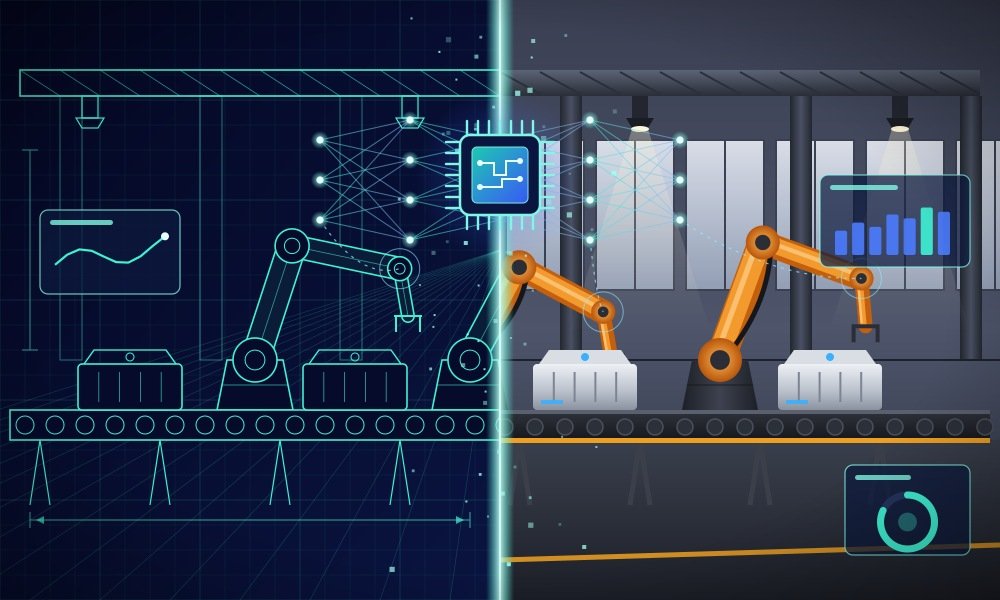
Imagine a factory where engineers can identify a machine failure days before it happens, test changes to a production line without interrupting operations, and decide ways to reduce energy consumption without compromising output. These capabilities are increasingly becoming possible as artificial intelligence (AI) enhances one of the most promising technologies in manufacturing — digital twins.
Digital twins have long helped manufacturers understand how equipment, processes and production systems behave. By adding AI, manufacturers can go beyond monitoring existing conditions to anticipate problems, explore possible solutions and make better operational decisions. The combination is changing how factories handle maintenance, quality control, production planning and resource management.
From virtual replicas to intelligent systems
A digital twin is a virtual representation of a physical asset, process or system. Connected to real-world information through sensors and other data sources, it reflects how its physical counterpart operates. Manufacturers can use this representation to monitor performance, investigate problems and simulate changes before implementing those.
However, collecting and displaying information is only one part of the challenge. A modern factory generates large quantities of data from machines, production lines, maintenance records and quality inspections. Identifying meaningful relationships within that information can be difficult.
That is where AI makes a difference.
Machine learning algorithms can analyse historical and real-time data, recognise complex patterns and identify changes that conventional monitoring systems might overlook. Combined with a digital twin, these capabilities help manufacturers understand not only what is happening inside a factory but also what might happen next.
For example, a digital twin may show that a machine’s operating temperature has increased. AI can examine whether the increase is unusual, compare it with previous operating conditions and assess whether it indicates a developing mechanical problem.
The result is a more responsive system that can support decisions using both engineering models and operational experience.
Predicting failures before production stops
Unexpected equipment failures are among the most nagging problems in manufacturing. A malfunctioning motor, damaged bearing or failing pump can interrupt an entire production line, causing delays, repair expenses and lost output.
Traditional maintenance strategies provide for machinery servicing at predecided intervals or repairing equipment once a failure is encountered. AI-enabled digital twins enable a different approach: anticipating the need for maintenance based on equipment conditions.
Sensors continuously collect information on vibration, temperature, pressure, operating speed and other parameters. AI analyses these readings alongside historical maintenance records to identify patterns associated with deterioration.
Consider a motor operating on an automotive assembly line. Its digital twin shows its current condition, while AI detects subtle changes in vibration resembling those that were observed before earlier bearing failures.
Instead of waiting for the motor to break down, maintenance teams can inspect or replace the affected component during a scheduled production break.
This approach can reduce unplanned downtime, avoid unnecessary servicing and extend equipment life. It also allows manufacturers to prioritise maintenance according to the likelihood and potential consequences of failure.
Improving production efficiency and product quality
The benefits extend beyond individual machines.
A manufacturing facility operates through interconnected processes. A delay at one workstation can affect several subsequent operations, even when every other machine is functioning correctly.
Digital twins allow manufacturers to examine these relationships across a production line. AI can then evaluate production data, detect recurring bottlenecks and suggest adjustments to improve overall throughput.
For instance, a factory producing electronic components may experience intermittent delays at its inspection station. An AI-powered digital twin could examine processing times, equipment utilisation and the arrival of components to determine whether the problem stems from inspection capacity, scheduling or upstream production variations.
Manufacturers could then simulate alternative arrangements, such as changing production sequences or reallocating workloads, before implementing them.
AI can also strengthen quality control.
In industries where small changes in temperature, pressure or material composition affect product quality, algorithms can identify operating conditions associated with defects. A digital twin provides the environment for evaluating how adjustments might affect the finished product.
In a metalworking facility, for example, the system could analyse machining temperatures, cutting speeds and previous inspection results to identify conditions that increase the likelihood of dimensional inaccuracies.
By detecting these relationships earlier, manufacturers can reduce rejected products, limit material wastage and improve consistency.
Experimenting without disrupting the factory
One of the most valuable features of a digital twin is the ability to conduct virtual experiments.
Changing a physical production line may involve substantial costs, mainly when adjustments require equipment shutdowns or affect product quality. Digital twins allow engineers to evaluate proposed changes in a simulated environment before going for physical modifications.
AI makes this experimentation more powerful by helping explore a wider range of possible configurations.
A manufacturer considering the introduction of another robotic workstation, for example, could simulate different layouts, operating speeds and material-handling arrangements. AI-driven optimisation can help identify configurations that offer promising combinations of productivity, cost and resource efficiency.
This principle also applies to product development. Engineers can use simulations to assess how alternative materials, component designs or manufacturing parameters might perform under different conditions.
AI can help improve the digital twin itself. By comparing simulated outcomes with actual operating data, algorithms help in refining model parameters and find discrepancies, making the virtual representation more useful as equipment ages or conditions change.
However, virtual testing does not eliminate the need for physical validation, particularly where safety and reliability are critical.
Moving from predictions to better decisions
Perhaps the most significant development is the transition from predictive to prescriptive capabilities.
Predictive systems estimate what might happen. Prescriptive systems go further by evaluating possible responses and recommending actions.
Suppose a digital twin indicates that a production machine is likely to develop a fault. An AI system could assess whether the manufacturer should reduce the machine’s operating speed, arrange immediate maintenance or continue production until the next scheduled shutdown.
The recommendation could consider expected production losses, repair costs, spare-part availability and safety requirements.
Generative AI is also making these systems easier to interact with. Instead of navigating complex dashboards, engineers may be able to ask questions in everyday language, such as why production efficiency declined during a particular shift or which machine requires attention.
AI assistants can bring together sensor readings, maintenance histories, technical manuals and simulation results to provide relevant explanations.
Such capabilities could make advanced manufacturing intelligence accessible to more employees, although significant operational decisions would still require appropriate human oversight.
The challenges of making digital twins smarter
Despite their potential, AI-powered digital twins are not simple to implement.
Their effectiveness depends heavily on the availability and accuracy of industrial data. Older machinery may lack suitable sensors, while information may be scattered across incompatible software systems.
Building a reliable digital twin also requires engineering expertise, investment in connectivity and computing infrastructure, and regular model validation.
AI introduces further concerns. Algorithms trained on incomplete or unrepresentative data may produce inaccurate predictions. Cybersecurity becomes increasingly important as previously isolated manufacturing systems become connected.
Manufacturers must therefore establish clear procedures for validating recommendations, protecting sensitive operational information and determining when automated decisions are appropriate.
Starting with specific applications, such as monitoring critical equipment or improving a high-defect production process, may offer a more practical route than attempting to digitally replicate an entire factory immediately.
Towards more adaptive manufacturing
The next stage of development could see digital twins becoming increasingly interconnected, allowing manufacturers to optimise not just individual assets but entire production environments.
AI could help factories adjust operating conditions in response to changing demand, evaluate energy consumption against production targets and coordinate maintenance with scheduling requirements.
The longer-term possibility is a manufacturing system capable of learning from its operations and adapting with progressively less manual intervention.
Nevertheless, autonomy is not the ultimate measure of success. What matters is whether manufacturers can make production more reliable, efficient, flexible and sustainable.
Digital twins provide a detailed understanding of physical manufacturing systems. AI adds the ability to discover patterns, anticipate outcomes and evaluate decisions. Together, they offer manufacturers something very valuable — the opportunity to improve operations before problems become costly realities.