







China’s ABB Veto, any learnings for India and its robots ?
China’s decision to block the deal between SoftBank and ABB, a deal valued at $5.4 Billion not only hampers the ambitions of the merging entities but also reflects on the evolving attitudes of...

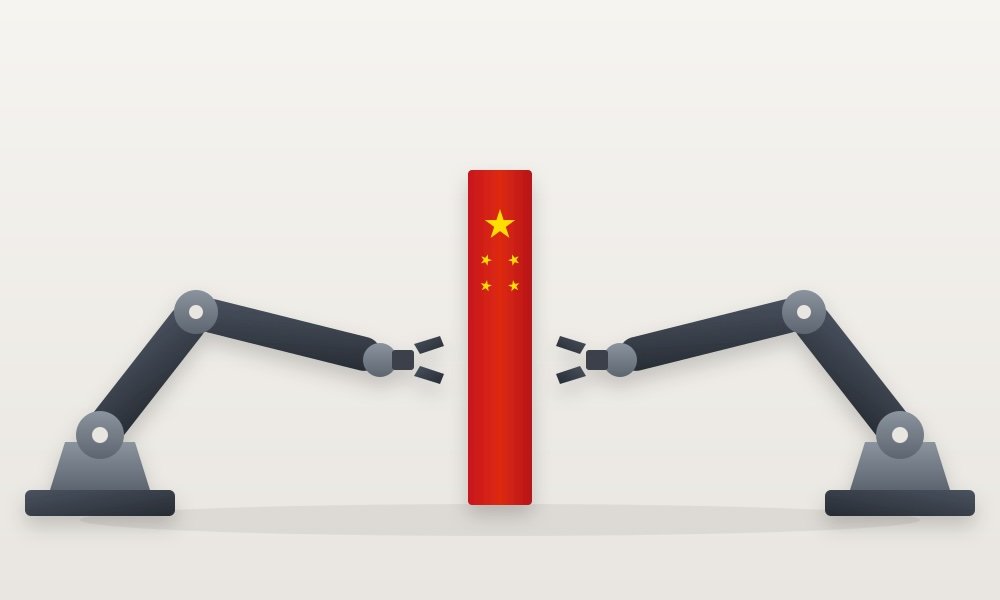
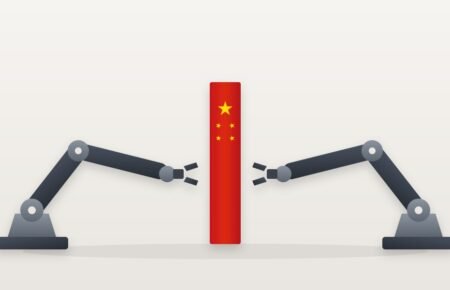
China’s decision to block the deal between SoftBank and ABB, a deal valued at $5.4 Billion not only hampers the ambitions of the merging entities but also reflects on the evolving attitudes of world’s economies towards industrial robotics, growingly seen as crucial infrastructure that has a lot to do with technology ownership, manufacturing intelligence as well as national security.
Is there a message for India , we think so , and it’s simple – robotics is not just about modernization of industries. Robotics and broadly physical AI is at the core of opportunities presented by the data economy and it should be seen with the focus given to an indigenous technology .
Industrial robots have gone from being primitive machines performing merely many different activities to now entities that are in the mix of industrial activity, seeing, processing and analysing data and interacting with artificial intelligence.
Whoever uses the control of these systems and the software around it will find themselves in a position of influence .
The ABB Deal: Why China Drew the Line
In October 2025, SoftBank announced plans for acquiring ABB’s robotics division for an amount of $5.37 billion. The company aimed to strengthen its position in physical AI, where it utilizes its experience in industrial robotics while also leveraging its other investments made in IT and automation. The transaction earlier slated to complete mid- to late-2026, hit an unseen obstacle when Chinese authorities prohibited the deal from going ahead, the information was relayed to parties and confirmed by SoftBank on Nov. 6.
With China accounting for around 30% of ABB’s robotics business, its largest individual market, this is clearly about more than a Japanese company acquiring a European robotics business. China is also weighing the deal’s implications for its own technology, businesses and industrial future.
Robotics Is Becoming a Question of Industrial Sovereignty
The ABB episode must be understood in the wider context of the changing landscape of global manufacturing. The Chinese, the Americans, the Japanese and the Europeans are going head to head for supremacy in robotics, automation and physical AI. Competition is no longer just about making more robots or selling them for less money.
Modern-day industrial robots do more than just execute commands. They interact with the manufacturing systems, produce operational data, and now increasingly collaborate with AI-based software. The data produced can provide insights into production activities, manufacturing capacity, equipment performance, and weaknesses at a bare minimum. Some industries such as automotive, electronics, and defense can highly benefit from this information in terms of its commercial as well as strategic value.
A robot working in an auto manufacturing facility can produce data relating to manufacturing cycles, precision, handling of components, machine performance, and quality differences. This information can be used to enhance production processes and to educate increasingly powerful automation systems.
The value isn’t just limited to the robot but extends beyond to the wider context including software, control systems, sensors, actuators, simulation tools and data infrastructure that make the machine functional.
It becomes a growing concern as to who controls the underlying technology, designs the parts, owns the software and who gets the intelligence created by the automated production. Industrial robots are especially significant due to their position of intersection between hardware, software and manufacturing data.
That is also why solely relying on imported robotics technology can be a vulnerability in the long term. The factories may be operated by automated systems but the country may not have the technology to design, maintain, modify or upgrade the systems. India must be aware of this difference as it rapidly modernizes its manufacturing.
India Has a Robotics Roadmap. The Missing Piece Is Execution.
To say that India hasn’t paid any attention to robotics policy is an understatement. The government had prepared a National Strategy on Robotics with the vision of making India a global leader in robotics by 2030. The framework defines robotics as one of the critical areas of India’s manufacturing and technology goals within Innovate India
The problem is that policy vision doesn’t necessarily create an industrial ecosystem.
The Office of the Principal Scientific Adviser subsequently met to develop a roadmap in the Technology Advisory Group of the Empowered Technology Group in February, 2026. The discussions noted a series of shortcomings such as a lack of corresponding suitable actuators, sensors, transducers and chipsets, precision gears, and a lack of design and simulation tools.
It also emphasized the importance of having a common national robotics data infrastructure, targeted investment, mission-based research, enhanced testing capabilities and procurement policies .If you add all that was highlighted as missing, it potentially threatens to break our ability to manufacture competitive products in the field of robotics keeping us only buyers of these technologies built and controlled elsewhere.
India has research institutes, engineering talent, technology start-ups and a steadily expanding manufacturing industry. However, there is a lack of integration of these capabilities. Contrary to popular belief, not every research result leads to a commercial product or marketable solution, start-ups have difficulty in finding deployment opportunities, and sometimes, imported solutions are easier to find than those developed locally.
The Bigger Manufacturing Question
India is expanding its manufacturing ambitions across electronics, automobiles, semiconductors, defence and advanced engineering. These industries will increasingly depend on intelligent automation to improve productivity, quality and global competitiveness.
India can continue to attract factories and build manufacturing capacity while relying on foreign robotics platforms. But this may accelerate industrial growth without necessarily building long-term technological leadership.
China’s intervention in the ABB deal is a reminder that countries are increasingly willing to use regulatory powers to protect technologies and industrial capabilities they consider strategic.
The lesson for India is not that every industrial robot must be made here. It is that India must develop the capability to build, control, maintain and upgrade critical robotics technologies, instead of remaining dependent on decisions made elsewhere.
Ultimately, where factories are built may matter less than who controls the intelligence, technology and data that run them.