








Accenture and SAP deploy humanoid robots for warehouse inspections at Vodafone facility
What happened: Accenture, SAP, and Vodafone Procure & Connect piloted humanoid robots at a Vodafone warehouse in Duisburg, Germany. The robots operated autonomously to conduct visual inspections...
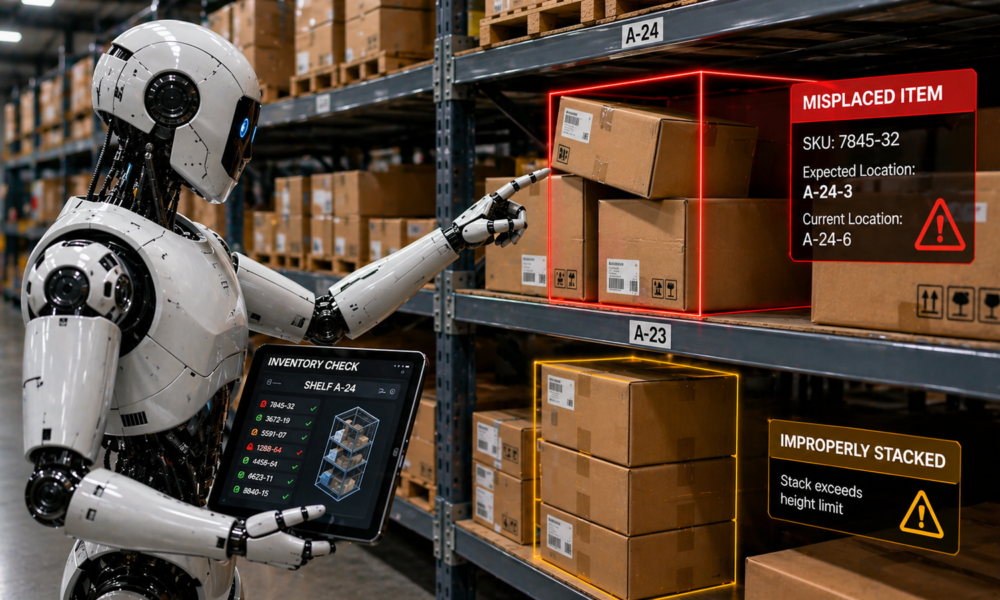
What happened: Accenture, SAP, and Vodafone Procure & Connect piloted humanoid robots at a Vodafone warehouse in Duisburg, Germany. The robots operated autonomously to conduct visual inspections across the facility. They received tasks through SAP Extended Warehouse Management and identified damaged products, improper pallet stacking, weight distribution issues, unused storage areas, and safety hazards like obstacles in aisles. The robots communicated via voice, gestures, and text with human workers. SAP integrated the robots into warehouse management systems while Accenture built the robot intelligence using its Robot Brain solution. The robots were trained in digital twins built on Accenture’s Physical AI Orchestrator, which uses NVIDIA Omniverse libraries. The project was presented at Hannover Messe 2026.
Why it matters: The deployment targets reduced worker injuries, lower overtime costs, and decreased reliance on temporary labour. Vodafone will use operational data to develop future humanoid workforce business models. The robots enable automated health and safety incident reporting plus real-time inventory validation through SAP data integration. This creates auditable compliance workflows without manual intervention.
Industry context: Warehouse automation traditionally uses fixed equipments in controlled zones or in lab environment. Humanoid robots are all about adaptable systems that work alongside people in existing facilities without safety cages. The robots learn tasks through imitation and reinforcement learning rather than single-function programming. This allows progression from basic automation to systems that observe, decide, and act across varied warehouse processes.
Our Take : The pilot focuses on inspection intelligence rather than material handling strength this, also involved a feedback loop between the robot and the enterprise and places it as an intelligent decision loop where the humanoid operated autonomously . The data collection serves as practical groundwork for scaling humanoid labour models across supply chain operations.