Think Electronics Manufacturing: Vision-Guided Robotics in Action
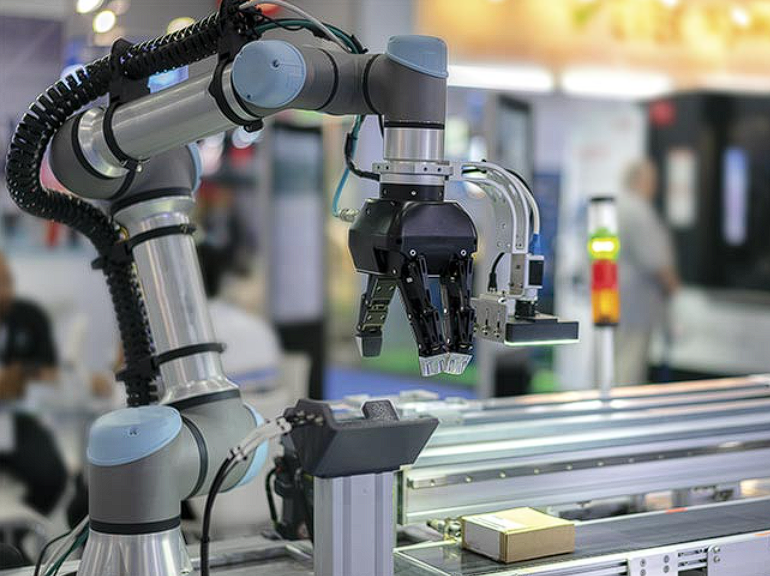
A robotic arm pauses mid-motion. A high-resolution camera mounted above its gripper sends real-time images to an AI engine. Milliseconds later, the arm repositions, adjusting its angle by three degrees. The result: a touchscreen panel placed flawlessly into a smartphone chassis without a single smudge or scratch. This scene, once improbable, is what the world is expecting as precision manufacturing lines grow in India.
Manual Finesse to Automated Accuracy
That wasn’t always the case. Handling delicate goods—circuit boards, glass bottles, ceramic tiles—required human dexterity. Robots lacked the visual acuity and real-time feedback to avoid mishaps. Even minor misalignments meant costly rejects or production halts.
The advent of vision-guided robotics has bettered this dynamic. Combining industrial cameras with AI-driven image processing, modern systems detect part orientation, inspect alignment, and direct robots to adjust trajectory and grip force on the fly.
The Technology Triad: Camera, AI, Robot
Vision-guided robotics hinges on three integrated elements. First, high-speed cameras capture images of incoming parts—at speeds up to 200 frames per second—ensuring even fast-moving conveyors are monitored without blur. Second, AI algorithms process these images, identifying features such as edges, contours, and fiducials to determine precise positions and orientations.
Lastly, advanced robot controllers translate visual data into motion commands. Instead of following pre-programmed, blind paths, robots dynamically alter their trajectories and grip forces. Force sensors embedded in the grippers measure resistance, while vision feedback corrects any misalignment mid-task.
Real-World Impact: Quality and Flexibility
The benefits extend beyond speed and precision. Vision-guided robots excel at handling variable or complex geometries—components that differ slightly from batch to batch. AI models trained on sample images adapt to minor variations, reducing the need for multiple gripper designs.
Overcoming Challenges: Environment and Integration
Adopting vision-guided robotics in India comes with hurdles. Factory floors are dusty; lighting conditions vary; reflective surfaces can confuse vision algorithms. Integrators counter these challenges by deploying controlled lighting rigs—LED arrays with uniform intensity—and using polarizing filters to minimize glare.
Data pipelines also matter. High-bandwidth networks transport camera feeds to edge-compute units that run AI inference locally, avoiding latency spikes. Standard protocols—OPC UA for vision data and ROS-Industrial for robot commands—ensure seamless interoperability among devices from different vendors.
Training AI models requires initial sample sets. Manufacturers partner with system integrators to collect images under varied conditions—new part arrivals, line speed changes, or ambient light shifts. Once deployed, models undergo continuous learning, leveraging production data to refine detection accuracy.
Implications: Human-Robot Synergy
Vision-guided robotics is not to replace human workers; it’s to augment them. By automating repetitive, strain-inducing tasks, manufacturers reduce workplace injuries and elevate human roles to oversight, programming, and process improvement.
Moreover, the cost case can be compelling if the vision-guided robotics can reduce defect-related losses by up to 20% in consumer-electronics plants, translating into savings of crore annually for mid-sized lines.
As India targets a $1 trillion manufacturing economy by 2030, technologies that combine speed, precision, and flexibility will be non-negotiable. Vision robotics stands at this nexus, enabling factories to handle fragile goods at scale without sacrificing quality.