A quick moment on the line
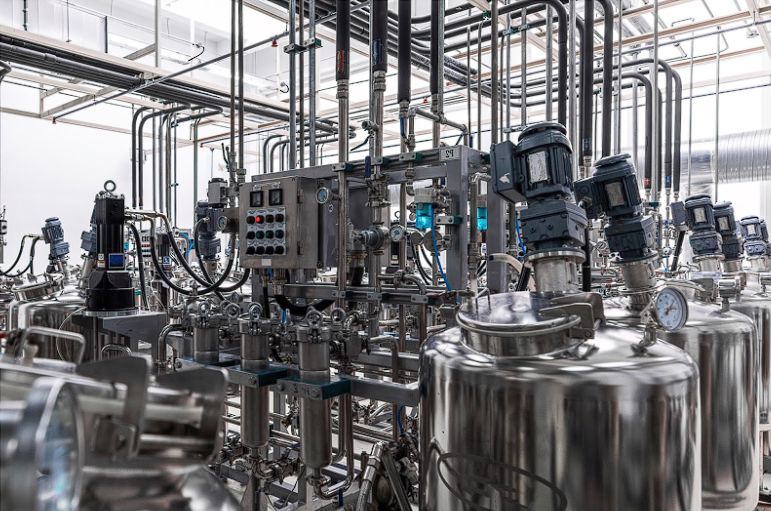
On a darkened commissioning bay in an Indian specialty-chemicals plant, an engineer watches steam rise off a sample loop. Unlike the old days—when technicians drew vials and waited hours for lab results—an FTIR probe in the recirculating line reports spectra every few seconds.
The process chemist nods as predicted spectral signatures appear: polymerisation is progressing, residual monomer is dropping, and the reactor will hit spec in minutes. No stop-gap sampling, no late discovery. For many plants, that short feedback loop promises fewer rejected batches and faster troubleshooting. That’s the core appeal of inline FTIR: it brings the laboratory into the process, continuously.
Why it matters now
Process Analytical Technology (PAT) has been a regulatory and engineering priority in pharma and fine chemicals for over a decade. Spectroscopic techniques—Raman, NIR and mid-IR/FTIR—are now proven PAT sensors for reaction monitoring, endpoint detection and content uniformity.
Recent peer-reviewed studies show FTIR’s ability to track reaction trajectories and discriminate subtle chemical changes in real time, and industry vendors offer hardened inline probes and fibre interfaces designed for 24/7 use in industrial environments.
In short: the science is mature, the instruments are industrialised, and the business case (reduced rework, tighter control) is increasingly persuasive.
What inline FTIR actually delivers (and how)
Inline FTIR systems analyse the mid-infrared or near-infrared absorbance of a flowing sample using a probe or flow cell. Spectra encode molecular fingerprints; chemometric models convert those fingerprints into concentrations, conversion percentages or product quality indices.
That means you can measure critical process parameters (CPPs) continuously—residual monomer, solvent content, polymer composition—rather than infer them from intermittent HPLC results.
Modern FT-NIR/FT-IR analysers are built for process conditions: they tolerate temperature swings, can be purged, and support automated background routines. When coupled to multivariate models, they give operators actionable alarms and can feed model-predictive control layers.
Vendor application notes and academic studies document transfer-from-lab workflows and long-term stability—both key for industrial adoption.
Business relevance for Indian chemical makers
For India’s large base of specialty chemicals, agrochemicals and pharma intermediates, two commercial benefits stand out.
First, speed: inline sensing shortens the decision lag from hours to seconds, reducing off-spec production and saving working capital.
Second, traceability and compliance: continuous records from an FTIR make deviation investigations faster and evidence-based. This matters for contract manufacturers and exporters who must demonstrate consistent quality to global buyers.
Indian engineering teams are also finding that FTIR can reduce reliance on manual sampling in hazardous streams—improving safety as well as data quality.
Implementation realities — what often trips projects up
Practical success depends on three hard things.
One: sampling and hydrodynamics. Inline probes see what the flow exposes to the optical path; poor mixing, fouling or bubble entrainment distort spectra. Engineering the sample interface—flow cell geometry, purge and cleaning regimes—is often the real project work.
Two: chemometrics and data governance. FTIR produces dense spectral data that must be linked to robust calibration models and maintained as process conditions drift. Without a disciplined calibration transfer plan and a governance loop, models degrade.
Three: plant operations and regulatory alignment. Teams must plan maintenance, window cleaning, and calibration verification; and in regulated sectors, instrument validation requires documented performance qualification and traceability.
Recent process-monitoring literature emphasises that the instrument is only one half—the sampling and analytics chain are the other.
What to focus on next
Indian plants are already running FTIR pilots—reaction monitoring, endpoint detection and solvent quantification—and the pathway to wider use is clear: start with high-value, high-risk steps where continuous knowledge returns immediate cost or compliance benefits.
Invest engineering hours early in sampling hardware and in building calibration transfer between lab and line. Pair FTIR data with historian and MES layers so models remain auditable and maintainable.
Finally, treat inline FTIR as part of a broader PAT strategy—alongside NIR, Raman and process sensors—not a silver bullet.
Inline FTIR doesn’t replace the lab; it changes where the lab’s information lives.
In India’s chemical industry, that relocation of knowledge—from delayed tests to real-time spectra—can be the difference between discovering a problem after a batch is ruined and steering a process back to safety while there’s still time to act.
For plants willing to invest in sampling, analytics and validation, the payoff is less variability, clearer compliance evidence, and a manufacturing floor that reacts as fast as chemistry moves.