
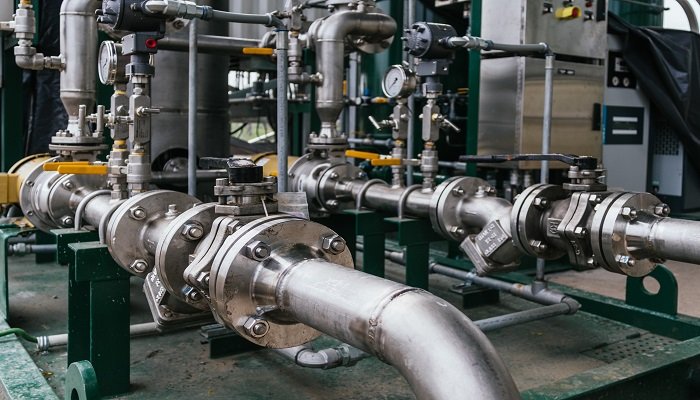
For every industrial plant, whether its food processing, oil and gas or power generation, valves do serve as the invisible protectors of flow. They normally regulate, isolate and direct fluids to make sure there is safe precision and reliability. But nowadays, industries are moving toward smarter and more advanced operations thereby making industrial valve design and automation should be undergoing a transformation of their own.
Nowadays, Valves are no longer a passive mechanical device but rather they are becoming an intelligent, automated and digitally connected component which plays a vital role in the modern industrial era.
The Changing Role of Valves in Industry
Conventionally, industrial valves were designed for robustness and mechanical efficiency. Operation by hand or some simple actuator-based control was sufficient. Demands from Industry 4.0, energy efficiency, and predictive maintenance have thoroughly changed this picture.
Modern plants now need valves that can communicate, self-monitor, and seamlessly integrate into the process control system. This is driven by three converging forces which includes:
- Digital transformation of process industries
- Automation and control system integration
- Stringent safety and sustainability requirements
For Indian manufacturers and system integrators, this evolution brings about a challenge and an opportunity that will blend traditional engineering expertise with more smart automation and data analytics.
Key Trends in Modern Valve Design and Automation
1. Smart Valves and IIoT Integration
One of the biggest changes arising across the industry is the rise of smart or intelligent valves. These are supported with sensors, positioners, and digital controllers that help real-time data to plant control systems.
Valve position, pressure, temperature, and flow rate all need to be monitored remotely. Using Industrial Internet of Things (IIoT) technologies, this data will help operators make better decisions, optimize their performance, and detect any potential issues as soon as possible.
For instance, a smart valve in a chemical plant can automatically inform operators about rising internal friction or actuator delays which may indicate possible wear or contamination before failure arises.
For Indian industries, especially in sectors like oil refining and water management, they are actively investing in IIoT-enabled valve automation as part of their digital plant modernization programs.
2. Advanced Materials and Design Innovation
Material science plays a crucial role in the next generation of valves. With industries handling more aggressive media like acids, high-pressure steam, and abrasive solids, there should be a need for durable, corrosion-resistant materials.
Manufacturers are now using ceramic-lined, duplex steel, and composite materials to enhance life and performance. Lightweight polymers are also gaining attention in food and pharmaceutical applications, where hygiene and ease of cleaning are demanding.
In India, local manufacturers are getting things fast, producing globally competitive valve designs tailored to demanding service conditions.
3. Actuation and Control System Integration
Automation in valve actuation has evolved beyond simple on/off control. The trend is now toward electronic and electro-pneumatic actuators with more precise modulation ability.
These actuators, which are integrated with PLC, DCS, or SCADA systems, help the operators to control flow rates based on process feedback. In high-value sectors such as oil & gas, power, and pharmaceuticals, valve automation systems are being deployed as part of complete process control architectures.
For system integrators, this will open new opportunities to design custom valve automation panels, remote I/O architectures, and diagnostic dashboards by combining mechanical engineering with smart control systems.
4. Energy Efficiency and Sustainability
Valves do seem like small components, but their effect on energy consumption is significant. When there is leakage, improper sizing, or poor maintenance, it will result in major process inefficiencies.
The newest valve automation systems use low-power actuators, optimized flow paths, and air management systems (for pneumatic valves) to cut energy usage. Additionally, smart control algorithms can help to minimize pressure losses and reduce compressed air consumption.
Sustainability-conscious organizations for example, global MNCs operating in India are setting stricter laws for leak-free, energy-optimized valve systems. Local suppliers are responding by offering eco-efficient valve designs that must meet ISO and API standards.
5. Predictive Maintenance and Digital Twins
Predictive maintenance is no longer a future concept but it’s happening now. By integrating sensors and connecting valves to cloud-based analytics platforms, manufacturers can now track performance trends and predict failures before downtime arises.
For Indian plants with high maintenance costs and limited downtime windows, predictive maintenance is essential which is a powerful way to enhance reliability without increasing man’s energy.
Challenges on the Path to Automation
While the benefits of valve automation are clear, several challenges also occur:
● Legacy infrastructure: Many Indian plants are still operating with older, manually controlled valves that cannot be easily upgraded.
● Cost sensitivity: Intelligent valve systems can be expensive initially to those small- and mid-sized manufacturers.
● Skill gaps: Engineers and technicians need upskilling to handle advanced automation and digital tools.
● Cybersecurity: As more valves become connected via IIoT, data security and network protection become a major concern.
To overcome these challenges there must be a close collaboration between OEMs, automation providers, and end users i.e building ecosystems that combine technology, service, and training.
The Indian Perspective: Local Innovation Meets Global Standards
India’s industrial valve market is expected to grow faster, which is driven by infrastructure expansion, energy projects, and industrial automation. Local companies are rapidly adopting global standards (API, ASME, IEC) while integrating indigenous innovation.
Automation providers both Indian and multinational are now partnering with domestic valve manufacturers to provide end-to-end flow control solutions that combine hardware, software, and analytics.
The Road Ahead
As manufacturing becomes more digital, the humble valve is transforming into a critical era in the industrial data network. From smart sensors to predictive diagnostics, valve automation is redefining how plants operate and maintain efficiency.
For Indian manufacturers and system integrators, this is not just a style, it’s a roadmap for future-ready industrial infrastructure. By adapting intelligent valve technologies, the industry can achieve higher reliability, energy savings, and safety, while aligning with the global move toward connected, sustainable manufacturing.
Conclusion
In conclusion, valves may have existed for centuries, but their future lies in intelligence, connectivity, and sustainability.
In the forthcoming years, expect to see smart, automated valves becoming as essential to plant performance as the PLCs and sensors which will surround them. For those designing, integrating, or manufacturing them, the information is clear: the future is flowing and it’s digital.