







GE Aerospace Deploys Robotics and Lean Manufacturing to Address Jet Engine Repair Bottleneck
GE Aerospace is transforming jet engine maintenance operations by combining robotic automation with Lean manufacturing principles to alleviate critical repair delays affecting global aviation. The...

GE Aerospace is transforming jet engine maintenance operations by combining robotic automation with Lean manufacturing principles to alleviate critical repair delays affecting global aviation. The company’s Singapore facility, undergoing a $300 million transformation, exemplifies this shift as skilled technicians transition from manual repair work to training robotic systems capable of replicating their expertise.
Unexpected wear in latest-generation jet engines has created severe maintenance backlogs across the aviation industry, forcing aircraft grounded for months while awaiting engine overhauls. Airlines struggle with parts shortages and extended repair queues, with some keeping older jets flying longer than planned to maintain operational capacity. This pressure has intensified tensions between airlines and engine manufacturers over pricing and production capacity.
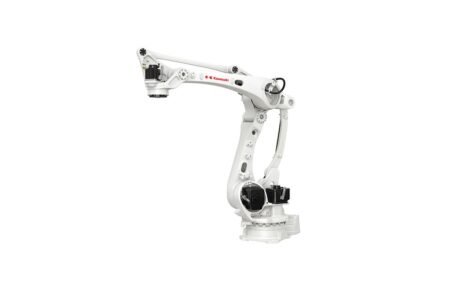
At GE’s upgraded automation lab in Singapore, they are teaching robots to perform compressor blade repairs previously executed manually across sanding belts. This knowledge transfer represents GE’s broader push toward industrial automation capable of easing aviation’s maintenance bottleneck while preparing for next-wave manufacturing capabilities.
The 2,000-employee Singapore repair hub is implementing “Flight Deck,” GE’s interpretation of Lean manufacturing focused on continuous improvement and waste elimination. The initiative targets 33 percent repair output increase without expanding facility footprint, achieved through workflow reorganization, floor layout redesign, and standardized task automation.
White light robots now operate at GE’s Services Technology Acceleration Center, evaluating high-pressure turbine disks and other nickel-based components requiring extreme precision. While robots handle repetitive data collection, scanning, and serial number recording, human engineers retain final decision authority for accepting, repairing, or rejecting parts based on digital records catalogued in cloud systems.
The company aims to halve both processing time and airline costs for key repairs. For CFM56 turbine nozzles, GE targets reducing turnaround from 40 days to 21 days by 2028. These improvements directly address engine downtime, which represents lost revenue for airlines every hour an engine remains off aircraft wings. GE’s approach seems to addresses immediate industry needs while building foundation for long-term operational transformation.