








Grid Automation Strategies for Industrial Energy Resilience
In a world where energy disruptions happen more often, driven by rising demand, changing grid conditions, and climate-related events, industrial plants cannot afford downtime. Whether it’s a steel...

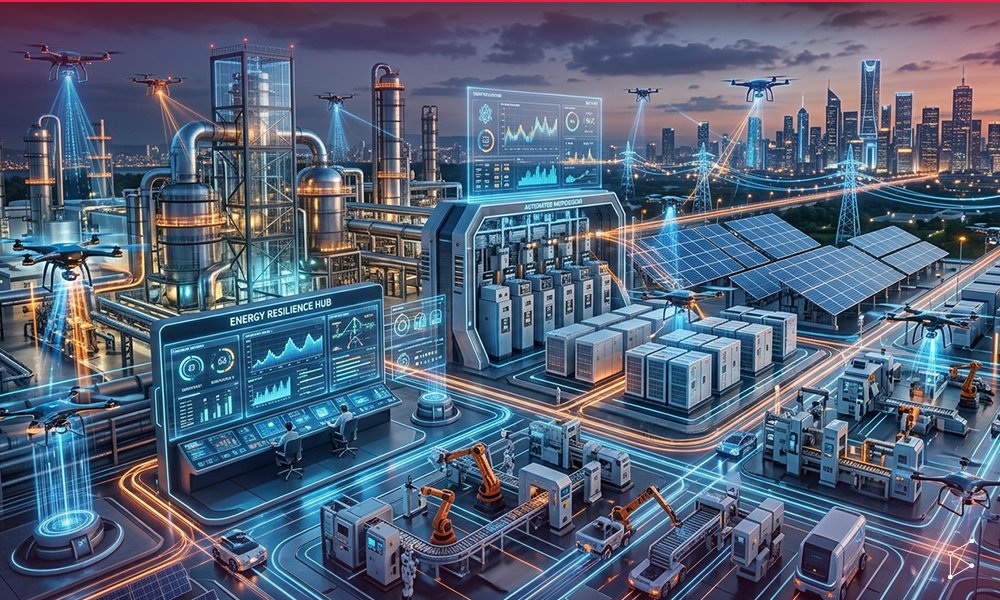
Table Of Content
- Why Energy Resilience Matters Today
- What Is Grid Automation?
- Key Grid Automation Strategies for Modern Industries
- 1. Automated Monitoring and Fault Detection
- 2. Intelligent Switchgear and Protection Systems
- 3. Integrating Renewable and Distributed Energy Resources
- 4. Microgrid Deployment for Complete Energy Independence
- 5. Demand Response and Peak Load Management
- 6. Predictive Maintenance and Asset Health Monitoring
- Benefits for Indian Manufacturers and Automation Providers
- Challenges in Implementation
- The Road Ahead: India’s Energy Transition
- Conclusion
In a world where energy disruptions happen more often, driven by rising demand, changing grid conditions, and climate-related events, industrial plants cannot afford downtime. Whether it’s a steel mill, a semiconductor facility, a chemical plant, or a large automotive manufacturer, energy resilience has become a top priority. For industries in India, where grid reliability differs by region, creating a strong, automated energy system is now a competitive necessity.
This is why grid automation is gaining traction. By using smart controls, predictive analytics, sensors, switchgear automation, and distributed energy management, industries can keep operations running smoothly even when the external grid is unstable.
Why Energy Resilience Matters Today
Industrial operations move on consistency i.e consistent power, consistent voltage, consistent uptime. But multiple pressures are rebuilding their energy level:
● Growing energy demand
● Renewable integration
● Aging grid infrastructure
● Climate risks
● Rising energy costs
For Indian industries operating in competitive global supply chains, even a few seconds of outage can lead to equipment damage, unsafe conditions, and massive production losses.
What Is Grid Automation?
Grid automation involves using smart technologies to monitor, control, and optimize the flow of electricity across industrial systems. It often includes:
● Automated switchgear
● Intelligent relays and protection systems
● Load management controllers
● Distributed Energy Resource Management Systems (DERMS)
● Predictive analytics for fault prevention
● Microgrid controls
Key Grid Automation Strategies for Modern Industries
1. Automated Monitoring and Fault Detection
Traditional electrical systems rely on operators to detect issues manually. In contrast, automated systems use sensors and digital relays to:
● Help to monitor voltage, harmonics, and load patterns
● Detect faults instantly
● Trigger protective actions automatically
● Localize and isolate the fault zones
Digital relays, IoT sensors, and smart meters help plants deal with issues before they affect production. This is especially important in industries with delicate equipment, such as EV battery manufacturing, pharmaceuticals, and electronics.
2. Intelligent Switchgear and Protection Systems
Automated switchgear helps ensure quick response to electrical disturbances. Features include:
● Self-diagnosis of breaker health
● Remote operation
● Arc-flash detection and suppression
● Fast switching for load transfer
For large manufacturing sites or industrial townships in India, the use of IEC 61850-enabled switchgear allows for seamless communication between protection devices, which improves both safety and reliability.
3. Integrating Renewable and Distributed Energy Resources
Many industries are investing in energy sources such as:
● Solar power plants
● Wind energy
● CHP (cogeneration) systems
● Battery Energy Storage Systems (BESS)
● Diesel or gas gensets
The challenge is to balance these with the utility grid. Grid automation allows for:
● Smooth synchronization between renewable assets and the main grid
● Automated decisions on when to draw power or store it
● Reducing demand charges through peak shaving
● Seamless switching during outages
For Indian plants adopting solar or hybrid systems to meet sustainability requirements, automated energy management is essential.
4. Microgrid Deployment for Complete Energy Independence
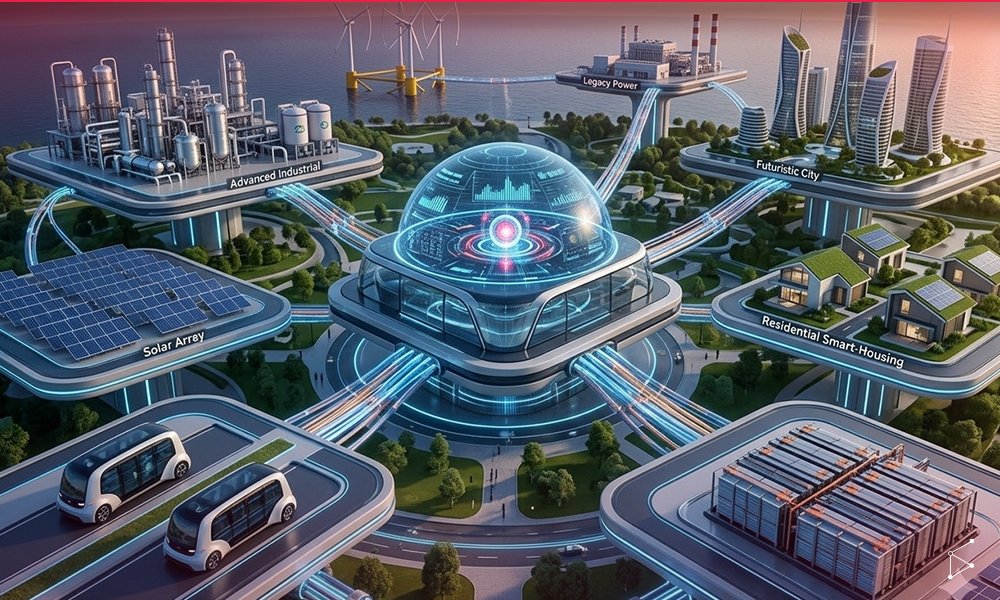
A microgrid is a local energy system that can function independently when the main grid fails. Automated microgrid controllers handle:
● Load prioritization
● Power flow optimization
● Storage dispatch
● Smooth grid-to-island transitions
This strategy is particularly important for:
● Industrial clusters and SEZs
● Remote manufacturing facilities
● Data centers
● Chemical plants and refineries
Microgrids can make a site a resilient, self-sustaining energy source, lessening reliance on the stability of the external grid.
5. Demand Response and Peak Load Management
Energy costs are rising, and utilities often impose heavy penalties during peak load periods. Grid automation can optimize consumption by:
● Scheduling non-critical loads
● Controlling HVAC and pumping loads
● Integrating storage for peak shaving
● Prioritizing essential equipment during peak pricing windows
In India, where Time-of-Day (ToD) tariffs are becoming common, smart demand response systems help companies significantly reduce energy costs.
6. Predictive Maintenance and Asset Health Monitoring
A major advantage of grid automation is shifting from reactive to predictive maintenance. Plants can monitor transformer temperature and insulation health, breaker wear and contact erosion, cable degradation patterns, and harmonic distortion levels using analytics and machine learning. Early detection helps prevent major failures. For industries that run expensive and sensitive machinery, this ability protects both equipment and productivity.
Benefits for Indian Manufacturers and Automation Providers
Implementing grid automation delivers multiple advantages:
● Reduce downtime
● Improved worker and equipment safety
● Better quality of power supply
● Reduced energy costs through optimization
● Greater resilience to grid fluctuations
● Enhanced sustainability and emission reduction
Challenges in Implementation
Despite the benefits, industries face several challenges:
● High upfront investment for smart infrastructure
● Integration complexity with old electrical systems
● Need for a skilled workforce in digital electrical engineering
● Cybersecurity concerns
● Lack of standardization across industrial sites
However, cloud-based systems, modular architecture, and affordable automation packages are making it easier for mid-sized manufacturers to adopt these technologies.
The Road Ahead: India’s Energy Transition
India’s goal of reaching 500 GW of renewable energy, increasing electrification, and the fast growth of energy-heavy industries like EV manufacturing, data centers, FMCG, and metals will speed up grid modernization across the country.
Grid automation will be key to this effort by:
● Stabilizing industrial operations
● Helping adopt clean energy
● Boosting productivity
● Supporting India’s sustainability goals
● Creating safer, smarter industrial ecosystems
As industries change, they will depend more on smart electrical infrastructure to ensure energy security and maintain high performance.
Conclusion
Grid automation is no longer a luxury but a foundational strategy for ensuring industrial energy resilience. By embracing smart monitoring, advanced protection systems, renewable integration, microgrids, and predictive analytics, industries can protect themselves from disruptions and operate with confidence.
For Indian manufacturers, automation providers, and system integrators, this represents a powerful opportunity: to build the resilient, future-ready energy systems that modern industry demands.