






Industrial Motion Control & Drive Innovations: What Modern Manufacturers Need to Know
Motion control and drive systems are undeniably two of the key determinants of the different between a good line and a great one in modern manufacturing. They determine speed, precision, […]

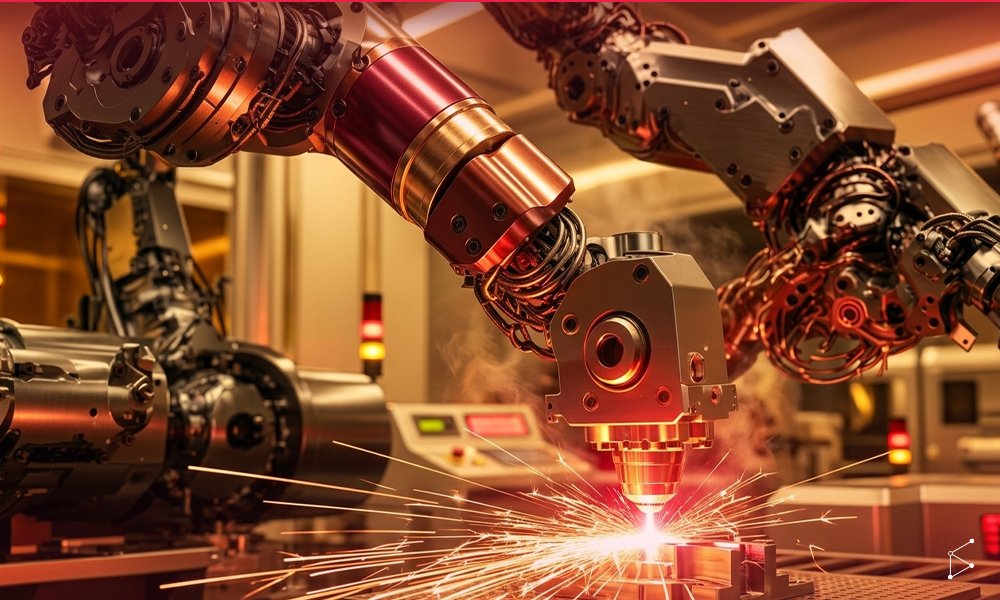
Motion control and drive systems are undeniably two of the key determinants of the different between a good line and a great one in modern manufacturing. They determine speed, precision, quality, and uptime across manufacturing lines. In this regard, the industry and its quests for perfection have resulted in a growing pressure for shorter batches, higher quality and energy savings thus, making legacy drives insufficient. Indian manufacturers, from automotive and packaging to electronics and textiles, continue to face tighter margins, not to mention the widespread use of older equipment – these aspects have prompted a demanding need for upgrades. This article discusses practical innovations in drives and motion control and how operations teams can apply them.
Shift from Legacy Drives to Smart Drives
Traditionally, most drives provided basic voltage and speed signals, elements of which are commonly associated with minimal intelligence. Conversely, modern smart drives offer additional functionalities such as diagnostics, connectivity, load monitoring, and self-tuning features. Studies have found that it is possible to detect faults in real-time when using current-sensor diagnostic curves, and it helps to avoid external monitoring hardware [1]. Also, AI-enabled drives have been established to increasingly support forecasting of failures and predictive maintenance workflows [2]. Thus, smart drives reduce downtime, improve commissioning speed, and cut maintenance costs. It, therefore, implies that manufactures that are embracing emerging drive innovations should opt for those with embedded sensors, connectivity, and built-in diagnostics as a standard requirement.
Servo Systems Becoming Affordable & More Precise
Technology continues to revolutionise the manufacturing industry and its practices. Servo systems are hailed across the globe for their reliability and dependability, but also criticised for limited affordability. They were once considered limited mostly to high-end robotics and machine tools. However, today, these systems are cost-effective, and available even for mid-tier manufacturers. Existing literature argue that advanced servo control techniques deliver high responsiveness and motion bandwidth [3]. Moreover, ADRC-based servo control has been established to reduces positioning time by over 10%, as opposed to conventional drives [4]. Reflectively, manufacturers who upgrade their systems to servo axes are likely to achieve improved repeatability, reduced change-over time, and enhanced throughput. Indian manufactures need to adopt these emerging systems to improve practices and outcomes in packaging, textiles, electronics assembly, and small machine builders.
Integrated and Decentralized Drive Architectures
The revolution can also be seen in the architecture of drivers. Unlike in the past when drives were commonly located inside large panels, they are now embedded on motors or located near the load rather than. The advantage of this change in architecture is that the design of most modern modular integrated motor-drive is associated with increased power density, simplified supply chains, and reduced total system cost [5]. Therefore, the benefits would include but not limited to shorter wiring runs, less floor space, fewer heat issues, and quicker commissioning. These are the elements that are ideal for space-constrained plants and retrofit projects, and are particularly common in Indian manufacturing spaces.
High-Performance Motion Controllers & Industrial Networks
Motion control today is as much about the network as it is about motors and drives. Deterministic industrial networks like EtherCAT, PROFINET and Ethernet/IP enable tight axis synchronization and coordinated motion that legacy fieldbus systems cannot match. Research into EtherCAT-based multi-axis motion control demonstrates how low-latency communication shortens cycle times and improves stability in precision tasks [6]. Similarly, another study found that networked multi-axis control improved performance in robotized machining under disturbance conditions [7]. In practice this means faster change-over, higher throughput, smoother motion and less scrap. A food-packaging line can run fillers, cappers and labelers as a tightly synchronized unit rather than independent machines. In India, where machine productivity and change-over flexibility matter, the value is immediate. For integrators, recommending systems that support high-performance network architecture becomes a differentiator.
Safety-Integrated Motion (Functional Safety in Drives)
For any manufacturing setup, one key underlying and ultimate focus is safety. Whether it is the safety of the workplace or plant itself, of that of the people that use the final products, safety is central to all the designs and operations of in the manufacturing realm. As a result, safety now embedded directly in drives: STO, SLS, SS1 and similar functions. It is important to recognise that functional safety architectures that are built into drives tend to reduce system response time and downtime in hazardous zones [8]. Moreover, STO and SLS are known to allow operator to access the system efficiently in order to clear jams or intervene promptly without the need to totally shut down the machine [9]. As a result, some of the benefits of this integration include safer operations, simpler wiring, easier certification, and improved uptime. These are some of the elements that need to shape the choices and practices among Indian manufactures, making sure that safety is not just a norm when talking about clients, but also with the plant itself.
Sustainability Angle: High-Efficiency Drives & Motors (IE4/IE5)
Another aspect in which the notion of innovated drivers and motors have excelled is sustainability. Global warming and climate change is threatening the stability and sustainability of the global society, and every corner is out for a change for a better tomorrow. People are talking about reduced waste, reduced emissions, and improved practices, and corporate practices are rapidly integrating sustainable practices. Energy efficiency, for example, is now a central factor when it to drive and motor selection, owing to rising electricity tariffs. IE5 synchronous reluctance motors have been established to outperform IE3, especially under typical partial-load profiles [10]. Also, drives that are equipped with energy-optimization algorithms tend to reduce consumption when real-time load is varied appropriately [11]. These upgrades, therefore, would deliver measurable savings in pumps, compressors, conveyors, and textile fans. Therefore, manufactures must evaluate energy profiles across full duty cycles, and not only for peak loads.
Practical Playbook for Indian Manufacturers
As the article point out, manufacturing industry has a lot to ease its burden in today’s ‘innovated’ society. Indian manufacturers should benchmark performance involving these imposed systems, and learn to utilise ideas from adjacent industries, just as much as from their own sector. They need to start upgrading their systems with low-capex pilot machines or even single-axis retrofits, and they can then scale to larger setups. In this aspect, the better approach would to choose architectures and designs that are open and interoperable in order to achieve a future-proof investments. Besides, research confirms, as detailed in this article, that integrators with multi-industry experience would be able to reduce project risk and improve retrofit quality upon integrating these emerging designs and systems. They must look to combine flexibility, energy savings, and throughput improvements in every upgrade that they plan and implement. They must also set support operators in place, using digital SOPs, AR tools, and continuous training during when adopting new technologies.
References
[1] N. Koteleva and N. Korolev, “A diagnostic curve for online fault detection in AC drives,” Energies, vol. 17, no. 5, 1234, 2024.
[2] K. Vishnu Murthy, “Analysis of artificial intelligence in industrial drives and fault-forecasting systems,” International Journal of Electrical Power & Energy Systems, 2022.
[3] X. Luan, H. Yu, C. Ding, Y. Zhang, M. He, J. Zhou and Y. Liu, “A review of research on precision rotary motion systems and driving methods,” Applied Sciences, vol. 15, no. 12, 6745, 2025.
[4] B. Yuan, “Precision position servo PMSM fast-response control based on ADRC and jerk/time-optimal trajectory,” Electronics, vol. 14, no. 10, 2062, 2025.
[5] B. Zhang, Z. Song, S. Liu, R. Huang and C. Liu, “Overview of integrated electric motor drives: opportunities and challenges,” Energies, vol. 15, no. 21, 8299, 2022.
[6] M. A. Ibrahim, M. F. Rahmat, M. H. Marhaban and A. I. Jamaluddin, “EtherCAT-based multi-axis motion control system for industrial automation,” Machines, vol. 11, no. 6, 2023.
[7] J. Liu and X. Zhang and R. Wang, “Networked multi-axis motion control for robotic machining with disturbance rejection,” Mechanical Systems and Signal Processing, vol. 178, 2022.
[8] A. T. Ward, P. T. Korner and J. E. Steinberg, “Functional safety architectures for integrated industrial drives,” IEEE Transactions on Industrial Electronics, vol. 71, no. 4, 2024.
[9] P. M. Vilarinho, J. A. P. Carvalho and R. Ferreira, “Safety-integrated motor drives: Performance evaluation of STO and SLS functions in hazardous industrial environments,” Safety Science, vol. 158, 2023.
[10] A. P. Simões, L. E. B. da Silva and R. C. Mesquita, “Comparative efficiency analysis of IE3 and IE5 electric motors under industrial load profiles,” Energy Reports, vol. 9, 2023.
[11] S. Sarkar, M. Rajput and A. K. Verma, “Energy-optimal speed and torque control in industrial electric drives using real-time load profiling,” Energies, vol. 16, no. 12, 2023.