






New Rules, New Urgency
This shift isn’t happening in isolation. India’s Bureau of Indian Standards rolled out the Omnibus Technical Regulation in 2024 and with its latest amendment in August 2025, mandating stricter safety protocols for electrical equipment across manufacturing by September 2026. Simultaneously, the country’s low-voltage drives market—valued at ₹646 crore in 2024—is projected to hit ₹967 crore by 2033, driven largely by safety concerns and energy efficiency mandates.
The regulatory pressure coincides with economic reality. Indian manufacturers face electricity costs that can devour 15-20% of operational budgets. Energy-efficient motors, particularly those meeting IE3 and IE4 standards, can slash consumption by up to 50% in variable-speed applications.
Safety by Design, Not Default
Traditional high-voltage systems treat safety as an add-on—circuit breakers, isolation switches, emergency stops. Low-voltage automation flips this logic. Ultra-low-voltage actuators operate below 60V, eliminating the risk of fatal shocks even during maintenance.
ABB India’s recent ₹140 crore investment in IE5 ultra-premium efficiency motors exemplifies this trend. These motors deliver up to 40% lower energy losses than IE3 variants while maintaining the same torque output. The result: safer operations, lower insurance premiums, and faster regulatory approvals.
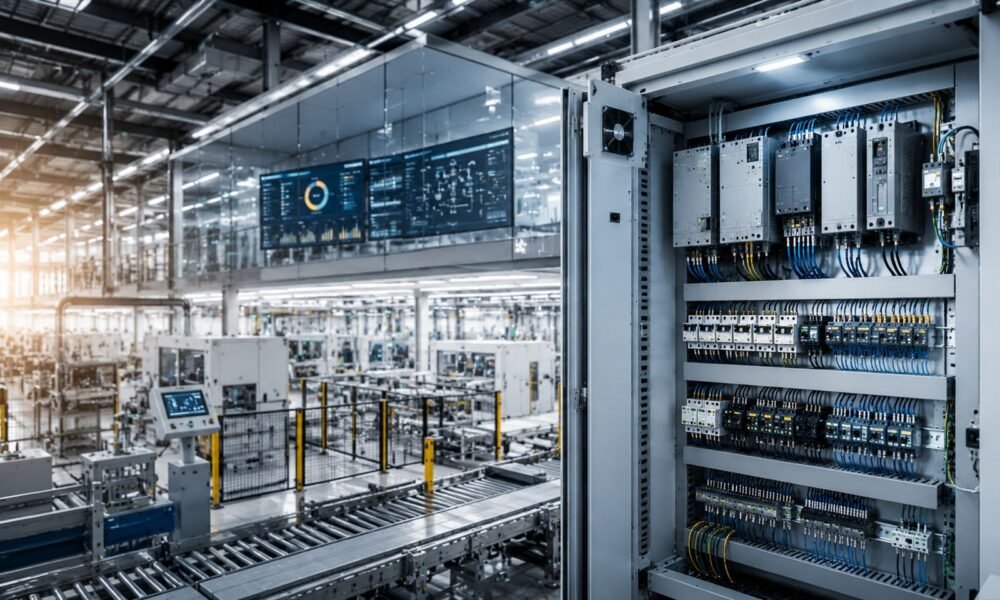
In Coimbatore’s textile belt, mills are retrofitting century-old power systems with modular low-voltage drives that fit into existing control cabinets. The space savings are dramatic—what once required a room-sized electrical panel now fits in a compact enclosure.
The Wireless Edge
Perhaps the most striking innovation lies in energy-harvesting sensors. These devices extract power from ambient machine vibrations or temperature gradients, eliminating the cable runs that often become maintenance nightmares in high-humidity industrial environments.
For example, vibration-powered sensors can monitor equipment health in real-time without additional power infrastructure. When a bearing shows early signs of wear, predictive analytics flags the issue weeks before traditional maintenance schedules would have caught it.
The Compliance Dividend
Built-in safety interlocks and diagnostic modules in low-voltage packages help manufacturers meet increasingly stringent regulatory requirements without retrofitting separate safety systems. This integration proves particularly valuable as India’s PAT (Perform, Achieve, Trade) scheme pushes energy-intensive industries toward mandatory efficiency targets.
For smaller manufacturers, often intimidated by complex compliance requirements, these all-in-one systems offer a clear path forward. Installation becomes plug-and-play. Certification becomes streamlined. Operations become predictable.
The Ripple Effect
What began as a safety and compliance exercise is reshaping factory design itself. Lower-voltage systems enable more flexible production layouts—machines can be repositioned without major electrical work. Maintenance windows shrink because technicians work on live systems safely. Training costs drop because the learning curve flattens.
As India’s manufacturing sector modernizes under PLI incentives and global supply chain pressures, low-voltage automation should be seen for more than just reducing risk—look at it as unlocking agility. In a world where adaptability defines competitiveness, trading high voltage for high performance might be the smartest power move Indian manufacturers can make.